A Distribution Center’s LED Lighting Retrofit
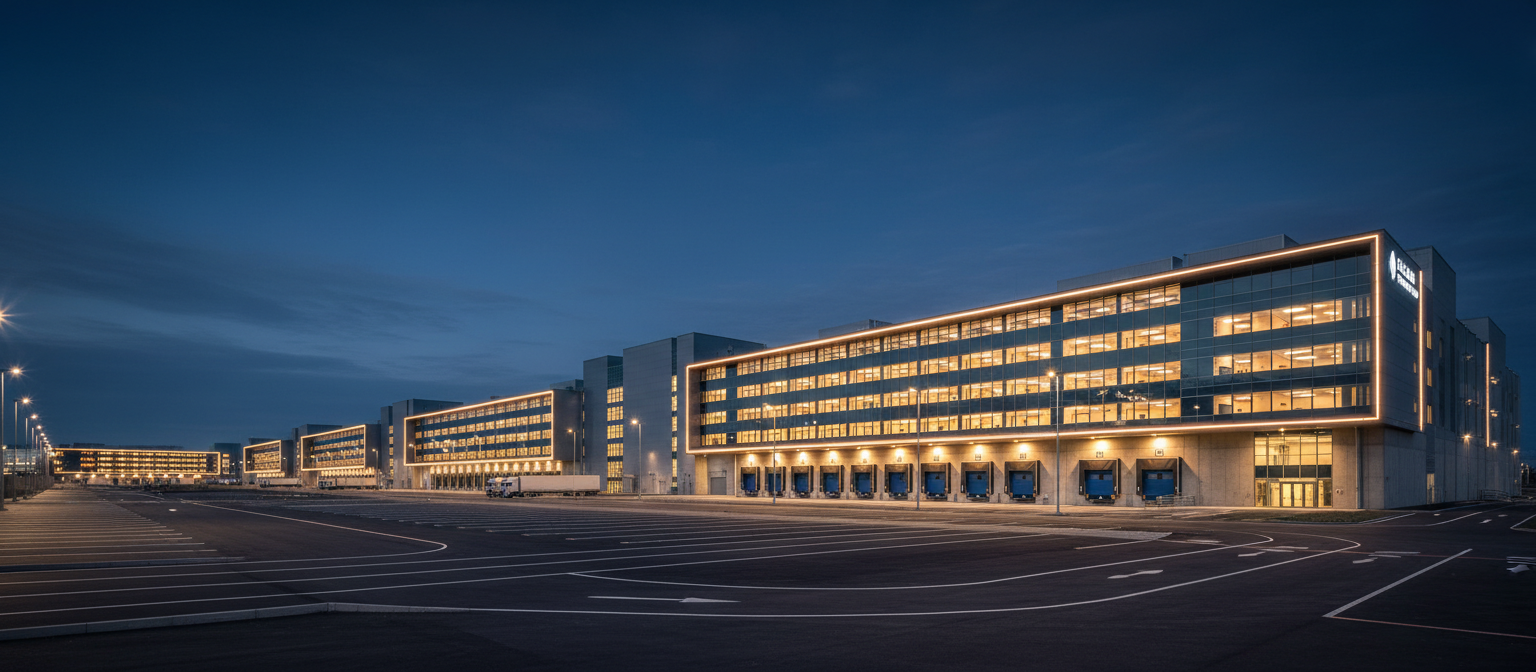
A Houston distribution center was running 1,240 legacy high-bay and fluorescent fixtures that consumed 2.1 million kWh a year and required constant lamp and ballast labor. A phased LED retrofit cut lighting energy 58 percent, saved $168,000 annually in energy and maintenance, captured a $9,400 utility rebate, and paid back in 14 months — installed entirely after hours with zero downtime.
Third-party logistics and distribution operator (name withheld at client request)
640,000 sq ft warehouse · 90,000 sq ft office · 1,240 high-bay and fluorescent fixtures
Greater Houston, TX
LED lighting retrofit, controls, rebate documentation
Legacy High-Bays Draining Energy and Labor
The building ran 400W metal halide high-bays in the racking aisles and T8 fluorescents in the office and dock areas — about 2.1 million kWh of lighting load a year, on top of the cooling energy needed to remove the heat those fixtures produced.
Maintenance was a constant drain: lamp and ballast failures on lift-reach equipment, lamps going dark in occupied aisles, and no lighting controls, so every aisle stayed at full output through the night shift whether or not anyone was working in it.
- Roughly 2.1 million kWh per year of lighting consumption across 730,000 sq ft
- Continuous lamp and ballast replacement requiring lift equipment and planned aisle closures
- No occupancy control, so all aisles ran at full output around the clock
- Rebate paperwork that internal teams had started and abandoned twice
How the Program Was Built
Fixture-by-fixture audit recording type, wattage, mounting height, and measured light levels, producing a layout that met IES-recommended levels with fewer, better fixtures.
A published fixture schedule with wattages, quantities, aisle-by-aisle controls, energy savings, rebate estimate, project cost, and payback — reviewed before a single fixture was ordered.
The retrofit ran in six phases, overnight and on weekends, area by area. Racking stayed loaded, operations never stopped, and no aisle was left dark during a shift.
Motion sensors were installed per aisle and in dock areas, cutting idle run time on the night shift and in low-traffic zones — the savings driver beyond the fixture swap itself.
We completed the utility rebate paperwork and documented 179D eligibility, and handled compliant disposal of all removed lamps and ballasts.
A 14-Month Payback With No Production Impact
Lighting energy fell 58 percent, about 1.22 million kWh a year, and the combination of energy and eliminated lamp-and-ballast labor totaled roughly $168,000 in annual savings. The utility rebate landed at $9,400 and the project paid back in 14 months.
Installation happened entirely outside operating hours, so the facility ran its normal shipping schedule through the whole project. Lighting levels improved in the racking aisles at the same time wattage dropped.
About 1.22 million kWh saved annually
Energy cost plus eliminated lamp and ballast maintenance
Filed and documented by our team, plus 179D documentation
Against total installed project cost
“They worked around our shipping schedule completely. We never lost an aisle during a shift, and the savings showed up on the first full utility bill after commissioning.”
How Fast It Moved
Photometric audit, fixture schedule, savings model, and payback review with the client
Material procurement and phase scheduling coordinated around shipping windows
Six installation phases executed after hours with aisle-by-aisle controls commissioning
Photometric verification, rebate filing, disposal documentation, and warranty registration
Questions About This Program
Related Service Pages
Want Results Like These?
Tell us your portfolio, your buildings, and the number that hurts. We will scope a program against the same metrics used in this case study — documented, audited, and priced in writing.