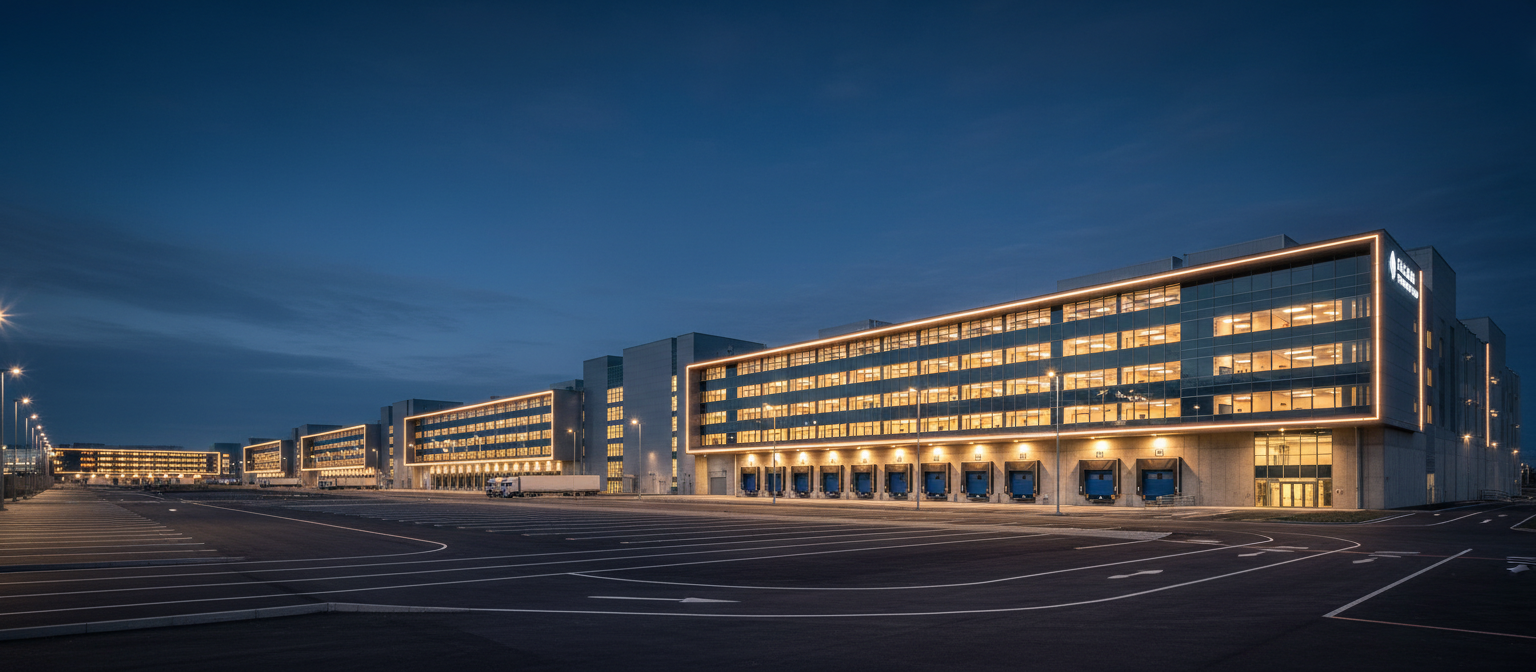
Commercial HVAC Preventive Maintenance for Boston Seaport Office Buildings
Boston's Seaport District is one of the most dynamically evolving commercial corridors in the Northeast — and the HVAC systems powering its glass-clad office towers face a punishment that most facility managers underestimate until a compressor fails in February. A disciplined commercial HVAC preventive maintenance program isn't overhead; it's the single most defensible investment a Seaport building operator can make to protect asset value, tenant retention, and regulatory standing.
Why Seaport Office Buildings Face Unique HVAC Challenges
The Boston Seaport District — anchored by the Innovation and Design Building, Pier 4, One Channel Center, and the rapid new-construction corridor along Seaport Boulevard — represents a convergence of demanding environmental stressors that few other U.S. submarkets replicate simultaneously.
Salt air and coastal corrosion accelerate degradation of condenser coils, cabinet finishes, and electrical contacts at a rate roughly 30–40% faster than inland commercial properties. Drive fifteen minutes west to the Back Bay or Cambridge and you're dealing with a different machine. In the Seaport, proximity to the Fort Point Channel and Boston Harbor means that even Class A trophy buildings with premium mechanical packages are fighting marine-grade corrosion from day one.
Thermal swing severity compounds the issue. Boston endures genuine four-season extremes — lows that dip into the single digits during polar vortex events, summers that regularly push heat index values above 95°F — and the Seaport's glass-heavy architectural vocabulary means solar heat gain is a persistent adversary. Modern VRF and chilled-water systems in these buildings cycle harder and more frequently than comparable equipment in milder markets.
Building density and interdependence create a third challenge. Many Seaport towers share mechanical infrastructure across mixed-use podiums: a single AHU malfunction can simultaneously affect a life sciences tenant on floors 3–6, a law firm on 7–12, and a hotel component above. The tolerance for downtime is essentially zero.
The Boston Climate and Regulatory Context
Effective commercial HVAC preventive maintenance in Boston cannot be planned without understanding the city's specific regulatory and energy landscape.
The Boston Building Energy Reporting and Disclosure Ordinance (BERDO 2.0), now with binding emissions intensity limits phased in through 2025 and beyond, means that underperforming HVAC systems translate directly into compliance exposure. Buildings over 20,000 square feet — which describes virtually every commercial property in the Seaport — face escalating penalties if they exceed their allowable greenhouse gas emissions. A fouled heat exchanger, a refrigerant leak left undetected, or a degraded economizer damper doesn't just cost you in utility spend; it costs you in reportable emissions.
Massachusetts also enforces 310 CMR 7.72, the state refrigerant management regulation, which imposes strict recordkeeping and leak repair timelines on commercial HVAC systems using HFCs. Facilities without documented maintenance logs — capturing inspection dates, refrigerant charge checks, and technician credentials — are exposed during audits. A proactive PM program generates the paper trail that satisfies both state environmental regulators and your insurance carrier.
Finally, ASHRAE Standard 180, the industry's authoritative framework for commercial HVAC inspection and maintenance, is increasingly referenced by lenders, REITs, and institutional property owners during due diligence. If your building is on a Seaport asset or you're managing properties across Downtown, Charlestown, or the Longwood Medical Area, ASHRAE 180 compliance is becoming table stakes for Class A credentialing.
What a Comprehensive Preventive Maintenance Program Covers
Not all PM contracts are created equal. A genuine preventive maintenance program for commercial HVAC in a demanding environment like the Boston Seaport should include, at minimum, the following service disciplines executed on a documented schedule:
- Quarterly coil cleaning and inspection — both evaporator and condenser coils, with special attention to salt-deposit buildup in coastal-exposure equipment
- Refrigerant charge verification and leak detection — using electronic detection equipment, not just visual inspection, documented per 310 CMR 7.72 requirements
- Belt, bearing, and motor inspection — vibration analysis on critical air handlers, lubrication of all moving components, V-belt tension and wear assessment
- Air filter replacement and MERV compliance audit — confirming filter specification matches the building's IAQ commitments to tenants and any WELL or LEED certification requirements
- Controls and BAS calibration — thermostat, sensor, and DDC controller calibration to confirm setpoints are being honored, not just approximated
- Economizer and damper operation verification — a stuck-closed economizer in a Boston spring can add 15–20% to your cooling load unnecessarily
- Drain pan and condensate line treatment — biological growth in Seaport buildings is accelerated by the humidity profile; Legionella risk management starts here
- Electrical connections and safety control testing — contactors, capacitors, high-pressure and low-pressure cutouts, and disconnect integrity
- Pre-season system commissioning — a structured heating season readiness check in late September/early October and a cooling season readiness check in April, timed to Boston's transition months
For buildings with cooling towers, a staple of larger Seaport commercial towers, the PM scope must also encompass water treatment program management, basin cleaning, drift eliminator inspection, and fan assembly service — all on schedules that satisfy the Massachusetts Department of Public Health's Legionella risk management guidance.
The Real Cost of Reactive Maintenance in Boston's Seaport
Facility directors who defer preventive HVAC maintenance in favor of reactive repair typically cite short-term budget pressure. The math rarely survives scrutiny.
An emergency rooftop unit replacement in a Seaport high-rise during peak winter carries mobilization, crane access, and permitting costs that can easily reach $80,000–$150,000 for a mid-size commercial packaged unit — before you account for the tenant credits, productivity loss, and potential lease event your lease agreements may trigger. A chillerplant failure during a late-July heat event is categorically worse: parts lead times for large centrifugal chillers currently run 8–20 weeks, meaning a failed chiller in August may not be restored until October.
By contrast, a structured preventive maintenance contract for a typical 150,000-square-foot Seaport office building typically runs $35,000–$75,000 annually depending on system complexity — a fraction of a single unplanned failure event. HVAC systems that receive regular preventive care also demonstrate statistically longer service lives: ASHRAE data consistently shows a 15–25% lifespan extension on maintained equipment versus run-to-failure operation.
Energy savings compound the ROI. Clean coils, properly charged refrigerant circuits, and calibrated controls reduce HVAC energy consumption by an estimated 10–20% in commercial applications according to EPA ENERGY STAR guidance. For a large Seaport building spending $400,000 annually on energy, that's $40,000–$80,000 in recoverable operating cost — often exceeding the entire PM contract cost.
What to Look for in a Commercial HVAC Maintenance Provider in Boston
Not every vendor marketing commercial HVAC preventive maintenance in the Boston Seaport has the operational depth to actually deliver on it. Here's how to evaluate:
Licensing and credentials — Massachusetts requires HVAC contractors to hold appropriate trade licenses (Sheet Metal and Air Conditioning Contractors license, or Refrigeration Technician licensing for refrigerant handling). Verify EPA Section 608 certification for all technicians handling refrigerants. Ask specifically about NATE (North American Technician Excellence) certification.
Local knowledge and response capability — The Seaport's parking and access constraints mean a vendor without local dispatch capability will consistently fail to meet response time commitments. Ask for their closest service hub location and average emergency response time to Seaport ZIP codes (02210).
Documentation and compliance infrastructure — Modern PM vendors should provide digital service records, photographic evidence of completed work, and automated scheduling confirmations compatible with your building's BAS and CMMS. For BERDO 2.0 compliance, you need records, not just verbal assurances.
Scope transparency — Beware contracts priced low through exclusions. Demand an itemized scope of work mapped to your specific equipment schedule (AHU makes/models, chiller specs, number of rooftop units, cooling tower inventory). A reputable provider will perform a no-cost mechanical inventory and needs assessment before proposing.
Multi-site capability — If you manage properties beyond the Seaport — in Charlestown, the South End, Cambridge's Kendall Square corridor, or the Longwood Medical Area — a single vendor able to deliver consistent standards across your entire portfolio reduces administrative burden and creates pricing leverage.
MetroKleen | MKMaintX serves commercial facility operators across Boston and 35+ states with exactly this kind of documented, scalable preventive maintenance infrastructure. Learn more at mkmaintx.com or speak directly with a facilities specialist at 1-888-669-5808.
Building a Long-Term HVAC Maintenance Strategy
The most effective facility managers in the Seaport — and across Boston's competitive commercial real estate market — treat HVAC maintenance as a strategic asset program, not an annual line item to be minimized.
This means integrating PM scheduling into capital planning cycles: knowing that a 15-year-old chiller serving floors 8–22 of your Seaport tower will likely require replacement in years 3–5, and using preventive maintenance data to support that capital case with evidence rather than gut instinct. It means negotiating tenant improvement language that aligns HVAC performance obligations with your maintenance capabilities. And it means understanding that in a market where Seaport office rents rank among the highest in New England, the mechanical reliability of your building is directly correlated to your ability to attract and retain the life sciences, tech, and financial services tenants willing to pay those rents.
Buildings in Boston's Seaport, like those in Back Bay, Downtown Crossing, and the emerging Dorchester innovation corridor, are competing on experience as much as location. A building that runs too hot in July or too cold in January — because deferred maintenance allowed coil fouling or economizer failure to degrade system performance — loses that competition quietly but decisively.
Frequently Asked Questions
Q: How often should commercial HVAC systems in Boston Seaport buildings receive preventive maintenance?
A: For most commercial office buildings in the Seaport District, a quarterly PM visit is the appropriate baseline — with pre-season commissioning checks added in spring (April) and fall (October) to prepare systems for Boston's extreme seasonal transitions. Buildings with cooling towers, process cooling requirements, or life sciences tenants may require monthly or bi-monthly service on specific components.
Q: What does commercial HVAC preventive maintenance typically cost for a Seaport office building?
A: Annual PM contract pricing for a mid-size Seaport commercial office building (100,000–200,000 SF) typically ranges from $35,000 to $75,000, depending on system complexity, equipment count, and the breadth of services included. This should be evaluated against the avoided cost of reactive repair, energy savings, and BERDO 2.0 compliance value — not as a standalone budget line.
Q: Is HVAC preventive maintenance required for BERDO 2.0 compliance in Boston?
A: BERDO 2.0 doesn't mandate a specific PM program by name, but well-maintained HVAC systems are essential to meeting the emissions intensity limits the ordinance imposes. Equipment operating outside optimal parameters — due to fouled coils, refrigerant leaks, or degraded controls — consumes more energy and produces higher emissions. Documented maintenance records also support your compliance posture during reporting reviews.
Q: Can one vendor handle HVAC preventive maintenance across multiple Boston properties in different neighborhoods?
A: Yes, and consolidating your PM program with a single qualified vendor typically delivers pricing efficiency, standardized documentation, and simplified vendor management. MetroKleen | MKMaintX currently supports commercial facility operators across the Seaport, Back Bay, Charlestown, Cambridge, Longwood, and other Greater Boston submarkets, as well as nationally across 35+ states. Contact us at mkmaintx.com or call 1-888-669-5808 to discuss a portfolio approach.
Q: What's the difference between a preventive maintenance contract and a full-service HVAC contract?
A: A preventive maintenance contract covers scheduled inspections, cleaning, adjustments, and minor consumable replacements (filters, belts, lubricants) on an agreed schedule. A full-service (or comprehensive) contract typically adds coverage for parts and labor on covered repairs discovered during PM visits or in-between visits. For high-criticality Seaport buildings — particularly those with data center components or life sciences tenants — a full-service agreement often provides superior total cost predictability despite its higher upfront premium.
Get a Quote for Your Facility
Tell us where your building is and we'll call you back within 2 business hours. No obligation.
Subscribe to Updates
Get facility maintenance insights delivered
Join our newsletter for expert tips, industry news, and company updates from the MetroKleen | MKMaintX team.
Services That Cover This Work
MetroKleen | MKMaintX handles every trade under one contract — so the fix in this article and the next one call come from the same team.
Preventive programs, RTU & chiller service, 24/7 emergency repair
VIEW SERVICENightly cleaning, day porters, floor care, multi-site programs
VIEW SERVICEPrecision HVAC, humidity control, GMP-compatible cleaning
VIEW SERVICEPanels, wiring, code compliance, emergency power
VIEW SERVICEPipe repair, drain cleaning, backflow prevention
VIEW SERVICELED retrofits, fixture service, emergency lighting
VIEW SERVICELOCAL SERVICE PAGES
Need this work handled? Free assessment, no minimum contract.
Related Posts
AI SELECTED
How Much Does Commercial HVAC Preventive Maintenance Cost? (2026 Ranges)
Typical 2026 pricing: $450-$900 per rooftop unit per year or $0.03-$0.08 per sq ft for semi-annual service. Here are the real ranges by equipment type, building type, and program frequency.
6 min read
Connecticut Commercial HVAC Maintenance: Keeping Office Buildings Comfortable Through New England Winters
Ensure office comfort this winter with expert Connecticut commercial HVAC maintenance services across Massachusetts, Rhode Island, Connecticut, and New Hampshire.
3 min read
Massachusetts Preventive Maintenance Programs: How Bundled Facility Services Save Property Managers Money
Discover how Massachusetts preventive maintenance programs bundled facility services help Boston and New England property managers cut costs and increase efficiency.
2 min read
Comments (0)
No comments yet. Be the first to comment!