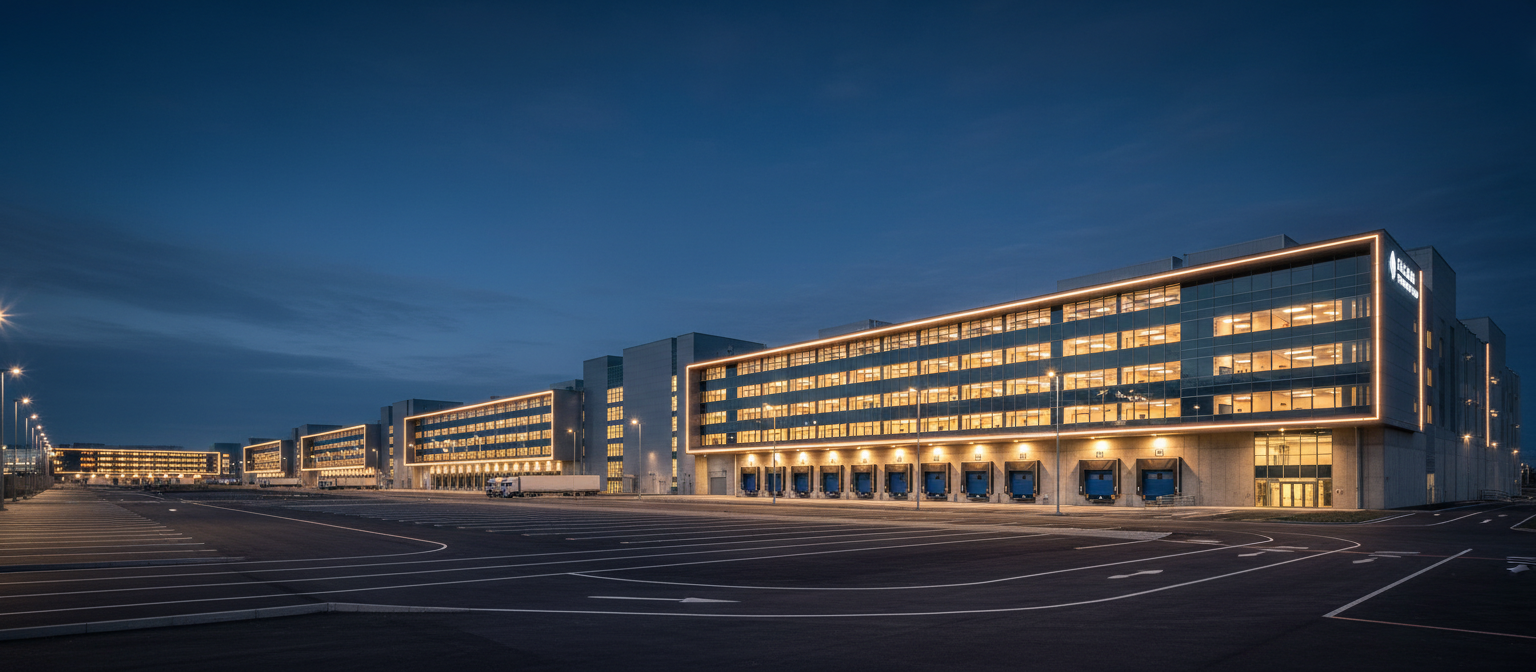
Commercial Facility Maintenance Houston: Why Local Texas Crews Outperform National Chains in Gulf Coast Heat
When Gulf Coast heat turns a Houston facility into a liability, the difference between a quick fix and a lasting solution often comes down to whether your maintenance crew has ever sweated through a Texas August. Local crews who know Harris County's humidity, its soil expansion cycles, and the way coastal heat attacks HVAC condensate lines don't just work faster — they work smarter, and they prevent the expensive failures that out-of-state teams consistently miss.
The Gulf Coast Maintenance Challenge No National Chain Will Admit
Houston sits at the intersection of subtropical heat, extreme humidity, hurricane-season wind loads, and expansive clay soils that move with every rainfall cycle. For commercial facility managers, this combination creates a maintenance environment unlike virtually anywhere else in the country. Commercial facility maintenance in Houston demands a fundamentally different playbook than what works in Phoenix, Chicago, or even Dallas.
Consider what happens to a commercial property during a typical Houston summer:
- HVAC systems run 18 to 22 hours per day, generating condensate volumes that overwhelm drain lines sized for moderate climates
- Flat roofing membranes expand and contract dramatically, accelerating seam failures at rates 30–40% higher than northern markets
- Exterior caulking and sealants degrade within 12–18 months under UV index levels that regularly exceed 10
- Concrete slabs and pavement heave and crack as Houston's notorious black clay — known locally as "gumbo soil" — swells after rain and shrinks during drought
- Electrical panels and conduit in non-climate-controlled utility rooms can reach internal temperatures that void manufacturer warranties on equipment
A national maintenance chain dispatching a crew from a regional hub in Atlanta or Denver will address the symptom in front of them. A local Texas maintenance crew recognizes the pattern behind it.
Why Local Crews Outperform in Texas Heat: The Technical Reality
The case for local expertise in commercial facility maintenance Houston operations isn't anecdotal — it's rooted in the specific technical knowledge that comes from years of hands-on work in the Gulf Coast environment.
Climate-Calibrated Preventive Schedules
Local crews understand that Houston's maintenance calendar doesn't mirror the national standard. Pre-season HVAC servicing must be completed by March, not May, because cooling demand arrives early and hard. Condensate drain line clearing — a task many national contracts schedule quarterly — needs to happen monthly during peak season in Houston's humidity. Exterior painting and sealant work must be scheduled around the 60% average relative humidity windows that allow proper adhesion and cure times.
These aren't minor adjustments. They're the difference between a maintenance program that prevents failures and one that simply responds to them.
Code and Compliance Familiarity
Harris County, the City of Houston, and surrounding municipalities like Pasadena, Pearland, and Sugar Land each maintain distinct inspection schedules and compliance requirements for commercial facilities. Houston notably lacks traditional zoning, which creates a patchwork of deed restrictions and special district regulations that can affect everything from signage maintenance to utility corridor access. Local maintenance professionals navigate these nuances daily; national chains frequently cause delays by treating Houston like a standard municipal market.
Vendor Networks and Emergency Response
When a tropical storm knocks out a rooftop unit at a Greenway Plaza office complex at 11 PM on a Friday, the value of local relationships becomes immediately measurable. Local Texas crews maintain active relationships with regional equipment suppliers, specialty subcontractors, and emergency restoration vendors who prioritize long-term local partners over one-time national dispatch calls. Lead times for parts that a national contractor quotes at 5–7 business days often compress to 24–48 hours through established local supply channels.
The Specific Failure Modes That Cost Houston Facility Owners the Most
Understanding what's most likely to go wrong — and when — is the foundation of any effective commercial facility maintenance strategy for Texas properties.
Condensate overflow and water intrusion is the single most common cause of interior commercial damage in Houston. A clogged secondary drain on a rooftop air handler can flood ceiling tiles, damage drywall, destroy flooring, and trigger mold remediation requirements within 48 to 72 hours. Local crews who have personally dealt with dozens of these events know exactly where to look during inspections and how to engineer drain line modifications that prevent recurrence.
Foundation movement affects a significant percentage of Houston's commercial building stock, particularly structures built before 1990 when soil engineering standards were less rigorous. Doors that stick, windows that develop gaps, and interior partition cracks are early warnings. Experienced local maintenance teams recognize these signs and coordinate with geotechnical professionals before what starts as a $2,000 maintenance call becomes a $200,000 structural remediation.
Exterior envelope degradation accelerates dramatically in the Gulf Coast UV environment. Brick mortar, EIFS (synthetic stucco), and fiber cement siding all require inspection and repair schedules that account for Texas sun exposure. A national maintenance program written for a property in Minneapolis will systematically underschedule these services for a Houston asset.
What a High-Performance Houston Facility Maintenance Program Actually Looks Like
The best commercial facility maintenance programs for Houston properties share several defining characteristics:
- Monthly mechanical inspections during cooling season (April through October) covering HVAC, condensate systems, and electrical panel temperatures
- Quarterly exterior envelope assessments including roof, caulking, expansion joints, and drainage
- Annual foundation and pavement surveys timed to follow the dry season when movement patterns are most visible
- Storm preparation and post-storm inspection protocols aligned with the June–November hurricane season
- 24/7 emergency response capability with technicians physically located in the Houston metropolitan area — not routed through a national dispatch center
Documentation matters as much as execution. Facilities in the Energy Corridor, Uptown/Galleria, Medical Center, and Downtown Houston submarkets increasingly face institutional tenant requirements for maintenance logs, warranty compliance records, and sustainability reporting. A maintenance partner who delivers structured documentation protects your asset's value and your tenant relationships simultaneously.
Evaluating a Commercial Maintenance Provider for Your Houston Property
Not every company that claims Houston coverage actually has deep local infrastructure. When evaluating providers, ask the right questions:
Where are your technicians based? The answer should be specific neighborhoods or zip codes — not "the greater Houston area" from a call center in another state.
What is your average emergency response time for a commercial facility in the Galleria submarket versus Katy or Pearland? A genuine local operation will give you a credible, differentiated answer.
Can you provide references from comparable commercial assets in Harris or Fort Bend County? Multi-tenant office, industrial, retail, and medical commercial properties each have distinct maintenance profiles. Ask for references that match your property type.
How do you handle manufacturer warranty compliance for rooftop equipment? Gulf Coast UV and thermal cycling conditions require specific documentation and service intervals to maintain many commercial HVAC warranties. National providers frequently create inadvertent warranty voids through non-compliant service records.
What does your storm response protocol look like? A credible Houston maintenance partner has a written, rehearsed plan — not a call center script.
The Cost Equation: Local Investment vs. National Contract Pricing
National maintenance chains frequently compete on headline price. The true cost comparison looks different when you factor in:
- Reactive repair frequency: Properties on local-calibrated preventive programs typically see 25–40% fewer emergency service calls in the first 18 months
- Response time costs: Every hour of HVAC downtime in a Houston summer costs real money in tenant relations, productivity, and potential lease risk
- Warranty protection value: Properly documented service records protect equipment warranties that represent tens of thousands of dollars in replacement value
- Documentation compliance: Institutional property owners and lenders increasingly require maintenance documentation that generic national contracts don't produce
For most Houston commercial assets in the 20,000 to 200,000 square foot range, the total cost of ownership under a locally-calibrated program — including avoided reactive repair spend — compares favorably with national contract pricing within the first contract year.
How MetroKleen | MKMaintX Serves Texas Commercial Facilities
At MetroKleen | MKMaintX, we operate with local crews and local management across our Texas service territories, delivering the technical depth that Gulf Coast commercial properties require. Our maintenance programs for Houston-area commercial facilities are built on climate-specific preventive schedules, documented compliance protocols, and genuine emergency response capability — not national call center routing.
Whether you manage a Class A office tower in the Energy Corridor, a medical office portfolio in the Texas Medical Center, or multi-tenant industrial space along the Ship Channel, our team brings the local knowledge your asset demands. Facility managers across 35+ states trust mkmaintx.com to protect their properties, and our Texas operations reflect that same standard of accountability and expertise.
To discuss a maintenance program for your Houston commercial facility, contact our team directly at 1-888-669-5808 or visit mkmaintx.com to request a facility assessment.
Frequently Asked Questions
Q: What makes commercial facility maintenance in Houston different from maintenance in other major Texas cities like Dallas or San Antonio?
A: Houston's combination of coastal humidity, expansive clay soils, hurricane-season wind loads, and extreme UV exposure creates a maintenance environment that is meaningfully more demanding than inland Texas markets. Condensate management, foundation monitoring, and exterior envelope maintenance all require accelerated schedules and Gulf Coast-specific techniques that don't apply in drier or less humid regions.
Q: How often should HVAC systems in Houston commercial buildings be serviced?
A: For most Houston commercial properties, monthly HVAC inspections during the April–October cooling season are the appropriate standard — not the quarterly schedule common in northern markets. Condensate drain lines should be cleared and treated monthly during peak humidity periods. Full mechanical servicing should be completed in late February or early March, before demand season begins.
Q: What should I look for in a commercial maintenance contract for a Houston property?
A: Prioritize providers with locally-based technicians, documented storm response protocols, climate-calibrated preventive schedules, and structured maintenance documentation for warranty compliance. Ask specifically about condensate management, exterior envelope inspection frequency, and emergency response time commitments for your specific submarket within the Houston metro.
Q: How does foundation movement in Houston affect commercial facility maintenance planning?
A: Houston's expansive black clay soils cause measurable foundation movement with every significant wet-dry cycle. For commercial facilities, this means annual foundation and pavement surveys should be a standard part of every maintenance program. Early identification of movement indicators — door alignment issues, partition cracking, pavement heaving — allows for cost-effective intervention before structural remediation becomes necessary.
Q: Can a national commercial maintenance company effectively serve Houston properties?
A: National companies can provide coverage, but the quality gap between national dispatch and genuinely local operations is significant in a market as technically demanding as Houston. The key differentiators are technician location, local vendor relationships, climate-specific service schedules, and emergency response time. Always verify whether a national provider's Houston operations include locally-based personnel or rely on regional dispatch from outside the metro area.
Get a Quote for Your Facility
Tell us where your building is and we'll call you back within 2 business hours. No obligation.
Subscribe to Updates
Get facility maintenance insights delivered
Join our newsletter for expert tips, industry news, and company updates from the MetroKleen | MKMaintX team.
Services That Cover This Work
MetroKleen | MKMaintX handles every trade under one contract — so the fix in this article and the next one call come from the same team.
Preventive programs, RTU & chiller service, 24/7 emergency repair
VIEW SERVICENightly cleaning, day porters, floor care, multi-site programs
VIEW SERVICEPrecision HVAC, humidity control, GMP-compatible cleaning
VIEW SERVICEPanels, wiring, code compliance, emergency power
VIEW SERVICEPipe repair, drain cleaning, backflow prevention
VIEW SERVICELED retrofits, fixture service, emergency lighting
VIEW SERVICELOCAL SERVICE PAGES
Need this work handled? Free assessment, no minimum contract.
Related Posts
AI SELECTEDMitigating Houston Heat: Preventive HVAC Care for Medical Center Clinics
Protect your medical facility from extreme heat with expert commercial HVAC maintenance in Houston. Ensure uptime and safety for your patients today.
3 min read
Preventing Mold in Medical Center Facilities: Humidity Control Guide
Learn how to manage humidity in Houston medical facilities to prevent mold. Improve your commercial indoor air quality with our expert maintenance tips.
3 min read
Preventing Humidity Damage: HVAC Care for The Woodlands Office Parks
Protect your Woodlands office from the Houston humidity. Learn expert tips for commercial HVAC humidity control and maintaining optimal building health.
3 min read
Comments (0)
No comments yet. Be the first to comment!