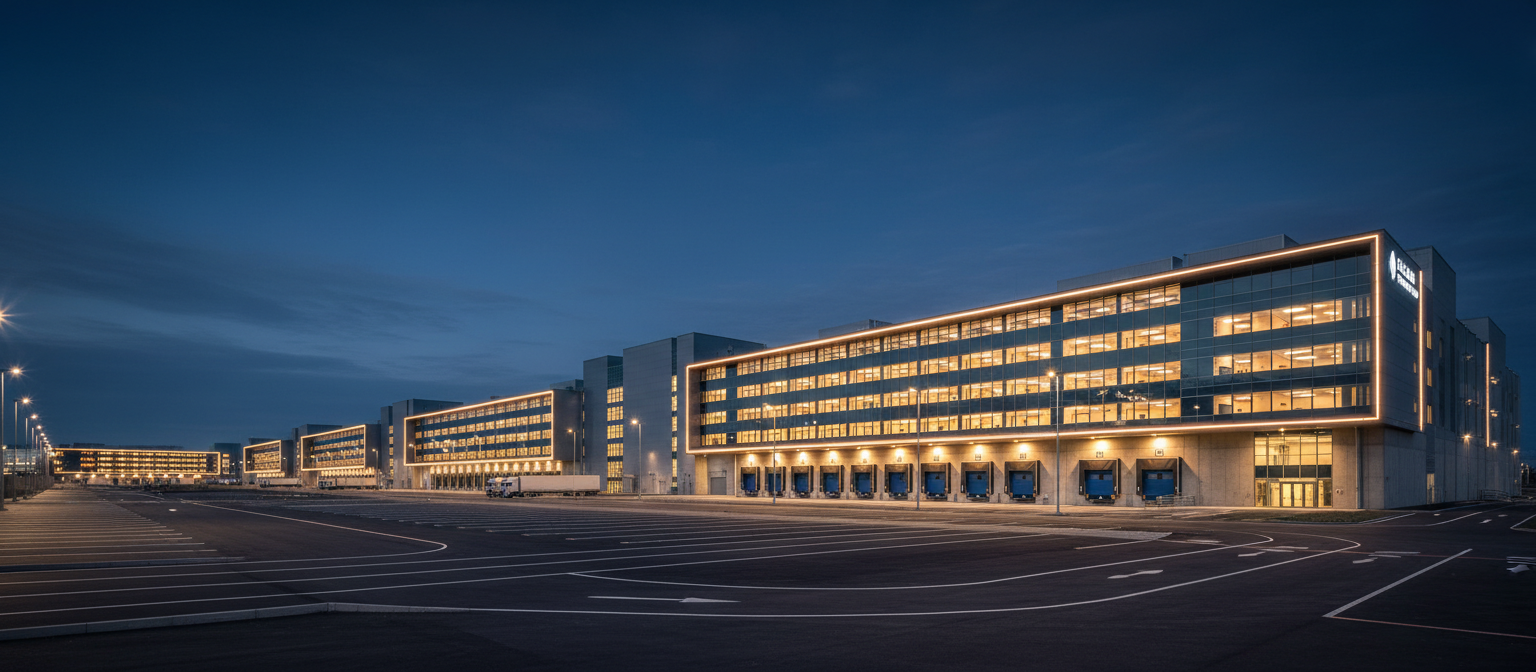
The 2026 HVAC & Facility Maintenance Calendar for the Texas Hub
Texas mechanical systems fail on a predictable seasonal schedule because the climate swings between extremes that stress equipment at both ends of its operating range—hard freezes that crack coils in January, relentless heat that collapses refrigerant charge in August, and hailstorms that shred condenser fins in April. A written 2026 HVAC maintenance calendar turns that predictable pattern into a defensible asset-protection plan. Facility managers who work from a calendar spend money on scheduled labor; those who don't spend the same money—plus overtime, expedited parts, and tenant disruption—on emergencies.
Q1: January, February, March — Freeze Recovery, Heating Reliability, and Cooling Prep
January
The Texas paradox opens the year: your chillers are off, but a three-day Arctic outbreak can destroy unprotected equipment that sat idle all winter. January priorities center on freeze protection verification and heating reliability.
- Confirm freeze stats on every rooftop unit are set correctly (typically 35°F or per manufacturer spec) and cycle-test each one. A failed freeze stat is the single most common cause of coil replacement calls during a hard freeze event.
- Inspect heat trace tape continuity on exposed condensate lines, cooling tower basin heaters, and any chilled water piping in unconditioned mechanical rooms.
- Verify boiler and heat pump operation: check flue integrity, heat exchanger condition, ignition controls, and combustion air on gas-fired equipment. For DFW and Austin office campuses running dual-fuel systems, confirm the fuel-switching sequence actually works.
- Pull and inspect filters on all air-handling units. January is typically low-occupancy and low-dust, but it is the right time to start the year with clean media before heating loads increase.
- Review BAS low-ambient lockout settings: units should not attempt mechanical cooling below the manufacturer's minimum ambient—usually 55°F for standard scroll compressors. Confirm lockout sequences and override timers.
Failure if skipped: A freeze stat that doesn't trip during a hard freeze event destroys a hot-water or chilled-water coil. Coil replacement during an emergency in January is three to five times the cost of a scheduled annual test.
February
February bridges winter and the pre-cooling sprint. Heating systems are still running, but procurement lead times for compressors, drives, and cooling tower fill now run four to twelve weeks, making February the last safe window to order before spring commissioning.
- Complete boiler water treatment analysis and log results. For San Antonio and El Paso central plants running older cast-iron sectional or firetube boilers, verify chemical inhibitor levels and check for signs of scale or pitting in the heat exchanger.
- Conduct economizer inspection: manually cycle the outdoor air damper through its full range, inspect linkage, actuator, and enthalpy or dry-bulb sensor. An economizer that's stuck closed wastes energy; one that's stuck open in February pre-heats the space unnecessarily and floods the drain pan when humidity rises in spring.
- Begin cooling tower inspection: check basin, drift eliminators, nozzles, and fill condition. Order replacement parts now. Gulf Coast facilities should test Legionella risk management protocols per ASHRAE 188 before startup.
- Order consumables: belts, filters, UV lamps, water treatment chemicals, and hail guards for units that were damaged last spring.
Failure if skipped: A cooling tower with compromised fill or a cracked basin that sits through February unexamined gets commissioned in April under load—often revealing the damage when the system can least afford downtime.
March
March is the most consequential month in the Texas HVAC calendar. Hail season opens, cooling loads begin, and the entire mechanical plant transitions from heating to cooling. This is the month where deferred maintenance meets rising demand.
- Complete pre-season chiller startup: verify refrigerant charge (no shortcuts—use a calibrated manifold and log superheat and subcooling), check oil level and oil heater, inspect tube bundles, and verify purge unit operation on centrifugal machines.
- Perform condenser coil cleaning on all rooftop units and split systems before the first heat event. Fouled condenser coils elevate head pressure and compressor discharge temperature; on a 95°F Texas afternoon, a 15% fouled coil can push a scroll compressor into high-pressure lockout.
- Inspect hail guards and rooftop equipment tie-downs. If hail guards were removed for coil cleaning, reinstall before March 15.
- Conduct full belt and bearing inspection: check V-belt tension and wear, sheave condition, and bearing temperature with an infrared thermometer. Replace any belt showing glazing, cracking, or uneven wear. A belt failure on a supply fan in June during a heat advisory is a tenant relations crisis.
- Change filters on a quarterly cadence if occupancy is normal; switch to monthly filter inspection at healthcare, lab, and cleanroom facilities where particulate loads and code compliance demand tighter control.
- Verify condensate drain pans and trap priming: a dry trap in early spring allows sewer gas back-flow and permits drain pan overflow once humidity rises. Pour water in traps now.
Failure if skipped: A chiller that goes into its first peak-load day without a refrigerant charge verification is the most expensive risk on this list. Low charge forces compressors to work in abnormal superheat ranges, accelerates wear, and typically results in a compressor failure that could have been caught with a 90-minute spring check.
Q2: April, May, June — Storm Season, Peak Prep, and Cooling Tower Commissioning
April
April is storm month. DFW, Austin, and San Antonio regularly see quarter-size hail and 60 mph straight-line winds in April, and the damage pattern is consistent: bent condenser fins, displaced hail guards, and rattled electrical connections.
- After any significant hail or wind event, perform a post-storm site walk: photograph fin damage, check electrical disconnects for water intrusion, and verify that rooftop refrigerant lines and conduit are still properly secured.
- Commission cooling towers: bring towers online per startup checklist, verify basin level, flow rates, fan operation, and confirm chemical feed system is active and dosing correctly. Texas drought cycles and municipal water restrictions affect makeup water availability—coordinate with your water treatment provider now.
- Verify variable frequency drives (VFDs) on supply, return, and cooling tower fans: check for fault codes, verify acceleration and deceleration ramps, and confirm bypass operation.
- For industrial and warehouse facilities in the DFW and Houston corridors: inspect make-up air units and high-bay heating units before they're dormant for summer. Confirm gas valves, burner controls, and damper actuators are fully operational—these units don't run all summer and often present first-start failures in October if not exercised now.
May
May is the final pre-heat checkpoint. Grid stress events in Texas tend to peak in late June through August, and any equipment deficiency not resolved by Memorial Day will surface under maximum load.
- Conduct full refrigerant leak checks across all DX equipment using electronic leak detectors. Log results and repair all leaks before ambient temperatures exceed 85°F, when leak detection accuracy drops and charge verification becomes less reliable.
- Test demand-response and load-shed sequences in the BAS. ERCOT demand response programs require confirmed equipment response—verify that pre-cooling, setpoint offset, and lighting load-shed sequences execute on command.
- Verify economizer lockout at high ambient: economizers should lock out mechanical cooling assistance correctly at your design conditions. Confirm the high-limit control is functional.
- Change filters on all quarterly-schedule units.
June
June transitions from preparation to operations management. Cooling systems are at or near design load.
- Conduct monthly cooling tower water analysis: monitor cycles of concentration, blowdown rate, and biological control. Gulf Coast facilities running in high-humidity conditions face accelerated biological growth—weekly visual inspections of basin and fill are appropriate from June through September.
- Inspect condensate drain pans monthly. A plugged drain in a humid June produces ceiling tile damage and mold conditions within 48 to 72 hours.
- Log chiller performance data: record entering and leaving water temperatures, approach temperatures, kW/ton, and refrigerant pressures at a consistent load point each month. Trending this data identifies tube fouling and refrigerant loss before they cause failures.
Q3: July, August, September — Peak Cooling, Humidity Control, and Early Fall Prep
July
July and August are the stress-test months. Equipment that was marginal in spring will fail in July. The operational calendar shifts from PM to performance monitoring.
- Continue monthly cooling tower water treatment log and biological control program.
- Verify chiller auxiliary systems: purge units, oil pressure, condenser water flow switches, and evaporator freeze stats. These interlocks rarely get tested under load—a false trip during a July heat event shuts down cooling for a building during the most dangerous outdoor conditions of the year.
- For facilities with backup or redundant chillers: run the standby machine under partial load for a minimum of two hours monthly to verify it will start and hold setpoint when needed.
- Monitor supply air temperatures and humidity in healthcare, lab, and education facilities. Humidity excursions in Texas summers frequently trace back to oversized or poorly controlled cooling equipment running short cycles.
August
The calendar's highest-risk month. No new PM tasks—operations and monitoring are the priority.
- Maintain all monthly monitoring tasks from July.
- Conduct bearing temperature survey on all rotating equipment with an infrared thermometer. Elevated bearing temperatures in August often precede failures in September, when equipment is still running hard but maintenance attention typically drops.
- Begin fall transition planning: identify any equipment that will need repair or replacement before the heating season. Order parts in August—lead times on heat exchangers, controls boards, and gas valves lengthen in October.
September
Cooling loads begin to moderate in late September, creating the first opportunity for daytime maintenance windows.
- Complete mid-year filter change on all quarterly-schedule units.
- Conduct economizer functional test: with ambient temperatures dropping into the 70s, the economizer should begin contributing free cooling. Test damper operation, sensors, and BAS sequences now while cooling is still needed as a control reference.
- Begin cooling tower winterization planning for North Texas facilities: inspect basin heaters and verify thermostatic controls before first expected frost.
Q4: October, November, December — Shoulder Season, Heating Startup, and Freeze Protection
October
October is the most efficient PM month in the Texas calendar. Ambient temperatures are moderate, equipment is accessible, and both heating and cooling systems can be serviced without disrupting building comfort.
- Conduct full annual PM visit on all rooftop units: clean evaporator and condenser coils, inspect heat exchanger, verify ignition and gas valve operation, check refrigerant charge, replace belts and filters, and test all safeties.
- Perform chiller seasonal shutdown procedures: log final performance data, check refrigerant pressure decay over 24 hours, inspect tube bundles, service purge units on centrifugal machines, and cover or secure exposed components.
- Verify boiler startup readiness: clean firesides, inspect burner and controls, verify combustion analysis, and confirm chemical water treatment levels before first call for heat.
- Inspect freeze stats and low-ambient controls on all rooftop units before the heating season. This is the scheduled version of January's emergency verification.
November
November marks the transition to heating reliability.
- Conduct heating system functional test under actual load: verify supply air temperatures, gas valve sequencing, and heat pump balance point operation. A heating system that tests fine in October may reveal duct leakage or zone control problems when a cold front arrives in November.
- Change filters on quarterly-schedule units.
- Confirm cooling tower winterization is complete for facilities north of I-20: basin heaters on, flow maintained above minimum, or towers properly drained and isolated per your water treatment provider's protocol.
December
December closes the calendar with documentation and freeze preparedness.
- Compile annual equipment performance logs: chiller trending data, water treatment records, filter change history, and repair logs. This documentation supports capital planning, warranty claims, and regulatory compliance.
- Verify BAS freeze protection sequences are active and alarm-tested. Confirm that after-hours freeze protection controls are not overridden by unoccupied setback modes.
- Conduct a roof and mechanical room walk: secure any loose conduit, pipe insulation, or equipment covers before winter weather. Document any deferred repairs that require spring scheduling.
- Brief your emergency response protocol with your service provider. Confirm that 1-888-669-5808 (MetroKleen | MKMaintX) is in your emergency contacts and that your site address, equipment list, and after-hours contacts are current at mkmaintx.com.
What a Compliant PM Calendar Actually Saves
A written PM calendar does three things that reactive maintenance cannot. First, it preserves asset life: refrigeration compressors, cooling tower motors, and chiller tube bundles have published design lives that assume scheduled maintenance. Deferred PM compresses that life predictably—a compressor running on a marginal refrigerant charge for two summers ages faster than one that gets an annual charge verification. Second, it creates documentation that supports capital budget requests, insurance claims after storm events, and Joint Commission or health department inspections at healthcare facilities. Third, it shifts labor costs from emergency to scheduled rates. The parts and hours required to repair a failed compressor, burst coil, or flooded ceiling tile are almost always greater than the scheduled PM that would have prevented the failure—and scheduled work happens on your timeline, not during a July heat wave or a January freeze.
Texas facility managers running commercial office, healthcare, education, and industrial portfolios across DFW, Austin, San Antonio, El Paso, and the Gulf Coast face a climate that rewards preparation. The calendar above is the preparation.
Frequently Asked Questions
Q: How often should commercial HVAC filters be changed in Texas facilities? A: Most commercial buildings run well on a quarterly filter change cadence, which aligns with the seasonal transition points in this calendar. Healthcare facilities, labs, cleanrooms, and any space with MERV-13 or higher filtration should shift to monthly inspection with replacement as needed—Texas dust and pollen loads during dry cycles can load high-efficiency media faster than the calendar suggests.
Q: When should cooling towers be started up and shut down in Texas? A: For most of the state, cooling tower startup belongs in March or early April, ahead of the first significant cooling load. Shutdown timing varies by geography: Gulf Coast and San Antonio facilities may run towers into November, while DFW and Amarillo installations should be winterized before the first expected hard freeze—typically by late November. Your water treatment provider should be involved in both events.
Q: What is the most commonly missed pre-season check for Texas rooftop units? A: Condenser coil cleaning before the first heat event is consistently the most skipped item. Facility managers often postpone coil cleaning until units are already running under load, which requires an unplanned shutdown and raises the risk of a high-pressure lockout during a heat advisory. March is the window—coils should be clean before ambient temperatures exceed 85°F.
Q: Do Texas commercial buildings need heating PMs if heating loads are low? A: Yes. The low frequency of hard freezes in Texas is precisely what makes heating system failures so damaging—equipment that runs rarely is not exercised and tested regularly, and failures surface during the one or two genuine cold events per year. Freeze stat testing, heat exchanger inspection, and gas valve verification are not optional in a Texas climate; they are the specific steps that prevent the coil bursts and pipe splits that generate the state's largest emergency service calls.
Q: How do I get a customized PM calendar for my specific portfolio across multiple Texas cities? A: The month-by-month framework above applies broadly, but equipment type, building age, occupancy class, and local utility incentives all affect the right cadence for a specific portfolio. MetroKleen | MKMaintX serves commercial and industrial facilities across 35+ states with region-specific PM programs. Contact the team at mkmaintx.com or call 1-888-669-5808 to build a calendar mapped to your actual equipment list and locations.
Get a Quote for Your Facility
Tell us where your building is and we'll call you back within 2 business hours. No obligation.
Subscribe to Updates
Get facility maintenance insights delivered
Join our newsletter for expert tips, industry news, and company updates from the MetroKleen | MKMaintX team.
Services That Cover This Work
MetroKleen | MKMaintX handles every trade under one contract — so the fix in this article and the next one call come from the same team.
Preventive programs, RTU & chiller service, 24/7 emergency repair
VIEW SERVICENightly cleaning, day porters, floor care, multi-site programs
VIEW SERVICEPrecision HVAC, humidity control, GMP-compatible cleaning
VIEW SERVICEPanels, wiring, code compliance, emergency power
VIEW SERVICEPipe repair, drain cleaning, backflow prevention
VIEW SERVICELED retrofits, fixture service, emergency lighting
VIEW SERVICELOCAL SERVICE PAGES
Need this work handled? Free assessment, no minimum contract.
Related Posts
AI SELECTED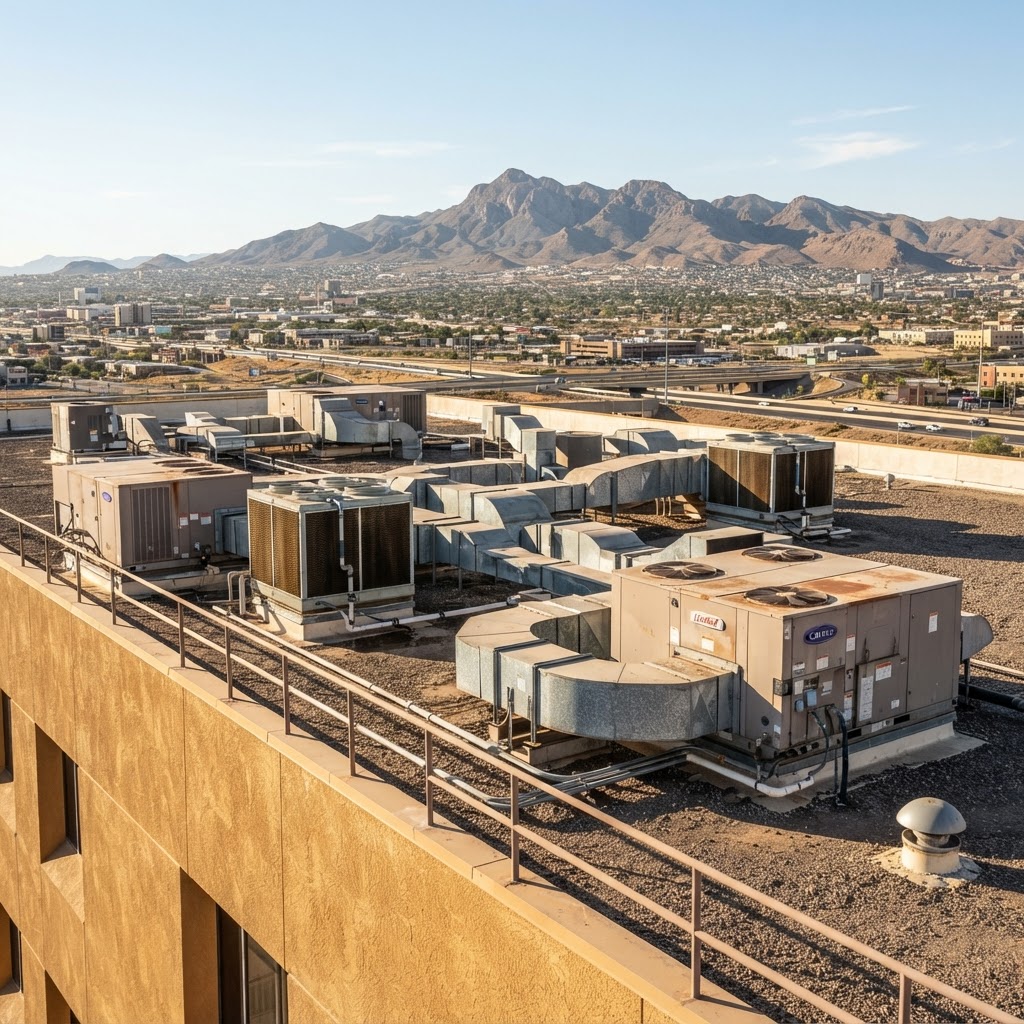
The 2026 HVAC & Facility Maintenance Calendar for El Paso
A month-by-month 2026 HVAC maintenance calendar built for El Paso's desert climate — covering freeze protection, coil cleaning, water treatment, evaporative coolers, and seasonal changeover for commercial facility managers.
10 min read
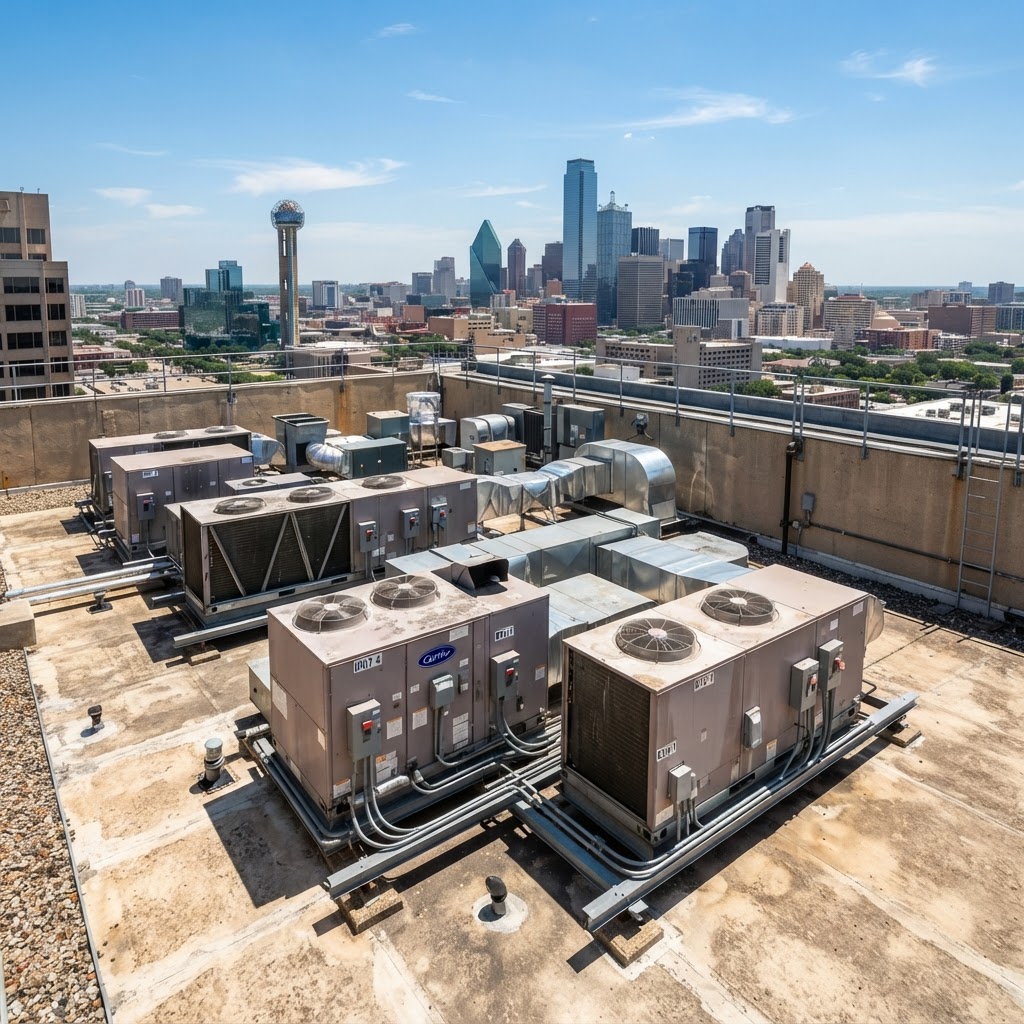
The 2026 HVAC & Facility Maintenance Calendar for Dallas
A month-by-month 2026 HVAC maintenance calendar built for Dallas TX commercial facilities—covering chillers, cooling towers, freeze protection, storm season, and quarterly PM tasks.
9 min read
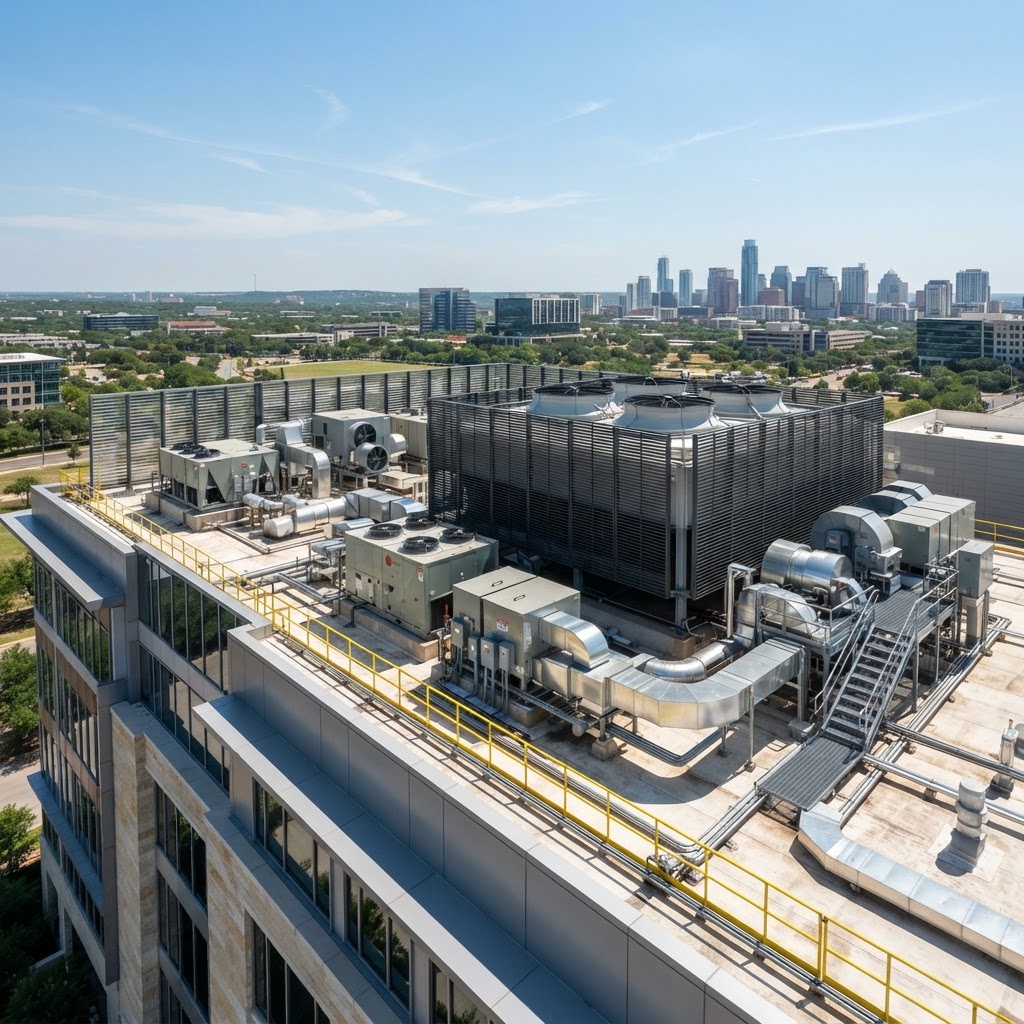
The 2026 HVAC & Facility Maintenance Calendar for Austin
A month-by-month 2026 HVAC maintenance calendar built for Austin's brutal cooling season, hail storms, and rare but damaging freezes — with concrete tasks for every month.
9 min read
Comments (0)
No comments yet. Be the first to comment!