The 2026 HVAC & Facility Maintenance Calendar for San Antonio
San Antonio commercial HVAC systems don't fail randomly—they fail on a schedule dictated by Gulf humidity surges, triple-digit cooling loads, and the annual transition windows when deferred maintenance compounds into breakdowns. If you manage a facility in Bexar County or the surrounding Hill Country corridor, a disciplined 2026 HVAC maintenance calendar is the single highest-leverage document in your operation. Here is how to build one that matches local conditions month by month.
Q1: January – March | Winter Protection and Pre-Season Readiness
January
San Antonio winters are mild until they aren't. A hard freeze event can split copper headers on rooftop units, crack condensate drain pans, and render freeze stats inoperable if they haven't been tested since the previous season. January tasks: test all low-limit freeze stats and economizer damper actuators, verify heat-strip operation on RTUs serving server rooms and data closets, and inspect all exposed condensate and chilled-water piping for insulation integrity. Boiler controls and pressure relief valves deserve a full inspection now, while heating load is at its seasonal peak. Skip freeze-stat testing and you will discover the failure during the one night the temperature drops to 18°F.
February
With cooling season still two months out, February is the correct window for chiller tube cleaning. Scale buildup on evaporator and condenser tubes is the leading cause of chiller efficiency loss in South Central Texas because hard municipal water and high cooling-tower evaporation rates concentrate minerals year-round. Pull tube plugs, eddy-current test if the unit is more than ten years old, and document leaving-water temperatures against manufacturer design. Also replace air-handler filters across the portfolio—MERV upgrades pay back in coil cleanliness all summer. Belt tension and bearing lubrication on AHU fan assemblies should be logged before the extended run season begins.
March
March is your last practical window for economizer inspection and calibration before outdoor conditions make free-cooling irrelevant. Verify damper travel, actuator torque, and enthalpy or dry-bulb sensor accuracy on every rooftop unit equipped with an economizer. A sticking damper left in the open position will flood supply air with humid Gulf air the moment April arrives, driving condensate overflow and coil microbial growth. Complete a full BAS sequence-of-operations verification now: confirm setpoints, occupied/unoccupied schedules, and demand-controlled ventilation logic. March is also when cooling tower basins should receive their first inspection of the year—drain, clean, and inspect fill, nozzles, drift eliminators, and basin heater controls before biological activity accelerates with warming water temperatures.
Q2: April – June | Cooling Season Activation
April
April marks the practical start of mechanical cooling season in San Antonio. Before chillers come online for sustained operation, complete a full refrigerant leak check on all DX equipment per EPA Section 608 requirements, verify chiller oil analysis results from the February service, and confirm that condenser coils on all rooftop and split systems have been cleaned. Dirty condenser coils force compressors to operate at elevated head pressure, accelerating wear that compounds over a six-month cooling season. Initiate or verify water treatment programs for all cooling towers and condenser water loops—biocide dosing schedules, conductivity blowdown setpoints, and corrosion inhibitor concentrations must be established before temperatures climb.
May
Gulf moisture arrives in force by May, and condensate drain pans become a primary failure point. Inspect and flush all drain pans, clear P-trap prime, and treat with pan tablets or biocide to suppress Legionella-friendly biofilm in standing condensate. Evaporator coils on units that serve high-occupancy spaces—healthcare waiting rooms, school gyms, hotel corridors—should receive their first coil cleaning of the season. A fouled evaporator coil in May will carry reduced capacity and elevated discharge air humidity all summer. Replace filters again if any building is in a high-dust or high-pollen zone. Log static pressure drops across coil sections to baseline for August comparison.
June
By June, cooling systems are running at design load or beyond. This is the month for a full mid-season PM inspection: verify refrigerant subcooling and superheat on all DX systems, check compressor amp draws against nameplate, inspect cooling tower drift eliminators and nozzle pattern, and confirm that BAS trending is capturing chilled-water supply and return temperatures, condenser water temperatures, and kW draw. Any chiller or AHU showing degraded performance at 50% of cooling season has the remaining four months to fail catastrophically. Document everything and escalate findings immediately.
Q3: July – September | Peak Load Management
July
July and August are when deferred maintenance becomes emergency service. Tasks this month focus on belt and bearing inspection on all rotating equipment—thermal imaging of motor bearing housings catches developing failures before a seized bearing takes an air handler offline in 104°F heat. Verify expansion valve operation and refrigerant charge on any DX unit showing suction pressure drift. Cooling tower water treatment is not optional: the combination of high evaporation rates, warm basin temperatures, and heavy biological load demands weekly water testing and logged blowdown cycles. A neglected tower in July is a Legionella risk, a chiller efficiency liability, and a regulatory exposure.
August
August is the hardest month on compressors and chiller motors. Run a full chiller plant operational review: compare current kW/ton against design, review BAS alarm logs for short-cycling events, and inspect condenser water pump mechanical seals. If your facility has older centrifugal chillers with inlet guide vanes, verify vane actuator calibration—degraded vane control is invisible to operators but measurable in electric bills. Replace filters in all units for the third cycle of the year. Any condensate overflow stains found during August rounds indicate a drain pan or trap issue that should have been corrected in May.
September
September begins the transition window. Cooling loads start to moderate, but Gulf moisture events can extend humidity stress into early October. This is the month to schedule second evaporator coil cleaning and a full drain pan inspection and treatment pass. Document refrigerant inventory and reconcile any losses against leak-check records from April. Begin procurement planning for any belt, bearing, or refrigerant components that will be needed for the Q4 transition—lead times on some compressor parts and specialty refrigerants have extended in recent years.
Q4: October – December | Seasonal Changeover and Winter Prep
October
October is changeover month. As chilled-water systems approach their seasonal shutdown, perform a cooling tower lay-up: clean basins, apply lay-up biocide or drain and dry depending on facility protocol, inspect fill media for biological fouling or scaling, and service the basin heater if the tower will remain in service for winter cooling of process loads. Decommissioned chillers should have their condenser and evaporator water-side connections flushed. Test boiler ignition controls, flame sensors, and pressure relief devices before heating loads arrive. Confirm glycol concentration in any freeze-protection loops serving rooftop coils or exposed hydronic piping.
November
Heating systems are now primary. Verify heat exchanger integrity on all gas-fired units, inspect flu and venting for blockage or corrosion, and confirm combustion analysis is within manufacturer specification. For facilities with dual-temperature hydronic systems, verify three-way valve changeover sequences in the BAS. Filter replacement is due again—this fourth cycle catches the fall particulate load and prepares coils for the heating season. Test all economizer controls for winter operation where free-cooling is beneficial during mild days.
December
December closes the maintenance year. Conduct a year-end PM documentation review: verify that all scheduled tasks were completed, all refrigerant records are current per EPA requirements, and all water treatment logs are archived. Inspect rooftop unit curbs, panels, and duct connections for weather seal integrity before any cold fronts arrive. Confirm freeze-stat setpoints one more time and verify that heat-trace circuits on exposed piping are energized. Begin planning the 2027 calendar with updated equipment lists and any deferred capital work identified during the year.
What a Compliant PM Calendar Actually Saves
A structured commercial HVAC PM program doesn't eliminate equipment failure, but it systematically removes the conditions that cause premature failure. Clean condenser coils reduce compressor lift and thermal stress on refrigerant circuits. Treated cooling tower water protects chiller tubes from scale that costs efficiency and leads to under-deposit corrosion. Calibrated economizers deliver free cooling hours that reduce compressor runtime. Documented BAS sequence verification catches setpoint drift before it becomes a comfort complaint or an IAQ incident. Facilities that follow a discipline like this don't avoid every emergency—but they convert unpredictable failures into scheduled replacements, they protect warranty coverage, and they give engineering and operations staff the data needed to justify capital requests.
For San Antonio facilities with aging central plants, the margin between a disciplined PM program and reactive maintenance is measured in cooling capacity during a July heat event, in regulatory compliance during a water treatment audit, and in occupant trust that the building will perform when it is needed. MetroKleen | MKMaintX supports commercial facility managers across San Antonio, New Braunfels, Boerne, Schertz, and 35+ states. Reach the service team at 1-888-669-5808 or visit mkmaintx.com to schedule a facility assessment or quarterly PM agreement.
Frequently Asked Questions
Q: How often should commercial HVAC filters be replaced in San Antonio? A: In most commercial buildings in South Central Texas, a quarterly filter replacement cadence—January, May, August, and November—aligns with cooling season activation, peak load, transition, and heating season. High-occupancy or healthcare facilities with higher particulate or pathogen control requirements may warrant a six-week or monthly cycle on critical air-handling units.
Q: Why does cooling tower water treatment matter more in San Antonio than in cooler climates? A: San Antonio's combination of hard municipal water, high evaporation rates during a long cooling season, and warm basin temperatures creates accelerated scale and biological fouling conditions. Calcium carbonate scale on chiller condenser tubes acts as insulation, directly degrading heat transfer efficiency. Warm stagnant water is also a favorable environment for Legionella pneumophila, making consistent biocide dosing and logged blowdown cycles both an efficiency and a public health issue.
Q: When should chiller tubes be cleaned in a San Antonio facility? A: The optimal window is late January through February, after the heating season stabilizes and before sustained mechanical cooling loads begin in April. This timing allows for a full eddy-current inspection if warranted, documentation of baseline leaving-water temperatures, and any necessary repair before the unit is needed at full capacity.
Q: What happens if economizer dampers are not calibrated before cooling season? A: A damper stuck in the open position will introduce uncontrolled outdoor air—humid Gulf air in San Antonio's case—into the supply air stream. This overwhelms latent cooling capacity, elevates supply air dewpoint, drives condensate overflow from drain pans, and promotes microbial growth in AHU cabinets and ductwork. A damper stuck closed wastes potential free-cooling hours and increases compressor runtime unnecessarily.
Q: Do San Antonio commercial buildings really need freeze protection in the HVAC calendar? A: Yes. While extended freezes are infrequent, a single hard freeze event can rupture rooftop coil headers, crack drain pans, and damage exposed condensate and chilled-water piping. Freeze stats, heat-trace circuits, and glycol concentration in exposed hydronic loops must be verified annually—typically in October and again in December—because the failure consequences are disproportionate to the low frequency of the event.
Get a Quote for Your Facility
Tell us where your building is and we'll call you back within 2 business hours. No obligation.
Subscribe to Updates
Get facility maintenance insights delivered
Join our newsletter for expert tips, industry news, and company updates from the MetroKleen | MKMaintX team.
Services That Cover This Work
MetroKleen | MKMaintX handles every trade under one contract — so the fix in this article and the next one call come from the same team.
Preventive programs, RTU & chiller service, 24/7 emergency repair
VIEW SERVICENightly cleaning, day porters, floor care, multi-site programs
VIEW SERVICEPrecision HVAC, humidity control, GMP-compatible cleaning
VIEW SERVICEPanels, wiring, code compliance, emergency power
VIEW SERVICEPipe repair, drain cleaning, backflow prevention
VIEW SERVICELED retrofits, fixture service, emergency lighting
VIEW SERVICELOCAL SERVICE PAGES
Need this work handled? Free assessment, no minimum contract.
Related Posts
AI SELECTED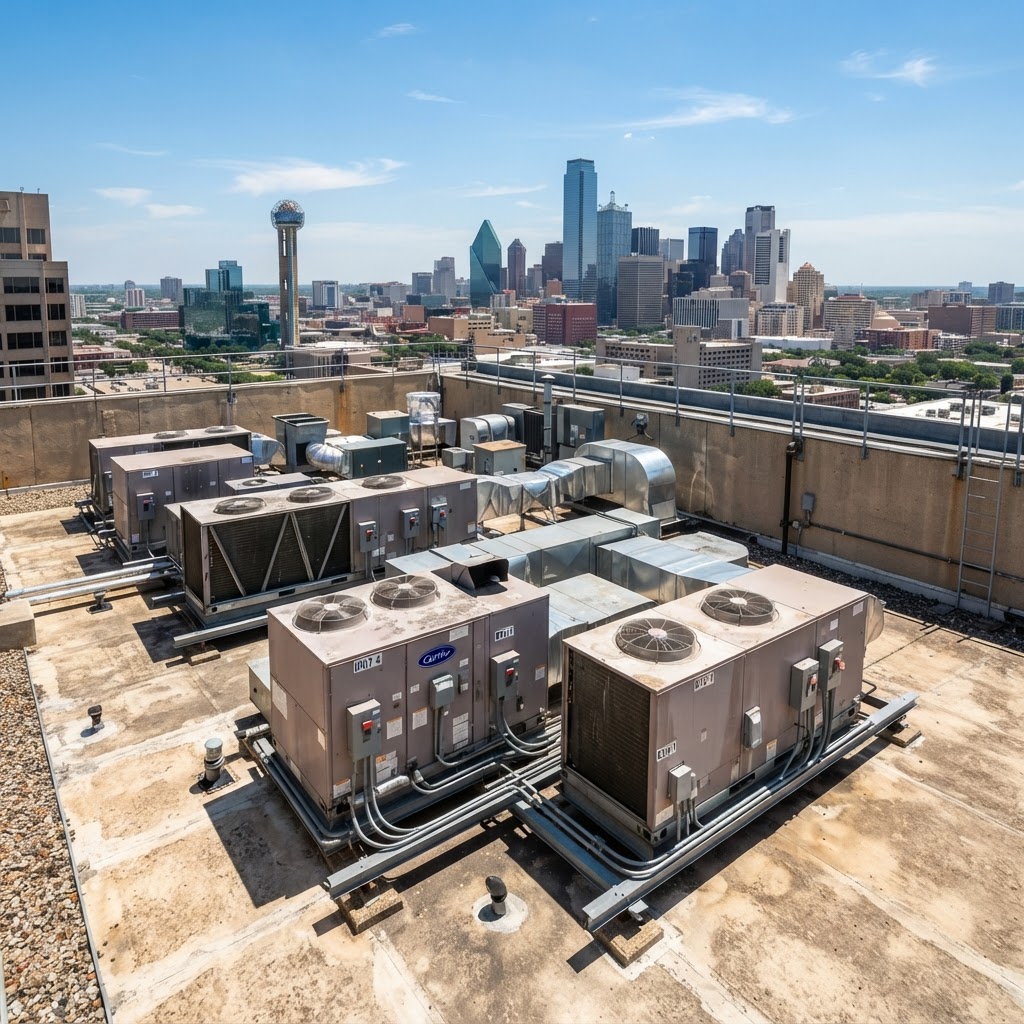
The 2026 HVAC & Facility Maintenance Calendar for Dallas
A month-by-month 2026 HVAC maintenance calendar built for Dallas TX commercial facilities—covering chillers, cooling towers, freeze protection, storm season, and quarterly PM tasks.
9 min read
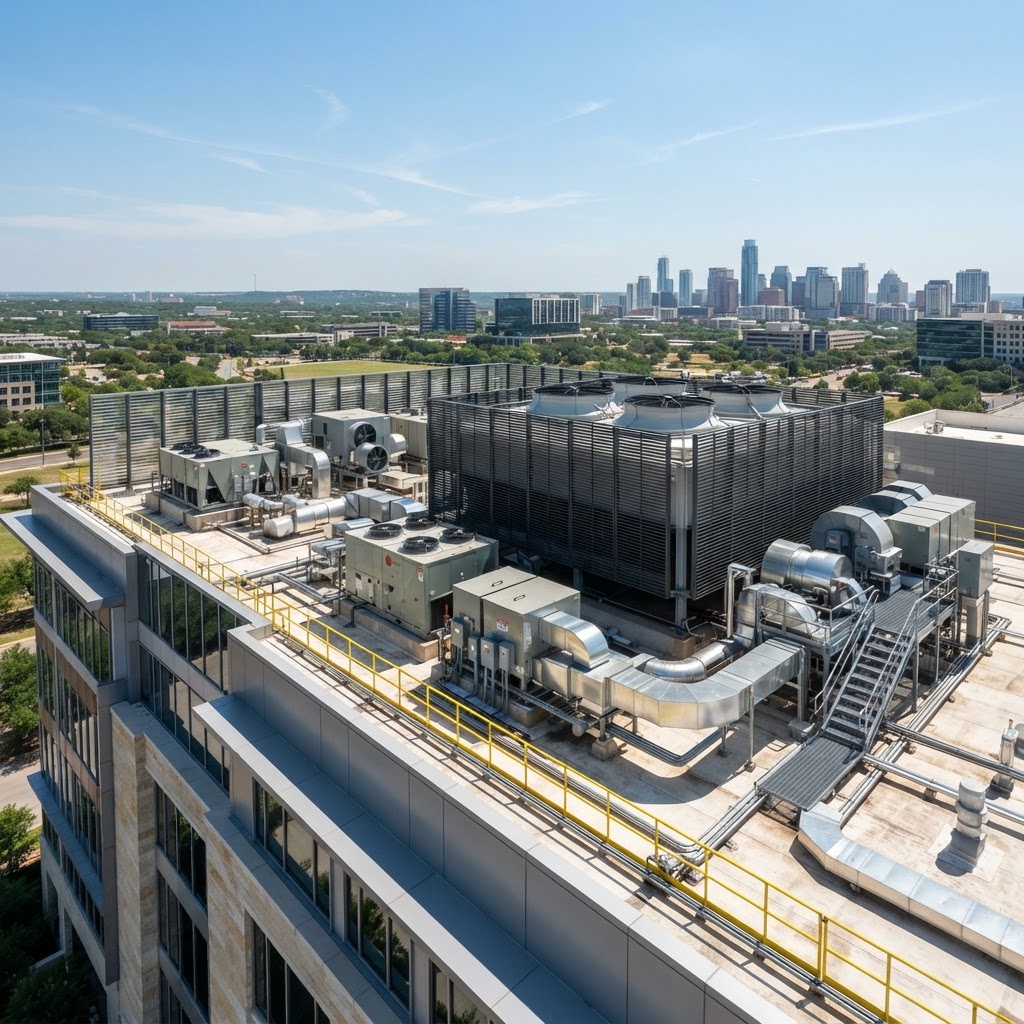
The 2026 HVAC & Facility Maintenance Calendar for Austin
A month-by-month 2026 HVAC maintenance calendar built for Austin's brutal cooling season, hail storms, and rare but damaging freezes — with concrete tasks for every month.
9 min read
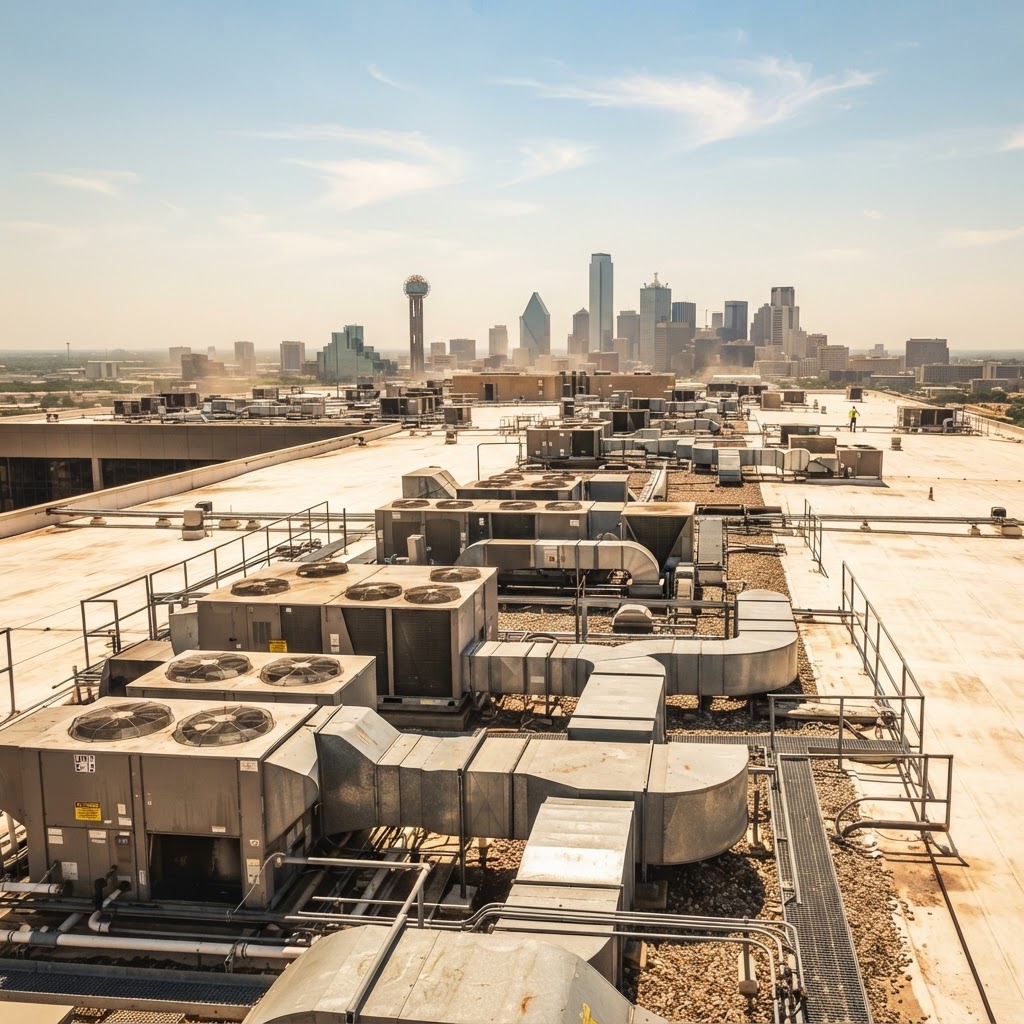
The 2026 HVAC & Facility Maintenance Calendar for the Texas Hub
A month-by-month 2026 HVAC maintenance calendar for Texas facility managers covering freeze protection, cooling season prep, storm recovery, and more.
13 min read
Comments (0)
No comments yet. Be the first to comment!