The 2026 HVAC & Facility Maintenance Calendar for the Rhode Island Hub
Rhode Island commercial HVAC systems fail on a predictable seasonal schedule because the state's compressed geography stacks coastal salt air, rapid temperature swings, legacy building stock, and a short window between cooling shutdown and heating startup into a mechanical calendar that punishes any gap in documentation. A written PM calendar is not a luxury for facility managers in Providence, Warwick, Newport, Cranston, or Woonsocket — it is the only reliable defense against the kind of mid-winter boiler failure or mid-summer compressor burnout that closes buildings and triggers emergency service calls at triple the cost of scheduled work. What follows is a month-by-month framework built around Rhode Island's actual climate, building stock, and code expectations for 2026.
Q1: January – March | Freeze Risk, Heating Peak, and System Stress
January
January is the highest-stakes month on the Rhode Island HVAC calendar. Freeze protection is not optional — exposed condensate lines, rooftop economizer coils, and any glycol loop with degraded concentration are all candidates for a burst that shuts a building down overnight. Begin the month with a glycol concentration test on all hydronic and chilled water loops; the target for coastal Rhode Island sites is typically 35–40% ethylene or propylene glycol by volume, adjusted for the specific system design. Check low-ambient lockout settings on rooftop packaged units so economizers do not introduce subfreezing outside air into occupied spaces during cold snaps.
For Providence mill conversions running legacy steam systems, January means verifying steam trap operation on every trap in the circuit. A failed-open trap wastes thousands of dollars in steam and masks itself as a heating complaint. A failed-closed trap cold-spots an entire zone. Use an infrared thermometer or ultrasonic tester on every trap; document findings by location.
- Inspect unit heater coils and cabinet fin condition on warehouse and industrial sites
- Confirm all BAS heating sequences are active and setpoints reflect occupied/unoccupied schedules
- Check supply fan belts and bearings on AHUs — cold-start tension loss is common after temperature swings
- Verify smoke detector and fire/smoke damper operation in accordance with NFPA 72 and 80 schedules
Skipping January freeze checks is the single most common cause of the emergency service calls MetroKleen MKMaintX receives in late January and early February.
February
February continues heating peak load with the added complication that older rooftop units on Newport and Warwick coastal properties have now been exposed to salt spray for a full winter season. Fastener and cabinet corrosion checks on rooftop units should be completed this month, not deferred to spring, because a compromised cabinet panel can admit moisture into a heat exchanger section — a life-safety issue on gas-fired equipment.
- Perform filter replacements on all AHUs and fan coil units (MERV 8 minimum for general commercial; MERV 13 for healthcare and lab spaces)
- Test heat exchanger integrity on gas furnaces and rooftop units; carbon monoxide infiltration into occupied space is the failure mode if this is skipped
- Inspect condensate drain pans for standing water or biological growth even in heating season — humidity from ventilation still generates condensate in mixed-mode operation
- Verify boiler water treatment chemistry and blowdown logs
March
March in Rhode Island brings the first shoulder-season temperature swings — 55°F one day, 28°F three days later. Economizer controls must be verified for proper damper modulation because this is when a stuck-closed economizer wastes energy and a stuck-open economizer freezes a coil. Test damper actuators manually and through BAS command; document stroke range and response time.
- Begin planning cooling tower startup procedures for April (chemical cleaning, basin inspection, drift eliminator check)
- Schedule chiller pre-season inspection — oil analysis, refrigerant charge verification, compressor amp draw baseline
- Complete any deferred winter repairs before heating systems are taken off-line
- For universities and hospitals: verify redundancy and standby equipment readiness before shoulder-season transition
Q2: April – June | Cooling Startup, Coil Cleaning, and Condensate Season
April
April is the most labor-intensive month on the calendar. Condenser coil cleaning should be completed before the first sustained cooling demand, which in Rhode Island typically arrives in May. For Newport and Warwick coastal sites, coils accumulate salt deposits that reduce heat transfer efficiency and accelerate aluminum fin corrosion; a dedicated coil cleaner appropriate for aluminum, not an acid wash, is the correct procedure.
- Cooling tower startup: drain and flush basin, inspect fill media for scaling or biological fouling, test drift eliminators, verify makeup water valve operation, establish baseline water treatment program (biocide, corrosion inhibitor, scale inhibitor)
- Chiller startup sequence: verify refrigerant charge, check all leak points with electronic detector, confirm oil level and pump operation, test safety cutouts and high-pressure controls
- Replace filters at start of cooling season
- Test condenser fan motors for correct amperage and rotation direction
- Inspect rooftop cabinet fasteners and apply corrosion-inhibiting coatings on coastal-site equipment
May
By May, cooling systems need to be fully commissioned and documented. Refrigerant leak checks using an electronic leak detector should cover all accessible service valves, fittings, and coil circuits. Any system showing refrigerant loss should be repaired and recharged in compliance with EPA Section 608 requirements — do not simply add refrigerant without locating the leak source.
- Verify BAS cooling sequences: supply air temperature reset, economizer changeover, demand-controlled ventilation if equipped
- Inspect and clean evaporator coils on split systems and air handlers
- Test drain pan float switches and condensate pumps; a failed condensate pump in summer floods a ceiling and triggers mold remediation
- Begin monthly cooling tower water treatment logs — document biocide dosing, pH, conductivity, and blowdown frequency
June
June brings Rhode Island's coastal humidity surge. Drain pan and condensate management becomes critical: inspect drain pans weekly in high-humidity buildings such as labs, healthcare facilities, and food service. Check condensate trap sizing on chilled water AHUs — an undersized or misconfigured trap floods the drain pan.
- Perform belt tension and bearing lubrication checks on all belt-driven AHUs and cooling tower fans
- Verify economizer lockout at high outdoor humidity; most RI codes and ASHRAE 90.1 compliance require lockout above roughly 75°F dewpoint
- Document all refrigerant charge baselines for comparison at end-of-season
- For healthcare and education: test emergency generator HVAC transfer sequences before summer peak load
Q3: July – September | Peak Cooling, Coil Corrosion Season, and Mid-Season Checks
July
July is the peak corrosion month for coastal Rhode Island equipment. Condenser coil inspections on Newport and Warwick rooftops should be repeated; a single summer storm can deposit enough salt to measurably reduce fin efficiency. Apply coil coating if bare aluminum is visible from previous corrosion loss. Check rooftop unit fasteners and gaskets for evidence of water intrusion.
- Mid-season filter replacement for high-occupancy buildings
- Verify cooling tower blowdown rates are keeping conductivity within the treatment program's target range
- Inspect chiller operating logs for trend deviations in approach temperature, compressor amp draw, or condenser water temperature — early detection of fouling or refrigerant loss avoids a mid-summer compressor failure
August
August is the highest-load cooling month and the worst time for an unplanned outage. The goal is to have zero deferred maintenance items on primary cooling equipment.
- Perform full cooling tower inspection: re-test water chemistry, inspect distribution nozzles for plugging, verify fan blade pitch and motor amp draw
- Check all VFD drives on AHUs and pumps for fault logs and filter cleaning
- Inspect rooftop drain and overflow scuppers — summer thunderstorm loads can overwhelm a partially blocked drain and flood a roof deck
- Healthcare and lab facilities: verify 24/7 temperature and humidity alarm logging is current and alarm contacts are functional
September
September is the transition month. Cooling loads begin to drop but the systems must stay ready through warm periods while heating startup planning begins in parallel.
- Schedule boiler annual inspection and startup for October — do not wait until November
- Begin steam trap survey refresh for Providence mill and industrial sites
- Test economizer controls again for fall shoulder-season accuracy
- Order replacement filters, belts, and consumables for the heating season
Q4: October – December | Heating Startup, Freeze Prep, and Year-End Documentation
October
Heating readiness must be complete before the third week of October in Rhode Island. A late-season cold snap before a boiler or furnace has been inspected, started, and load-tested is the most avoidable failure on the calendar. October is the month to:
- Complete boiler annual inspection: heat exchanger integrity, burner combustion analysis, safety valve test, low-water cutoff function, controls calibration
- Start and verify all hydronic and steam heating circuits
- Test unit heaters in warehouses and garages before overnight temperatures drop below 40°F
- Replace air filters at the start of heating season
- Perform economizer damper inspection for fall/winter operation
- Apply freeze protection measures: heat trace inspection, glycol re-test, drain and isolate any seasonal outdoor equipment
November
November in Rhode Island means heating is the primary system and any cooling equipment that is not winterized is a freeze risk. Cooling tower winterization should be complete: drain basin, blow out distribution piping if applicable, verify basin heater operation if the tower is year-round, and lock out the tower from automatic start.
- Confirm low-ambient lockout on all rooftop units is set and tested
- Inspect roof penetrations and curb flashings — winter moisture infiltration damages insulation and promotes corrosion on rooftop equipment bases
- Verify BAS heating sequences and night setback programs are active
- For coastal Newport and Warwick sites: inspect any exposed refrigerant line insulation for deterioration that allows condensation and freeze damage
December
December is the documentation and verification month. Every PM visit completed in 2026 should be logged, and any open deficiencies tracked against a corrective action record. Smaller buildings with no on-site engineer rely entirely on the contractor's documentation as the legal and operational record of what was inspected.
- Conduct year-end system performance review against baseline data collected in April and May
- Verify all safety control test records are complete for fire/smoke dampers, CO detection, and emergency ventilation
- Begin scheduling Q1 2027 PM visits to avoid the January backlog
- Confirm water treatment service records for cooling towers and boilers are complete for the calendar year
What a Compliant PM Calendar Actually Saves
A documented maintenance calendar does not guarantee against equipment failure, but it creates conditions where failures are predictable, detectable early, and contained. Coil cleaning at the right intervals extends fin-and-tube heat exchanger life materially — coastal Rhode Island equipment that goes three or more years without cleaning and coating can corrode through aluminum fins entirely, requiring coil replacement rather than cleaning. Boiler heat exchanger inspections completed annually catch stress cracks before they become carbon monoxide events. Bearing and belt replacements done on a scheduled interval cost a fraction of the motor or fan shaft damage that results from running to failure. Beyond individual components, a written calendar with service records is the asset documentation that supports capital planning, insurance audits, and in some Rhode Island healthcare and education facilities, regulatory inspections. It is also the record that demonstrates due diligence if a system failure causes property damage or a health complaint.
Frequently Asked Questions
Q: How many PM visits per year does a typical Rhode Island commercial building need? A: Most commercial buildings require a minimum of four visits annually — one per quarter — but coastal sites in Newport and Warwick with salt-exposed rooftop equipment, buildings with cooling towers, and healthcare or laboratory facilities typically need six to twelve service touches per year when water treatment, mid-season coil checks, and filter changes are included.
Q: When should heating startup be completed in Rhode Island? A: Heating system startup — including boiler inspection, burner commissioning, and hydronic circuit verification — should be complete no later than the second week of October. Rhode Island's first hard freeze risk typically arrives in late October, and any system that has not been inspected and load-tested before that point is operating on borrowed time.
Q: Does a coastal location in Warwick or Newport really require different maintenance than a Providence inland site? A: Yes, in practice. Salt-laden air accelerates aluminum fin corrosion on condenser and evaporator coils, degrades cabinet coatings, and attacks fasteners and cabinet gaskets at a measurably faster rate than inland sites. Coastal sites warrant coil cleaning and coating at shorter intervals, dedicated fastener inspections, and more frequent cabinet seal checks to prevent moisture intrusion.
Q: What is the most commonly skipped task that leads to emergency HVAC calls in Rhode Island? A: Condensate drain pan and pump maintenance. In humid summer months, a failed condensate pump or a blocked drain line floods a ceiling plenum within hours. This task is low-cost, takes minutes per unit, and is skipped more often than any other line item on a PM checklist.
Q: How do I schedule PM services that cover both legacy steam systems and modern rooftop equipment in the same building? A: The visit structure needs to be planned in advance with a contractor that has documented experience with both system types. A single quarterly visit can cover both if the technician is qualified and the scope is written out in advance. MetroKleen MKMaintX serves Providence mill conversions and modern commercial stock across Rhode Island and 35+ states — call 1-888-669-5808 or visit mkmaintx.com to build a site-specific scope that covers every system in your building.
Get a Quote for Your Facility
Tell us where your building is and we'll call you back within 2 business hours. No obligation.
Subscribe to Updates
Get facility maintenance insights delivered
Join our newsletter for expert tips, industry news, and company updates from the MetroKleen | MKMaintX team.
Services That Cover This Work
MetroKleen | MKMaintX handles every trade under one contract — so the fix in this article and the next one call come from the same team.
Preventive programs, RTU & chiller service, 24/7 emergency repair
VIEW SERVICENightly cleaning, day porters, floor care, multi-site programs
VIEW SERVICEPrecision HVAC, humidity control, GMP-compatible cleaning
VIEW SERVICEPanels, wiring, code compliance, emergency power
VIEW SERVICEPipe repair, drain cleaning, backflow prevention
VIEW SERVICELED retrofits, fixture service, emergency lighting
VIEW SERVICELOCAL SERVICE PAGES
Need this work handled? Free assessment, no minimum contract.
Related Posts
AI SELECTED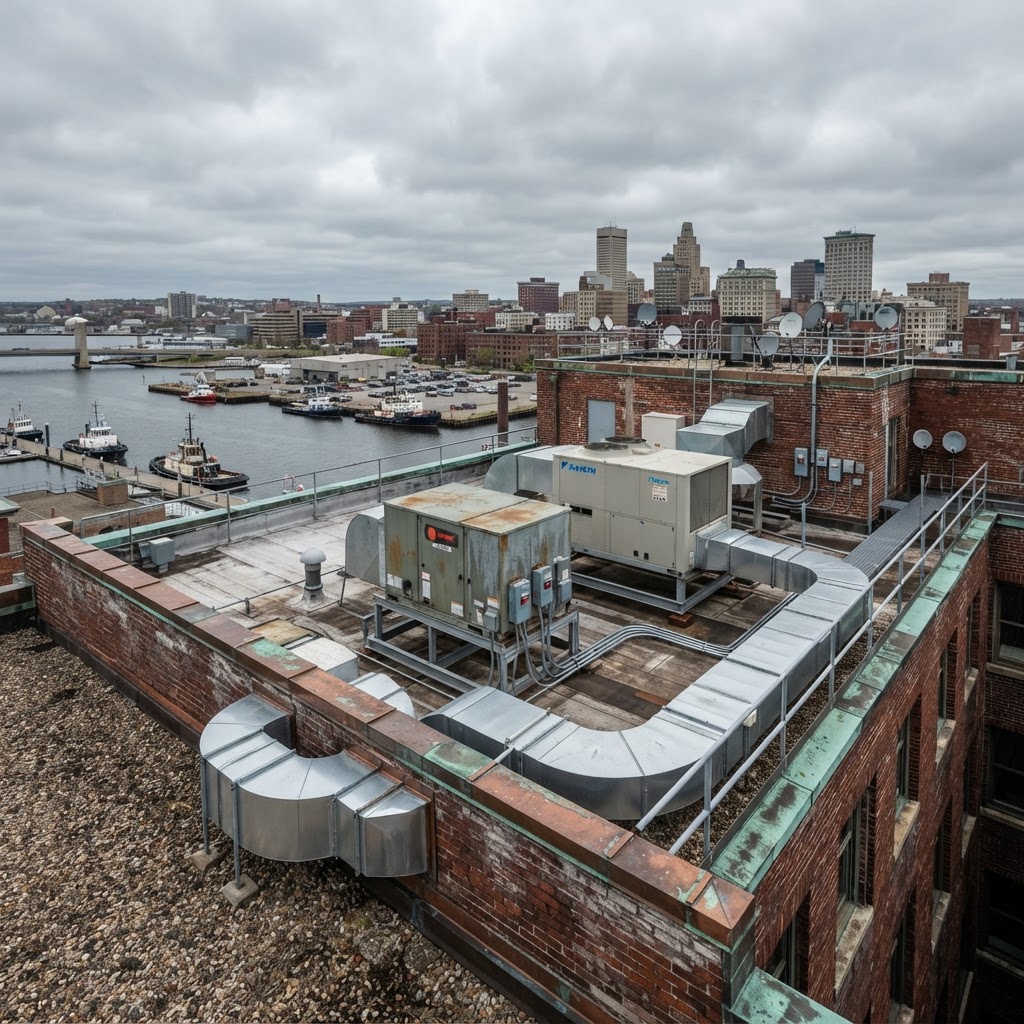
The 2026 HVAC & Facility Maintenance Calendar for Providence
A month-by-month 2026 HVAC maintenance calendar for Providence RI commercial buildings — covering freeze protection, coil cleaning, boiler and chiller PM, water treatment, and seasonal changeover.
10 min read
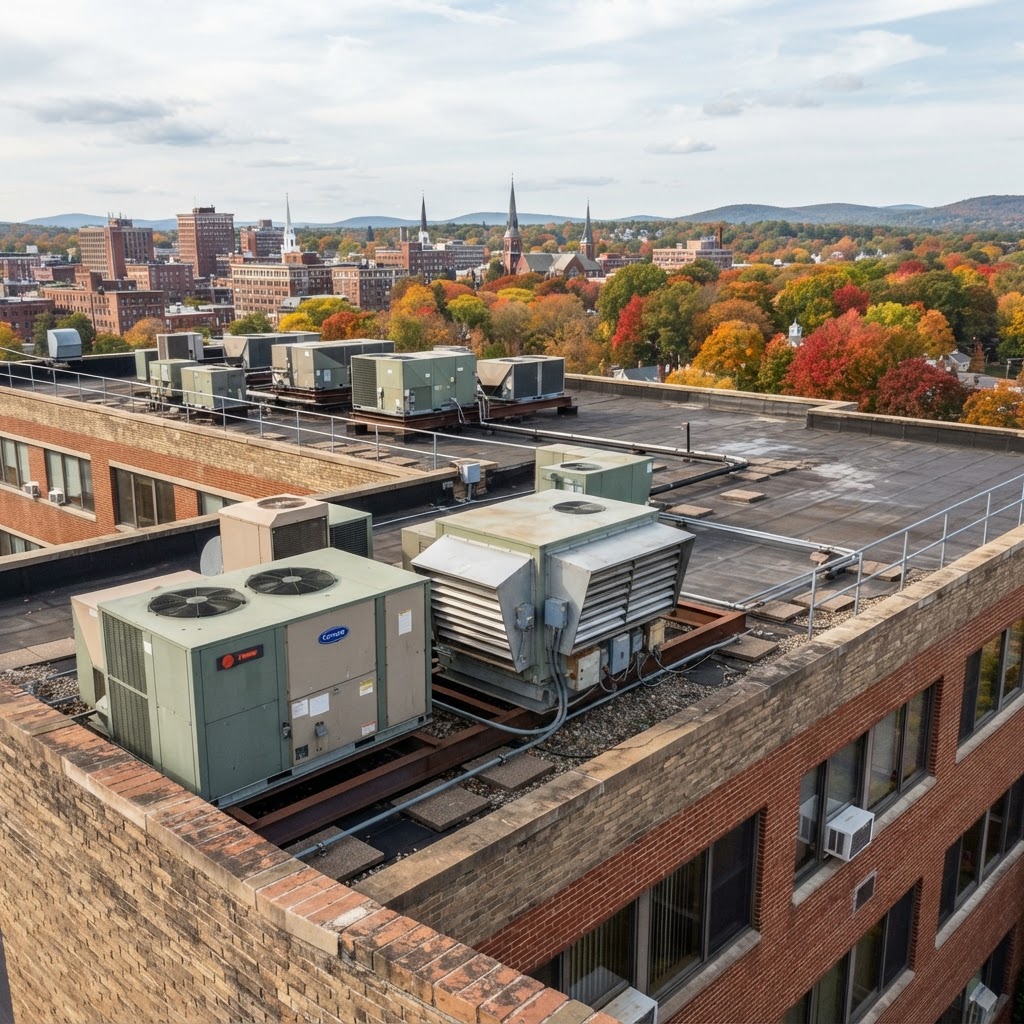
The 2026 HVAC & Facility Maintenance Calendar for the Massachusetts Hub
A month-by-month 2026 HVAC maintenance calendar for Massachusetts facility managers — boilers, chillers, steam, coils, and compliance all on one schedule.
11 min read
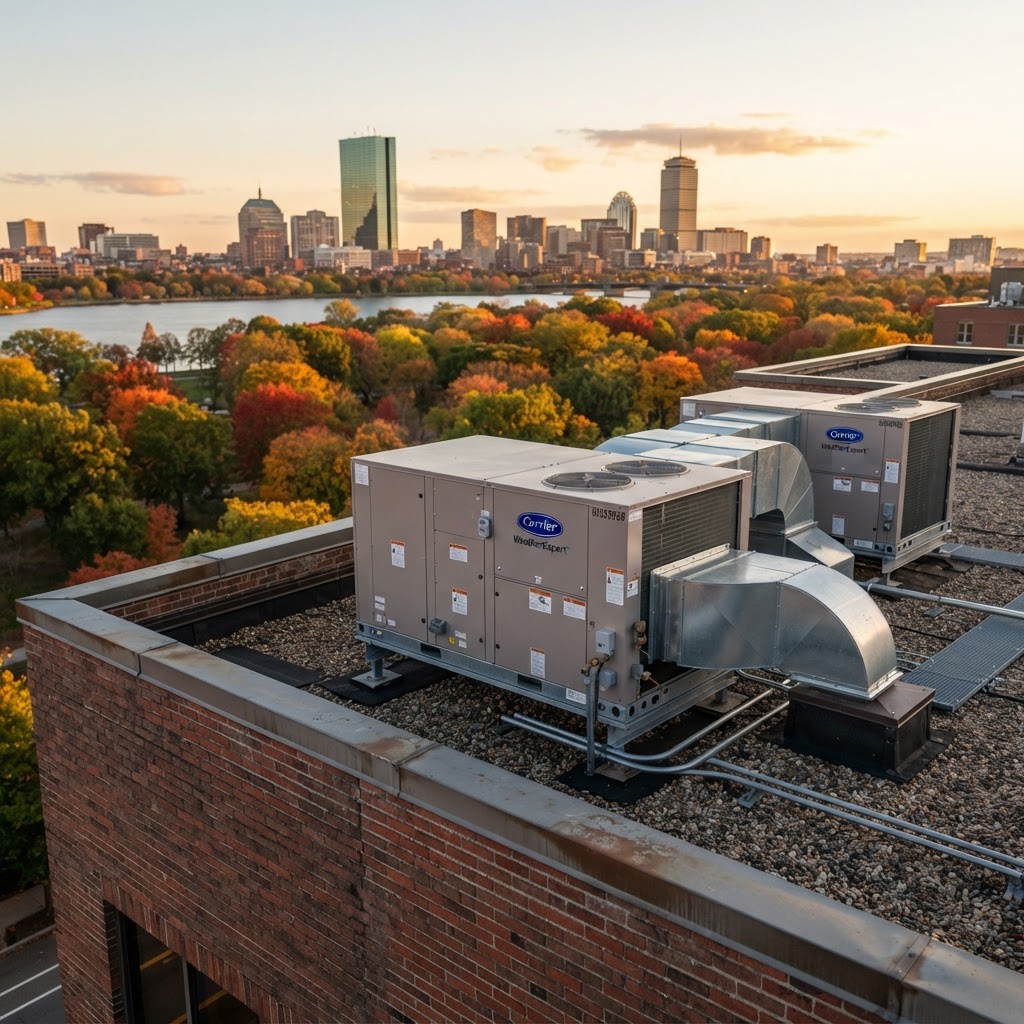
The 2026 HVAC Maintenance Calendar for the New England Hub
A month-by-month 2026 HVAC maintenance calendar for New England commercial facility managers — covering Boston, Manchester NH, Hartford CT, Providence RI, and Worcester. Quarterly PMs, seasonal changeover, freeze protection, cooling tower startup, boiler service, and more.
12 min read
Comments (0)
No comments yet. Be the first to comment!