The 2026 HVAC & Facility Maintenance Calendar for the New Jersey Hub
New Jersey commercial buildings fail on a predictable mechanical schedule because the climate demands two complete seasonal transitions every year, and most facilities miss at least one of them. A boiler that hasn't been serviced since last spring, a chiller started without a leak check, or a cooling tower left chemically untreated through a humid August are not bad luck—they are calendar failures. A written 2026 HVAC maintenance calendar converts that risk into a managed workflow.
Q1: January – March | Deep Winter Heating Reliability
January
January is the month New Jersey heating systems are asked to perform at maximum load with minimum margin. Boilers should already be commissioned from October, but January demands a mid-season inspection: burner combustion analysis, flue gas temperature verification, low-water cutoff test, and heat exchanger inspection for fireside fouling or waterside scale. For pharmaceutical and life-science campuses where validated clean-steam or process heating loops run continuously, check pressure-reducing valves, steam traps, and condensate return conductivity. Any trap blowing through wastes energy and destabilizes validated temperature profiles.
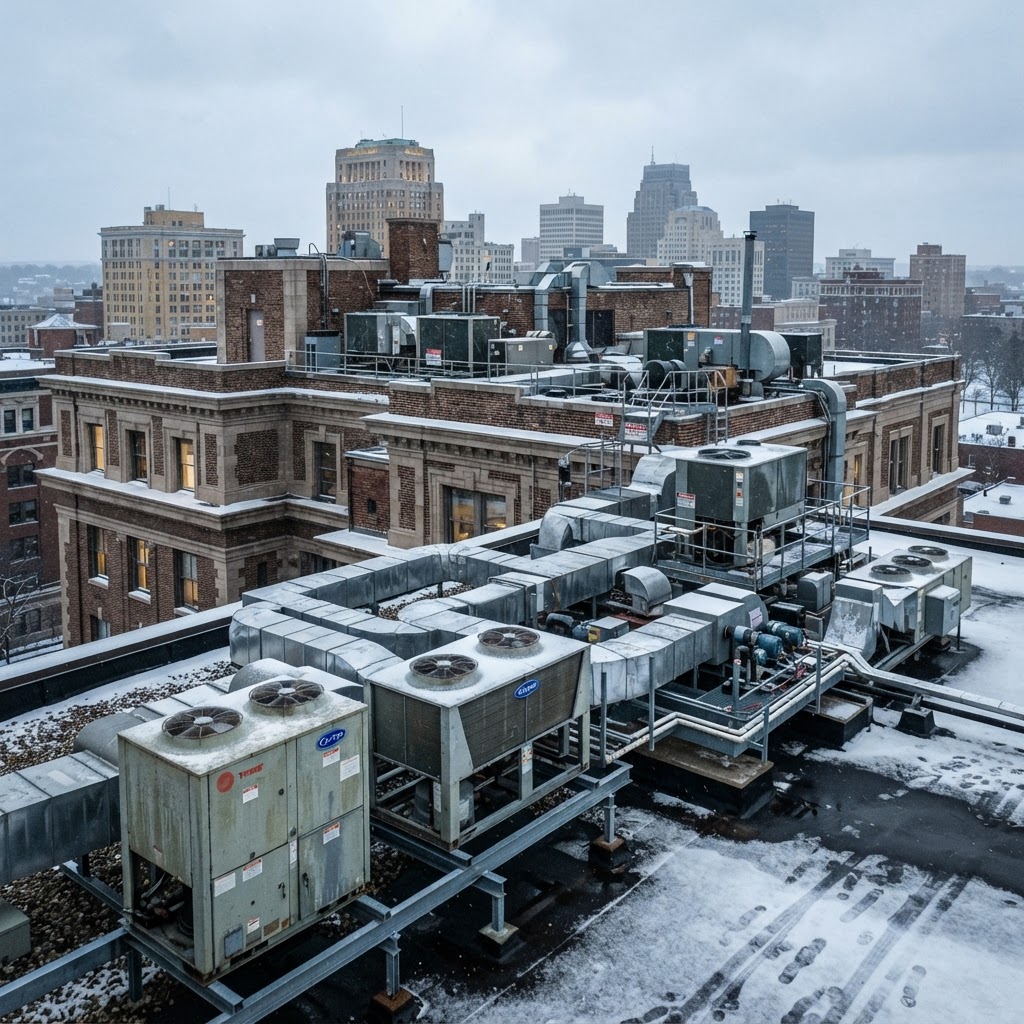
Rooftop unit freeze protection is a January priority. Inspect heat-tape continuity on condensate drain pans and lines. Verify low-ambient lockout controls are set correctly—units should not run economizer or compressor cycles in ambient temperatures where coil freeze is possible. For Newark and Jersey City high-rises with rooftop penthouse mechanical rooms, confirm vestibule heaters and pipe heat trace on exposed domestic and hydronic risers are functional.
For warehouse and industrial clients: unit heater filters, burner ignition electrodes, and gas valve operation checks belong on the same January visit. High-bay heaters running with degraded heat exchangers are a carbon monoxide risk, not just an efficiency loss. Confirm dock seal heaters and door curtains are operational—dock infiltration is the single largest heating load variable in distribution facilities.
Skipping January boiler inspection risks mid-winter combustion failure, nuisance lockouts, and unplanned emergency service at premium rates during the highest-demand period of the year.
February
February focuses on freeze protection verification and filter replacement. Coil freeze damage in rooftop units and air handlers occurs most often in February when overnight lows drop below 10°F and economizer dampers fail to close fully. Manually stroke all outdoor air dampers and verify actuator torque and end-switch feedback in the BAS. A damper that reads "closed" in the BAS but is actually at 15% open will freeze a chilled water coil or AHU preheat coil during a cold snap.
Replace or inspect MERV-13 and higher filters in healthcare and lab environments—these should be on a 60–90 day cycle in winter due to lower outdoor air dilution and higher indoor pathogen loads. Standard commercial office buildings running MERV-8 to MERV-11 should be assessed for loading; a clogged filter increases static pressure, reduces airflow, and stresses fan motors.
Dry coolers and fluid coolers serving data centers, process cooling, or emergency generator heat rejection need glycol concentration verification in February. Test with a refractometer, not a float-type tester. Concentration drift happens through pump seal weeping and is invisible until a coil freezes.
For South Jersey and coastal Hudson County facilities, check condensate drain pans in any unit running economizer hours—even in winter, humid coastal air can produce unexpected condensate that freezes in drain lines.
March
March is the transition month—heating is still primary, but pre-cooling season work begins. Commission economizer calibration: verify enthalpy or dry-bulb sensors, actuator stroke, and BAS high-limit lockout setpoints. An economizer that stays open into summer wastes cooling energy; one that never opens wastes economizer hours during the 55–65°F swing days New Jersey delivers in April and May.
Inspect belt-driven fans: measure belt tension and deflection, inspect sheave grooves for wear, and check bearing temperature with an infrared thermometer. March is the last low-risk month to replace a worn belt before cooling season load arrives. Schedule bearing lubrication on all non-sealed motor and fan shaft bearings per manufacturer intervals.
For cooling towers that were winterized, begin pre-start inspection: inspect basin for sediment, check drift eliminators, inspect fill media for biological fouling, and test makeup water valves. Do not fill towers until ambient temperatures are consistently above 40°F and the water treatment program is ready to dose on day one.
Q2: April – June | Pre-Cooling Commissioning and Spring Cleaning
April
April is the single most important month on the New Jersey commercial HVAC calendar. Everything installed for cooling season must be inspected, tested, and documented before the first heat wave—which in New Jersey can arrive as early as Memorial Day weekend.
Chiller pre-start is the April priority. For centrifugal and screw chillers, verify oil level and quality, check refrigerant charge and leak-test high-side and low-side circuits with an electronic detector, verify condenser water flow rates, inspect variable frequency drive (VFD) cooling fans, and confirm BAS integration for chilled water setpoint reset. Log refrigerant weight if the system is subject to EPA Section 608 recordkeeping requirements—refrigerant logs are an inspection item for both EPA and NJ DEP audits at pharmaceutical and chemical facilities.
Coil cleaning—pass one of two for the year. Spring pollen in New Jersey begins in earnest in late March and peaks through May. Condenser coils on rooftop units and condensing units accumulate cottonwood, pollen, and particulate rapidly. Clean with low-pressure water from the inside out; document coil face condition before and after. Dirty condenser coils raise condensing temperature, reduce capacity, increase compressor amperage, and accelerate compressor wear.
For cooling towers: complete basin cleaning, refill, and introduce biocide treatment before first recirculation. NJ cooling tower registration and Legionella water management plan (WMP) compliance under ASHRAE 188 requires that towers be documented and treated before startup. This is not optional for NJ healthcare facilities and is increasingly enforced for commercial office buildings.
May
May is the changeover and BAS sequence verification month. Switch hydronic systems from heating to cooling mode: verify changeover valve operation, pump rotation direction after any winter work, and differential pressure setpoints. For variable-air-volume (VAV) systems, test representative terminal boxes for damper stroke, reheat coil operation, and calibration against design CFM.
Inspect roof drains and overflow drains. Spring storms arrive with intense rainfall and spring debris. A blocked primary drain with a non-functional overflow drain on a New Jersey flat commercial roof creates structural ponding risk. Combine this with the rooftop HVAC inspection to keep one crew on the roof.
For warehouse and industrial: switch destratification fans to summer cooling mode, inspect exhaust fan louvers and belt drives, and verify dock exhaust systems for proper makeup air balance. A negative-pressure warehouse in summer draws uncontrolled hot, humid air through every door gap and dock seal.
June
June is the final commissioning check before peak cooling demand. Measure and document supply air temperatures, chilled water delta-T, and condenser water temperatures for all major systems. Establishing a June baseline is essential for identifying performance degradation in August without guessing.
Verify refrigerant leak checks on all DX equipment, document superheat and subcooling readings, and check condensate drain pan slope and drain line clearance. In coastal South Jersey and Hudson River corridor buildings, condensate production in June can be significant—a partially blocked drain in June becomes a flooded ceiling in July.
Replace filters across all facilities on the June schedule. High-humidity outdoor air increases biofilm growth on MERV-13 and higher media; lab and healthcare filters should be on 60–90 day rotation regardless.
Q3: July – September | Cooling Peak and Storm Response
July
July is maximum load month. The only acceptable July activity is monitoring and response, not discovery. BAS trending should be reviewed weekly: chilled water supply temperature deviation, compressor amp trending, cooling tower approach temperature, and condenser water conductivity. Any degradation identified in June should be corrected before July 4th weekend.
Cooling tower water treatment requires weekly blowdown verification and biocide dosing confirmation. Warm summer temperatures and high evaporation rates concentrate minerals and accelerate biological growth. For pharmaceutical campuses with open-loop process cooling, conductivity and pH logs are a GMP requirement.
For industrial and warehouse: monitor high-bay unit cooler and exhaust fan operation continuously. Heat stress risk for workers in un-air-conditioned facilities is a real liability. Confirm that all evaporative or mechanical cooling systems identified in the spring are functional.
August
August brings the peak humidity load and the highest probability of compressor failure from refrigerant system stress. Mid-season refrigerant checks on units showing any capacity loss should be completed in early August, not after a call-back. Check condenser coil cleanliness again—a second cleaning may be warranted for rooftop units near highways, industrial areas, or in South Jersey coastal zones with salt-laden air.
For cooling towers: inspect drift eliminators and fill for biological fouling. August is the highest-risk month for Legionella amplification in improperly maintained towers. Document all water treatment chemistry.
September
September is the pre-heating readiness month. As cooling loads drop, begin boiler pre-season inspection: fire the boiler in test mode, verify burner operation, test safety controls, and service the annual combustion tune-up before heating demand begins. Order any replacement parts—heat exchangers, ignition assemblies, gas valves—before October shortages occur.
Complete second-pass coil cleaning for AHUs and rooftop units before economizer season. September in New Jersey delivers significant economizer hours; a clean coil and verified damper sequence captures free cooling energy efficiently.
Q4: October – December | Heating Commissioning and Winter Preparation
October
Heating must be fully commissioned by October 15. New Jersey can deliver a hard freeze before Halloween. Complete boiler startup, verify heating water supply setpoint reset sequences, test radiation and terminal unit valves, and confirm BAS heating-mode changeover. For steam systems, verify steam pressure reducing stations and survey all steam traps.
For rooftop units: install or verify low-ambient controls, confirm heat section operation, and test defrost cycles on heat pumps. Drain and winterize any cooling equipment that will not operate through winter—condensate lines, outdoor coil drain pans, and makeup water lines to cooling towers.
November
November focuses on freeze protection commissioning and facility envelope. Confirm heat trace operation on all exposed piping, domestic water risers in mechanical rooms, and cooling coil condensate drain pans. Verify glycol concentration in all fluid systems.
For warehouse and industrial: confirm dock heater functionality and door seal integrity before winter freight volumes increase. Unit heater filter replacement and burner service belong on the November PM visit.
December
December is the documentation and planning month. Compile all PM records, refrigerant logs, water treatment reports, and filter change logs for the calendar year. For pharmaceutical and healthcare facilities, this documentation supports regulatory compliance and internal audit cycles.
Begin planning the 2027 capital project list: identify equipment approaching end of useful life, note any recurring failures, and submit budget requests based on documented performance data rather than estimates.
What a compliant PM calendar actually saves
A consistently executed preventive maintenance calendar extends compressor, boiler heat exchanger, and cooling tower fill life toward or beyond rated service intervals. Compressors that are operated with clean coils, correct refrigerant charge, and verified superheat simply run longer. Boilers with annual combustion tune-ups maintain thermal efficiency and avoid premature heat exchanger replacement. Cooling towers with documented water treatment programs avoid costly basin and fill replacement from biological and scale damage.
Beyond asset life, a written calendar creates the documentation trail required for NJ cooling tower registration compliance, EPA refrigerant records, pharmaceutical GMP facility audits, and LEED or ENERGY STAR ongoing certification. A facility that cannot produce PM records during an inspection has a compliance problem, not just a maintenance problem.
Finally, planned PM visits reduce emergency service calls—the most expensive, most disruptive, and least controllable maintenance event a facility manager faces. A July compressor failure in a pharmaceutical clean room or a January boiler failure in a Newark high-rise is not just an equipment cost; it is an operations, tenant, and liability event.
Frequently Asked Questions
Q: How many PM visits per year does a typical New Jersey commercial building require? A: Most commercial office, retail, and industrial buildings benefit from four quarterly PM visits with filter changes on 60–90 day cycles for critical environments and 90–120 day cycles for standard commercial. Facilities with cooling towers, chillers, or pharmaceutical-grade HVAC typically require six or more visits annually to meet water treatment, refrigerant recordkeeping, and validated environment requirements.
Q: When should cooling towers be registered in New Jersey? A: New Jersey requires cooling tower owners to register their towers with the NJ Department of Health and maintain a Legionella water management plan compliant with ASHRAE 188. Registration and WMP documentation should be current before spring startup—April is the latest responsible point to have this in place before seasonal operation begins.
Q: What is the biggest HVAC mistake New Jersey facility managers make in October? A: Delaying heating commissioning past mid-October. New Jersey heating seasons can begin abruptly. A boiler or rooftop heating section that hasn't been serviced since the prior spring may fail during the first sustained cold event, leaving a facility without heat during the period when service technicians are most in demand and lead times on parts are longest.
Q: Does a warehouse or distribution facility need the same PM calendar as an office building? A: The tasks differ but the calendar structure is the same. Warehouses prioritize unit heaters, dock equipment, exhaust and makeup air systems, and destratification fans over chilled water and precision cooling. The advantage of a single-provider PM contract is that one crew handles rooftop HVAC, high-bay heaters, dock exhaust, and compressed air dryer checks in one site visit, reducing scheduling complexity and total labor cost.
Q: How do I get a customized HVAC maintenance calendar for my New Jersey facility? A: MetroKleen | MKMaintX serves commercial and industrial facilities across Newark, Jersey City, Bergen County, Central Jersey, Princeton, South Jersey, and 35+ states. Contact the team at 1-888-669-5808 or visit mkmaintx.com to schedule a facility assessment and receive a site-specific PM calendar based on your equipment inventory, occupancy type, and compliance requirements.
Get a Quote for Your Facility
Tell us where your building is and we'll call you back within 2 business hours. No obligation.
Subscribe to Updates
Get facility maintenance insights delivered
Join our newsletter for expert tips, industry news, and company updates from the MetroKleen | MKMaintX team.
Services That Cover This Work
MetroKleen | MKMaintX handles every trade under one contract — so the fix in this article and the next one call come from the same team.
Preventive programs, RTU & chiller service, 24/7 emergency repair
VIEW SERVICENightly cleaning, day porters, floor care, multi-site programs
VIEW SERVICEPrecision HVAC, humidity control, GMP-compatible cleaning
VIEW SERVICEPanels, wiring, code compliance, emergency power
VIEW SERVICEPipe repair, drain cleaning, backflow prevention
VIEW SERVICELED retrofits, fixture service, emergency lighting
VIEW SERVICELOCAL SERVICE PAGES
Need this work handled? Free assessment, no minimum contract.
Related Posts
AI SELECTED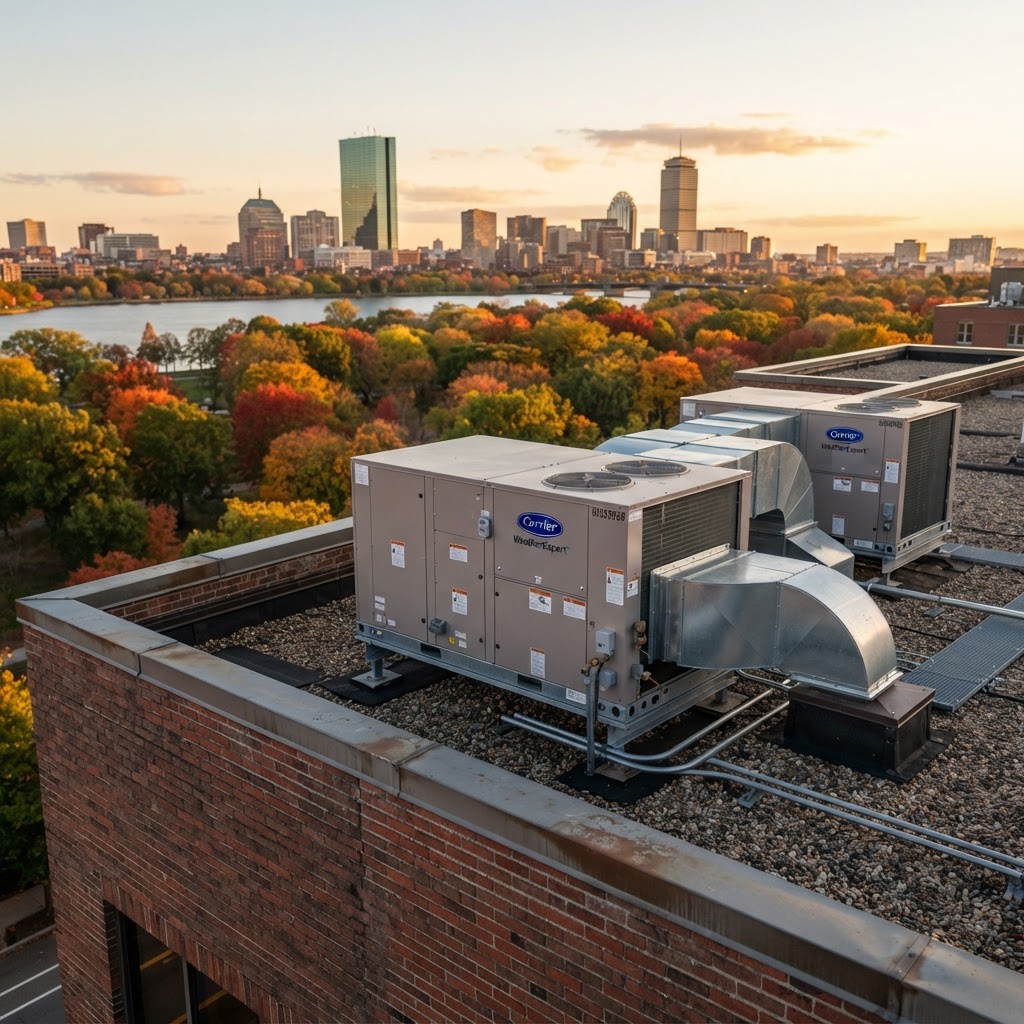
The 2026 HVAC Maintenance Calendar for the New England Hub
A month-by-month 2026 HVAC maintenance calendar for New England commercial facility managers — covering Boston, Manchester NH, Hartford CT, Providence RI, and Worcester. Quarterly PMs, seasonal changeover, freeze protection, cooling tower startup, boiler service, and more.
12 min read
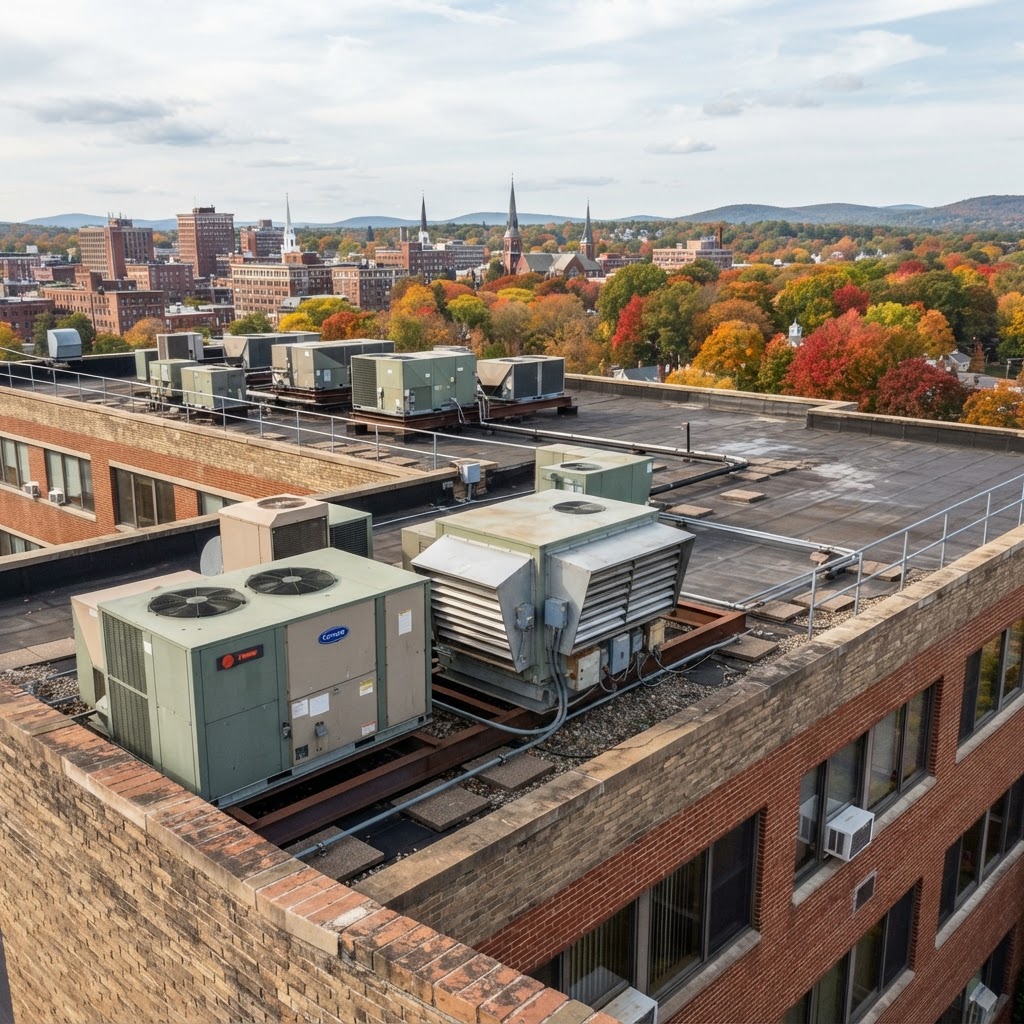
The 2026 HVAC & Facility Maintenance Calendar for the Massachusetts Hub
A month-by-month 2026 HVAC maintenance calendar for Massachusetts facility managers — boilers, chillers, steam, coils, and compliance all on one schedule.
11 min read
The 2026 HVAC & Facility Maintenance Calendar for the Connecticut Hub
A month-by-month 2026 HVAC maintenance calendar for Connecticut facility managers covering boilers, chillers, cooling towers, freeze protection and more.
12 min read
Comments (0)
No comments yet. Be the first to comment!