The 2026 HVAC Maintenance Calendar for the New England Hub
New England commercial buildings fail on a schedule. Boilers crack in February because no one checked heat exchangers in October. Cooling towers spike in July because basin cleaning got skipped in April. Chiller compressors seize in August because condenser coils were never cleaned after cottonwood season ended in June. A written, climate-aware maintenance calendar does not just keep equipment running — it turns reactive emergency calls into predictable, budgeted work orders.
Q1: January through March — Surviving the Heating-Dominant Core
January
January in Boston, Manchester, and Hartford means sustained sub-zero wind chills and maximum demand on steam and hydronic heating systems. Older Boston and Cambridge building stock — pre-1980 Class-A office, universities, hospitals — runs two-pipe and four-pipe hydronic systems with cast-iron radiation that punishes deferred maintenance.
Priority tasks this month:
- Verify freeze stat setpoints on all air handling units. Freeze stats should trip between 35°F and 38°F leaving-coil temperature. A missed trip means a burst preheat coil and a flooded air handler — a multi-day shutdown in a healthcare or biotech facility is not recoverable on a short timeline.
- Inspect low-ambient lockout controls on rooftop units serving 24/7 spaces (labs, data closets, server rooms). These spaces often need mechanical cooling even at 10°F outdoor air; lockout settings must allow operation while protecting the refrigerant circuit.
- Check rooftop unit curb seals and drain pans for ice damming. Snow loading on RTU platforms across Worcester and Providence has collapsed sheet metal drain pans and sheared fan shaft bearings — inspect monthly when accumulation is active.
- Perform monthly filter inspection. In high-occupancy buildings running 100% outdoor air economizer cycles to offset internal heat, filters load faster in winter than in summer.
- Log boiler stack temperatures and combustion analysis readings against the fall baseline established in October. A rising stack temperature on a firetube boiler indicates scale buildup reducing heat transfer efficiency.
What failure looks like if skipped: A frozen preheat coil in a 200,000 SF Class-A tower requires coil replacement, glycol fill, and controls recalibration — typically a 72-hour recovery window, with every tenant affected.
February
February is the statistical peak of heating load in New England. It is not the month for major mechanicals work — it is the month for vigilant monitoring and rapid response.
- Inspect expansion tanks and air separators on hydronic systems. Waterlogged expansion tanks cause pressure spikes that hammer relief valves open, releasing system water.
- Verify BAS alarm logging is active and alert thresholds are current. February is when control sequences that drifted in November announce themselves as failures.
- Check belt tension and bearing condition on all AHU supply and return fans. Cold temperatures increase belt stiffness and accelerate wear; a snapped belt on a healthcare AHU serving an OR suite is a life-safety event.
- Confirm humidification system operation in lab and biotech facilities. Steam humidifiers serving cleanrooms and BSL-2 labs must maintain setpoint without cycling off on high-limit faults caused by scaling electrode assemblies.
March
March is a transition month — late-season nor'easters remain a real risk through mid-month, but shoulder-season planning must begin now to hit April changeover windows.
- Begin chiller startup planning. Coordinate with the refrigeration technician for annual inspection of compressor oil, refrigerant charge verification, and condenser tube cleaning — schedule this for April while outdoor temperatures are still below chiller lift requirements.
- Order cooling tower fill inspection services now. Basin cleaning backlogs in April are real; vendors fill up fast once Hartford and Providence clear 50°F average highs.
- Conduct economizer actuator and damper blade inspection. Actuators that froze against their stops in January must be tested through full stroke before cooling season begins.
- Pull and inspect VAV box actuators and damper assemblies in any zones that generated heating complaints over winter — a stuck-closed reheat valve in a lab fume hood chase is a safety concern.
Q2: April through June — Changeover, Coil Season, and Peak Pollen
April
April is the most consequential HVAC maintenance month in the New England commercial calendar. Cooling tower startup, chiller commissioning, and coil cleaning must all land in a roughly three-week window before cooling loads arrive.
Cooling tower startup checklist:
- Drain and physically clean the tower basin — sediment, biofilm, and Legionella risk accumulate over winter layup. This is a regulatory and liability issue in Massachusetts and Connecticut healthcare facilities, not just a performance issue.
- Inspect tower fill, drift eliminators, and distribution nozzles for freeze damage.
- Commission water treatment program — biocide, scale inhibitor, and corrosion inhibitor — before the tower runs under load for the first time.
- Verify makeup water float valve operation and document basin water level setpoint.
Chiller annual service:
- Perform refrigerant leak check across all joints, relief valves, and purge units. Document in accordance with EPA Section 608 recordkeeping requirements.
- Inspect and clean condenser and evaporator tubes (eddy-current testing on tube walls every three to five years).
- Verify chilled water and condenser water flow rates against design before closing the season.
AHU coil cleaning:
- Clean chilled water coils, reheat coils, and preheat coils before peak load. Fouled coils in Boston biotech facilities running 55°F supply air year-round lose capacity quietly — the first symptom is a rising return air temperature at full cooling.
- Inspect and clean drain pans and condensate lines. A clogged drain pan in a ceiling-hung AHU over a laboratory will overflow before it trips a high-water alarm if the float switch is not tested.
May
May brings cottonwood and tree pollen — the single most underestimated coil-fouling agent in New England HVAC. Outdoor coils on rooftop units and condenser sections of split systems accumulate fiber mats in as little as two weeks during peak bloom.
- Inspect and clean condenser coils on all rooftop units and split condensing units mid-month, after primary cottonwood release. A matted condenser coil raises condensing pressure, increases compressor discharge temperature, and trips high-pressure safeties — often misdiagnosed as low refrigerant charge.
- Check outdoor air intake screens and bird screens — pollen and cottonwood will blind intake louvers and starve AHU airflow.
- Perform quarterly PM visit — belt and bearing inspection, filter change (or inspection against changeout criteria), controls point verification, and drain pan flush on all served units.
- Test economizer free-cooling sequence under real conditions: outdoor air between 45°F and 65°F dry bulb, cooling call present. Document damper position, leaving air temperature, and mixed air temperature.
June
By June, Boston and Cambridge commercial buildings are in full cooling mode, and Hartford and Providence typically see the first 90°F days of the season.
- Verify cooling tower blowdown rate and conductivity setpoint — as tower cycles of concentration rise in warm weather, scale deposition on condenser tubes accelerates.
- Inspect chiller evaporator approach temperature — a rising approach (difference between leaving chilled water temperature and refrigerant saturation temperature) indicates fouled tubes.
- For healthcare and lab facilities with 24/7 reheat loads: verify reheat coil valve operation and confirm zone temperature control accuracy. Laboratories with constant-volume exhaust systems cannot tolerate reheat valve failures that allow cold supply air to enter.
- Check variable frequency drive cooling fan settings on cooling towers and AHU units — summer is when VFD overtemperature trips appear as drives work harder.
Q3: July through September — Peak Load, Humidity, and Pre-Season Prep
July
July and August represent the highest latent load months in New England. Boston's coastal humidity regularly pushes dew points above 65°F, and Worcester and Manchester inland areas experience extended humid stretches that challenge dehumidification systems.
- Perform mid-season refrigerant leak verification on all systems above 50 tons. High-head pressure operation in humid weather stresses refrigerant circuit seals.
- Inspect drain pans weekly in high-humidity July periods — condensate overflow is the leading cause of ceiling tile damage and mold complaints in commercial buildings.
- Verify dehumidification setpoints in lab and healthcare BAS — relative humidity excursions above 60% in sterile processing or pharmaceutical storage areas trigger regulatory compliance issues.
- Monitor cooling tower basin temperature — Legionella proliferates above 77°F. Shock biocide treatment may be required after heat events.
August
- Perform quarterly PM visit — this is the last full-load PM before fall planning begins.
- Inspect compressor oil samples on centrifugal and screw chillers if not completed in April.
- Begin fall boiler inspection scheduling — Massachusetts and Connecticut require annual boiler inspections by a licensed inspector. September booking windows fill quickly.
- Check BAS trending data for any AHU, chiller, or boiler that showed anomalous runtime or setpoint deviation over summer — these are the units that need pre-season attention in October.
September
September is the planning and preparation month for heating season. Shoulder-season temperatures allow boiler work, BAS programming changes, and coil inspection without impacting either cooling or heating loads.
- Schedule and complete boiler annual service: combustion analysis, heat exchanger inspection, burner assembly cleaning, safety control testing (high-limit, LWCO, pressure relief), and flue/breeching inspection.
- Perform BAS controls sequence verification before heating season — verify that heating and cooling changeover logic, morning warmup sequences, night setback, and occupied/unoccupied scheduling all function correctly.
- Inspect steam trap operation on older Boston and Cambridge steam systems. Failed-open traps waste fuel; failed-closed traps starve terminal units. Ultrasonic testing of traps is the most efficient diagnostic approach at this scale.
- Test freeze stats and low-limit controls before first frost. This is the single most high-value test in the New England calendar.
- Replace filters on all AHUs before heating season — fall leaf debris and construction activity at surrounding properties sends PM 10 loadings up in October and November.
Q4: October through December — Heating Season Commissioning and Winter Readiness
October
- Complete cooling tower winter layup: drain basin to low point, clean and inspect fill one final time, close isolation valves, install winterization blankets or heat trace per system design.
- Verify glycol concentration in preheat coils and exposed piping loops — test with a calibrated refractometer, not litmus strips. Propylene or ethylene glycol concentration should provide freeze protection to at least -20°F at the coil face.
- Perform quarterly PM visit — belt and bearing inspection, filter check, controls verification, and full unit walkthrough before heating lock-in.
- Activate and verify heat trace circuits on condensate lines, makeup water lines, and any roof-mounted piping exposed to wind.
November
- Conduct full economizer lockout review — as outdoor temps drop below heating setpoints, economizer minimum position settings must be verified to prevent overcooling perimeter zones.
- Inspect rooftop unit snow guards and access platforms for integrity before first snowfall.
- Verify heating valve actuator operation across all VAV boxes and terminal units. A stuck-open cooling valve in a perimeter zone causes heating complaints that are misdiagnosed as boiler problems.
- Confirm BAS occupied scheduling is updated for any tenant changes that occurred over the summer — a building that changed tenant mix in August may have incorrect zone schedules running through winter.
December
- Perform final quarterly PM visit of the year — document all open deficiencies for budget planning in Q1.
- Verify emergency generator load testing includes HVAC critical circuits (data center cooling, healthcare AHUs, elevator machine rooms).
- Inspect steam pressure-reducing valves on campus steam systems serving Boston-area institutions — PRV seat erosion causes pressure fluctuations that damage terminal equipment.
- Confirm water treatment service logs for cooling tower and boiler systems are complete and filed for the calendar year — Massachusetts and Connecticut regulatory requirements for Legionella water management plans require documented service records.
What a Compliant PM Calendar Actually Saves
A maintained asset holds its rated service life. Centrifugal chillers designed for 25 years routinely fail at 14 when condenser tubes are never cleaned and refrigerant circuits are never leak-checked. Boiler heat exchangers rated for 20 years crack at 11 when combustion analysis is never performed and scale is allowed to build. A PM calendar does not guarantee a specific outcome — mechanical systems fail for reasons that maintenance cannot always prevent. What a calendar does guarantee is that when a failure occurs, the maintenance history demonstrates due diligence, the failure mode is identifiable, and the building owner did not accelerate the degradation through neglect. For Class-A office, healthcare, biotech, and educational facilities, that defensible maintenance record also matters for insurance, commissioning audits, LEED O+M documentation, and tenant retention.
Frequently Asked Questions
Q: How many PM visits per year does a New England commercial building actually need? A: The industry standard for most commercial HVAC equipment is four visits per year — quarterly — with monthly filter inspections on systems serving high-occupancy or sensitive environments like labs, cleanrooms, and healthcare. Larger central plant equipment (chillers, cooling towers, boilers) typically requires dedicated annual service in addition to quarterly PMs.
Q: When is the best time to schedule chiller annual service in New England? A: April is the optimal window — outdoor temperatures are still low enough that the building is not yet dependent on mechanical cooling, and the service can be completed before the first 80°F days that typically arrive in late May or June. Scheduling in March ensures vendor availability.
Q: What is the most commonly skipped task in New England commercial HVAC maintenance? A: Freeze stat testing in September. It takes less than 30 minutes per AHU and prevents the single most expensive single-event failure in the New England climate — a burst preheat coil. It is skipped because buildings are still in cooling mode in September and freeze protection feels irrelevant. It never is.
Q: How do I handle HVAC maintenance for a building with both old steam and new chilled water systems? A: Treat them as separate maintenance programs with separate inspection cadences, but coordinate your scheduling so that steam trap surveys and boiler work happen in September before heating season, while chilled water and cooling tower work happens in April before cooling season. A single integrated service partner managing both systems reduces the scheduling conflicts and ensures that controls sequences bridging both systems — like reheat from steam on chilled water AHUs — are tested as a complete sequence.
Q: How do I get a customized HVAC maintenance calendar for my specific facilities? A: Contact MetroKleen | MKMaintX at 1-888-669-5808 or visit mkmaintx.com to speak with a commercial HVAC maintenance specialist. The team serves Class-A office, healthcare, biotech, education, retail, and industrial facilities across Boston, Massachusetts, New Hampshire, Connecticut, Rhode Island, and 35+ additional states, and can build a site-specific calendar based on your equipment inventory, occupancy profile, and regulatory requirements.
Get a Quote for Your Facility
Tell us where your building is and we'll call you back within 2 business hours. No obligation.
Subscribe to Updates
Get facility maintenance insights delivered
Join our newsletter for expert tips, industry news, and company updates from the MetroKleen | MKMaintX team.
Services That Cover This Work
MetroKleen | MKMaintX handles every trade under one contract — so the fix in this article and the next one call come from the same team.
Preventive programs, RTU & chiller service, 24/7 emergency repair
VIEW SERVICENightly cleaning, day porters, floor care, multi-site programs
VIEW SERVICEPrecision HVAC, humidity control, GMP-compatible cleaning
VIEW SERVICEPanels, wiring, code compliance, emergency power
VIEW SERVICEPipe repair, drain cleaning, backflow prevention
VIEW SERVICELED retrofits, fixture service, emergency lighting
VIEW SERVICELOCAL SERVICE PAGES
Need this work handled? Free assessment, no minimum contract.
Related Posts
AI SELECTED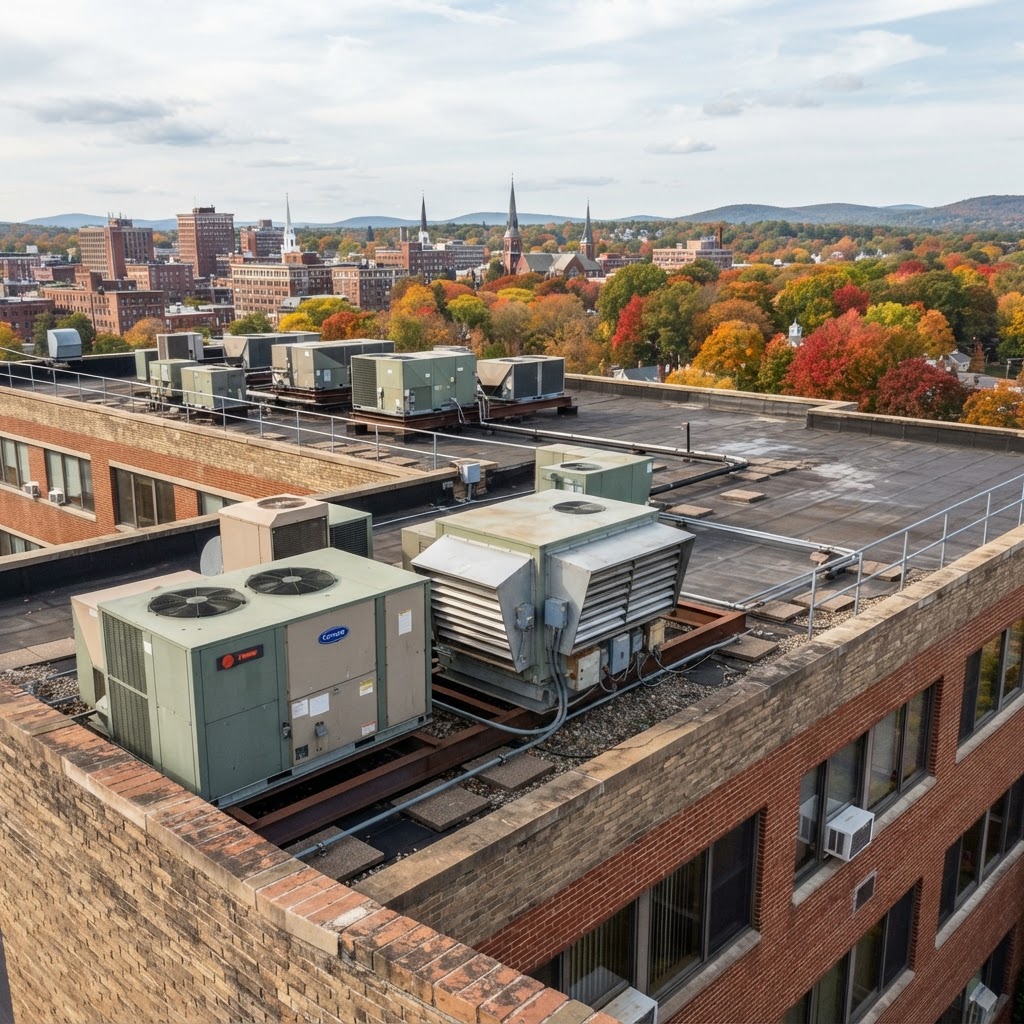
The 2026 HVAC & Facility Maintenance Calendar for the Massachusetts Hub
A month-by-month 2026 HVAC maintenance calendar for Massachusetts facility managers — boilers, chillers, steam, coils, and compliance all on one schedule.
11 min read
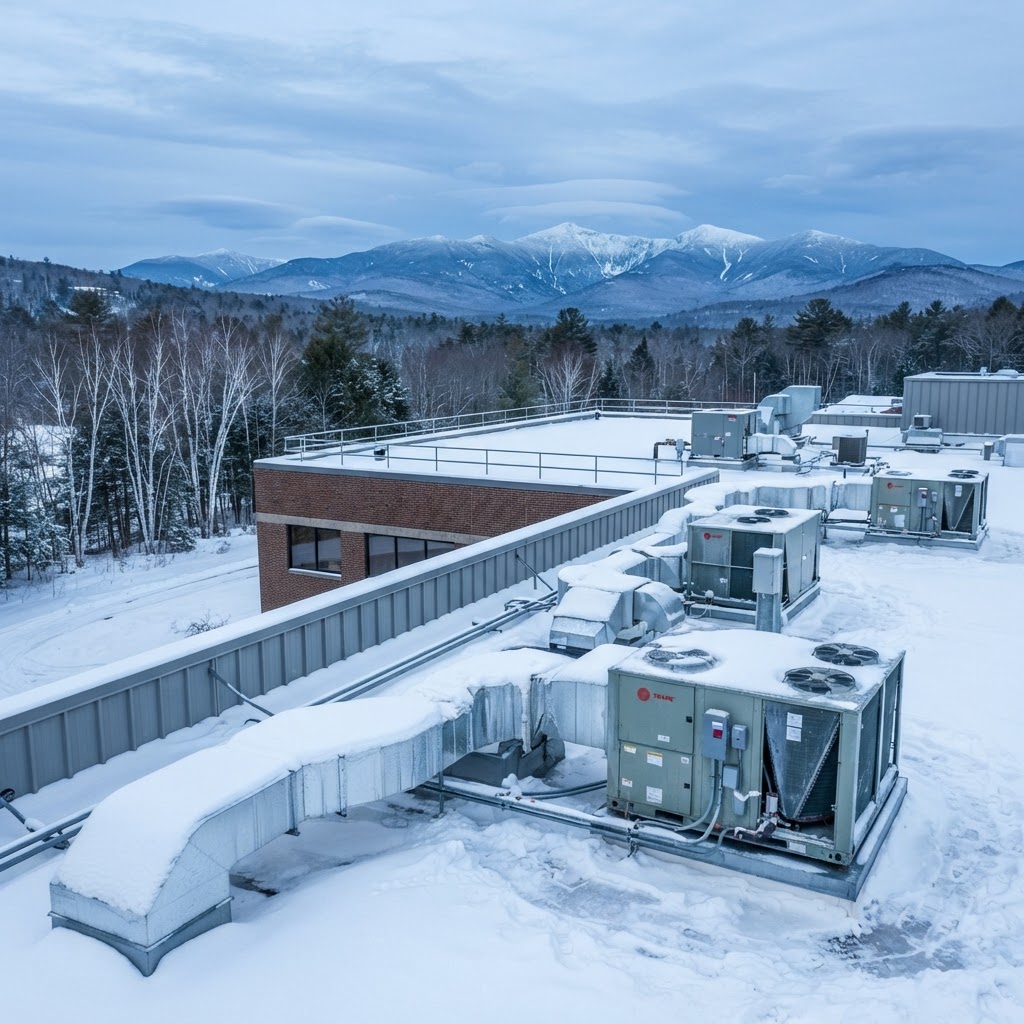
The 2026 HVAC & Facility Maintenance Calendar for the New Hampshire Hub
A month-by-month 2026 HVAC maintenance calendar built for New Hampshire's heating-dominant climate, covering boilers, RTUs, freeze protection, and more.
12 min read
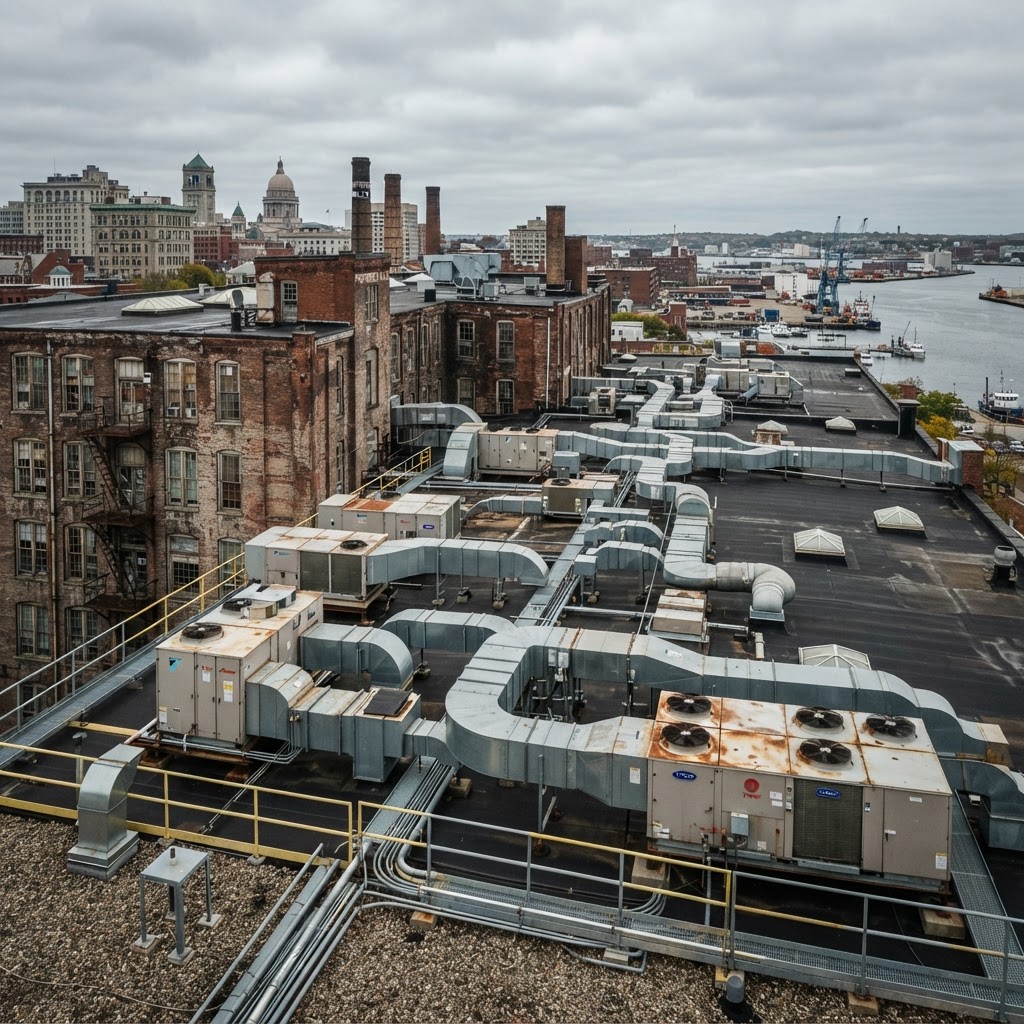
The 2026 HVAC & Facility Maintenance Calendar for the Rhode Island Hub
A month-by-month 2026 HVAC maintenance calendar for Rhode Island facility managers covering heating, cooling, coil care, freeze protection, and coastal PM needs.
11 min read
Comments (0)
No comments yet. Be the first to comment!