The 2026 HVAC & Facility Maintenance Calendar for Manchester
Manchester's commercial mechanical systems don't fail randomly — they fail on a schedule that mirrors the Merrimack Valley's punishing seasonal transitions. A rooftop unit that survived a mild October is the same unit that locks out on the first hard freeze in November if low-ambient controls were never verified. A boiler that ran fine last April is the same boiler that cracks a heat exchanger in September if combustion analysis was skipped all summer. The predictability of these failures is exactly what a structured 2026 HVAC maintenance calendar exploits.
Q1: January – March (Deep Winter Operations)
January
January is the peak heating load month. The priority is boiler performance verification and combustion analysis on any oil, propane, or dual-fuel appliance. Check flue draft, CO levels, and flame signal strength. Inspect oil filters, strainers, and fuel lines for cold-weather sludging — a clogged nozzle on a -10°F night is a full-building shutdown. Verify low-ambient lockout settings on any rooftop unit with supplemental electric heat or gas heat sections; units that attempt mechanical cooling below threshold can freeze coils solid within one operating cycle.
Rooftop and structural checks: Inspect curb flashings and economizer hoods for ice damming. Confirm roof drains are clear; blocked drains behind ice dams add live load to roofs already carrying snow. Replace MERV-rated filters — heavily loaded filters in January reduce airflow across heat exchangers, causing high-limit trips that look like controls failures.
Skipping January combustion analysis risks carbon monoxide accumulation, cracked heat exchangers, and regulatory liability.
February
February is maintenance and monitoring month. Pull a BAS trend report covering the prior 30 days: look for short-cycling, supply air temperature deviation, and zone valve hunting that indicates dirty coils or failing actuators. Inspect glycol loops serving rooftop units and any freeze-stat protected ductwork — test glycol concentration with a refractometer, not a float hydrometer. Concentration drift below 35% protection in a Manchester February is a coil-freeze event waiting to happen.
Inspect condensate drain pans on air handlers; even in heating season, units with humidification or partial economizer operation generate condensate. Standing water plus below-freezing plenum temperatures creates drain pan ice that cracks pans and blocks sensors.
Skipping glycol verification in February has resulted in burst coil sections in multiple Manchester-area facilities.
March
March delivers the freeze-thaw cycle that damages mechanical penetrations and pipe insulation. Walk the mechanical rooms and rooftop for insulation integrity on cold-water mains, chilled-water risers, and any sprinkler-adjacent piping in unconditioned spaces. Order belts and bearings now — lead times on OEM replacement components grow in April when every contractor in the region starts spring startups simultaneously.
Begin pre-season chiller inspection scheduling: arrange refrigerant leak checks, oil analysis, tube bundle inspection, and controls calibration for April execution. Facilities that wait until May to schedule chiller work miss the window before the compressed cooling season arrives.
Q2: April – June (Seasonal Changeover)
April
April is the single most important month on this calendar. Seasonal changeover requires deliberate sequencing: heating systems must be verified before they're locked out, and cooling systems must be commissioned before they're needed.
- Complete boiler layup: clean firesides, brush tubes, treat waterside with layup inhibitor, close isolation valves, and log final readings.
- Execute chiller startup: verify refrigerant charge, check for leaks with an electronic detector, confirm oil level and oil heater function, test capacity controls, and run a full-load simulation if building load allows.
- Inspect and clean condenser coils on rooftop units and condensing units — a winter's worth of debris, salt spray from parking lots, and biological growth on fin surfaces reduces heat rejection capacity before the first hot day.
- Calibrate economizer actuators and damper linkages: verify full-open and full-closed positions, check enthalpy sensors or dry-bulb sensors against a calibrated reference, and run the BAS economizer sequence end-to-end.
Skipping condenser coil cleaning in April produces high-head pressure trips on the first 80°F day in July, exactly when building occupancy and complaints peak.
May
May is the water treatment month for any facility with a cooling tower, closed-loop condenser water system, or process cooling loop. Commission chemical treatment programs before the tower fills and biological activity accelerates in warming water. Test Legionella risk controls: verify biocide feed rates, confirm drift eliminator integrity, and ensure water management plan documentation is current per ASHRAE 188.
Replace V-belts and check sheave alignment on supply and return fans. A belt that's been running since the previous April has stretch, cracking, or glazing that won't survive a full cooling season. Check fan bearing lubrication and vibration baseline on variable-speed drives.
Skipping water treatment commissioning before tower operation creates scale, biofouling, and Legionella risk simultaneously.
June
June completes cooling readiness. Verify BAS cooling sequences: supply air temperature resets, chilled water differential pressure setpoints, and demand control ventilation CO₂ sensor calibration. A miscalibrated CO₂ sensor that reads low keeps outdoor air dampers closed on high-occupancy days — an IAQ and code compliance failure.
Inspect condensate drain lines and trap assemblies on all AHUs and FCUs. Algae growth in drain lines during the shoulder months creates blockages that overflow drain pans onto ceilings and tenant spaces. Flush with biocide solution and verify float switch operation.
Q3: July – September (Cooling Season and Pre-Winter Prep)
July
July and August represent Manchester's compressed cooling peak. The task is system performance monitoring, not deferred work. Pull BAS data weekly: chiller kW per ton, cooling tower approach temperature, supply air temperature at design load. Any deviation from design indicates a problem that compounds through August.
Conduct mid-season refrigerant leak checks on systems with known history or that showed any refrigerant makeup at startup. Facilities skipping mid-season checks find compressor failures in August when replacement lead times are longest.
August
August is the crossover month. While cooling demand remains high, the pre-heating-season planning window opens. Contact your service provider — MetroKleen | MKMaintX serves Manchester and the surrounding region and can be reached at 1-888-669-5808 or at mkmaintx.com — to schedule September and October combustion work before the fall queue fills. Parts orders for burner components, ignition controls, and heat exchanger sections should be placed now.
Inspect cooling tower fill, basin, and nozzles for scale and biological fouling before fall tower shutdown planning begins.
September
September is combustion season preparation. Fire and test every boiler, furnace, and unit heater before the heating season begins. Perform full combustion analysis — O₂, CO₂, stack temperature, excess air, CO — and adjust burner air-fuel ratios to manufacturer specifications. Inspect fuel trains: gas valves, pressure regulators, low-gas and high-gas pressure switches, and pilot assemblies. For oil and propane systems, inspect tank gauges, vent lines, and fuel filters.
Verify heating sequence of operations in the BAS: outdoor air reset curves, morning warm-up sequences, and night setback recovery. A heating system that tests correctly in September prevents emergency calls in November.
Q4: October – December (Freeze Protection and Winter Lockdown)
October
October is the freeze protection deadline. Every task with the word "before winter" belongs in October.
- Test all freeze stats on AHUs and rooftop units — verify setpoint, wiring, and automatic reset function.
- Confirm low-ambient lockout controls on rooftop units are set and functional.
- Drain and blow out cooling tower basins and condenser water piping; install immersion heaters with aquastats on any basin that will see intermittent winter use.
- Inspect pipe insulation on all outdoor and unconditioned-space runs before temperatures drop.
- Verify heat trace circuits are energized and functional on roof drains, condensate lines, and any exposed domestic water lines in mechanical penthouses.
Skipping low-ambient lockout verification is the proximate cause of the majority of frozen coil failures in the Manchester market.
November
November begins the sustained heating season. Conduct the first quarterly heating PM: filter replacement, burner inspection post-startup, hydronic system pressure and expansion tank check, zone valve and circulator operation verification, and BAS alarm review. Inspect economizer hoods and rooftop curbs for early ice and debris accumulation.
Verify emergency heat backup sequences in facilities with heat pump systems or dual-fuel equipment: the switchover between fuel sources must be tested under load, not assumed.
December
December requires documentation and records closure for 2026. Compile all PM records, filter logs, refrigerant tracking documents, water treatment reports, and combustion analysis results into a single facility file. Facilities without on-site engineering staff — a majority of Manchester's commercial inventory — rely entirely on these records for warranty claims, insurance inspections, and code compliance audits.
Perform a BAS year-end review: confirm all setpoints reflect current building use, occupancy schedules are accurate, and any temporary overrides installed during the year have been cleared.
What a Compliant PM Calendar Actually Saves
A written PM calendar doesn't guarantee outcomes, but it systematically eliminates the conditions that produce the most expensive mechanical failures. Frozen coils, cracked heat exchangers, fouled condensers, and Legionella events share a common origin: a maintenance task that was deferred past its effective window. When that window is defined in advance — on a calendar, not in response to a breakdown — facilities gain predictable labor costs, advance parts procurement, and a documented maintenance history that supports equipment warranty claims, insurance underwriting, and regulatory compliance. For facilities without on-site engineering staff, the calendar itself functions as the engineering department's institutional memory.
Frequently Asked Questions
Q: How many PM visits per year does a typical Manchester commercial facility need? A: Most commercial facilities require a minimum of four quarterly PM visits, with additional focused visits for seasonal changeover in April and September-October. Larger facilities with chillers, cooling towers, or complex BAS systems often require six to eight scheduled visits plus monitoring between visits.
Q: When should filter replacement happen for Manchester's heating-dominant climate? A: At minimum, filters should be replaced quarterly. In heating-dominated facilities with high particulate loads — near loading docks, in healthcare settings, or in manufacturing adjacencies — monthly or bi-monthly replacement is appropriate. January and September are the two highest-priority replacement dates given the load transitions.
Q: Is refrigerant leak checking required on a schedule, or only when a problem is observed? A: EPA Section 608 regulations require leak inspection and repair for systems above specific charge thresholds when leak rates exceed defined percentages. Beyond regulatory compliance, scheduled leak checks at startup and mid-season detect slow leaks before they cause compressor damage or require large refrigerant additions that trigger reporting obligations.
Q: What's the risk of skipping cooling tower water treatment commissioning? A: Untreated or undertreated cooling tower water supports rapid biological growth including Legionella pneumophila, causes scale on heat exchanger surfaces that degrades chiller efficiency, and accelerates corrosion in basin and piping materials. ASHRAE 188 and many state health codes require documented water management plans for towers serving occupied buildings.
Q: How does MetroKleen | MKMaintX support multi-site facility managers across New Hampshire? A: MKMaintX provides scheduled PM programs coordinated across multiple locations, with standardized documentation, technician continuity, and a single point of contact for service dispatch. Facility managers can review service history and schedule visits at mkmaintx.com or by calling 1-888-669-5808.
Get a Quote for Your Facility
Tell us where your building is and we'll call you back within 2 business hours. No obligation.
Subscribe to Updates
Get facility maintenance insights delivered
Join our newsletter for expert tips, industry news, and company updates from the MetroKleen | MKMaintX team.
Services That Cover This Work
MetroKleen | MKMaintX handles every trade under one contract — so the fix in this article and the next one call come from the same team.
Preventive programs, RTU & chiller service, 24/7 emergency repair
VIEW SERVICENightly cleaning, day porters, floor care, multi-site programs
VIEW SERVICEPrecision HVAC, humidity control, GMP-compatible cleaning
VIEW SERVICEPanels, wiring, code compliance, emergency power
VIEW SERVICEPipe repair, drain cleaning, backflow prevention
VIEW SERVICELED retrofits, fixture service, emergency lighting
VIEW SERVICELOCAL SERVICE PAGES
Need this work handled? Free assessment, no minimum contract.
Related Posts
AI SELECTED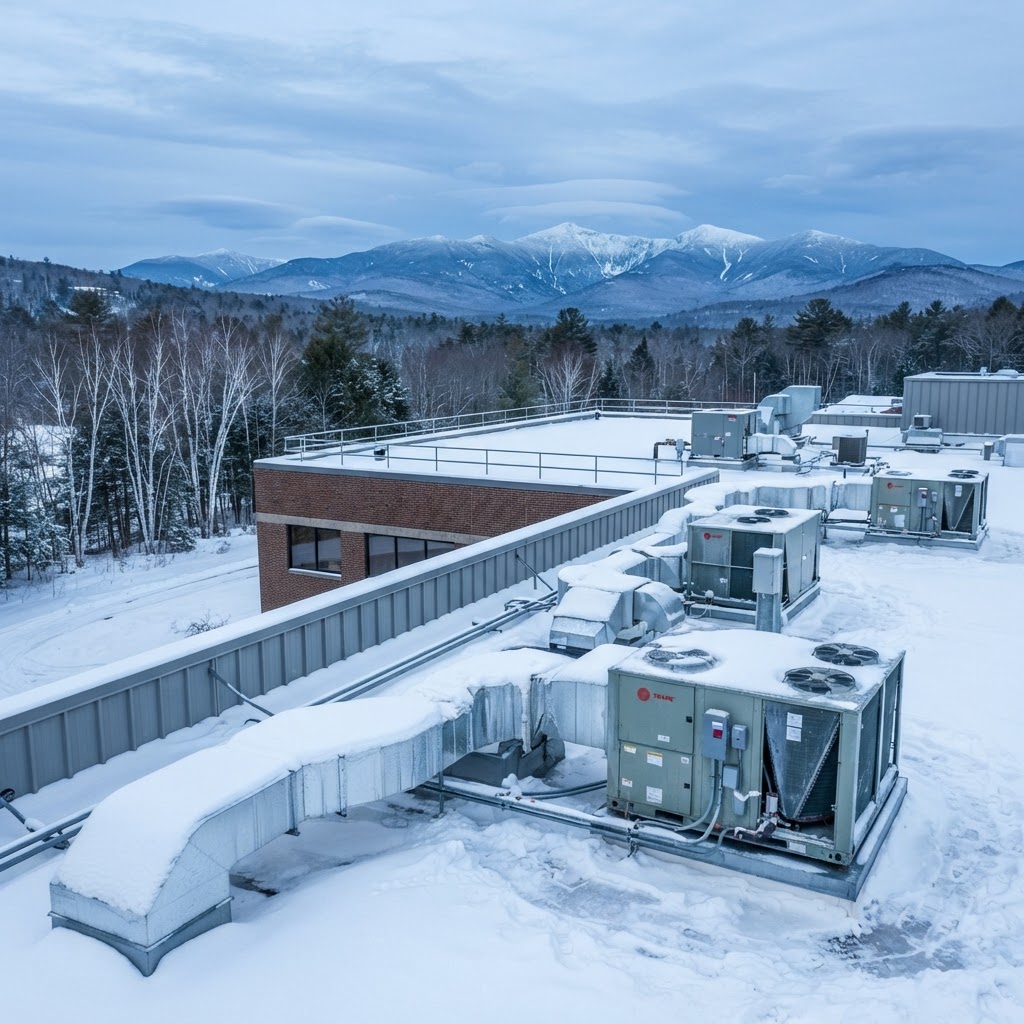
The 2026 HVAC & Facility Maintenance Calendar for the New Hampshire Hub
A month-by-month 2026 HVAC maintenance calendar built for New Hampshire's heating-dominant climate, covering boilers, RTUs, freeze protection, and more.
12 min read
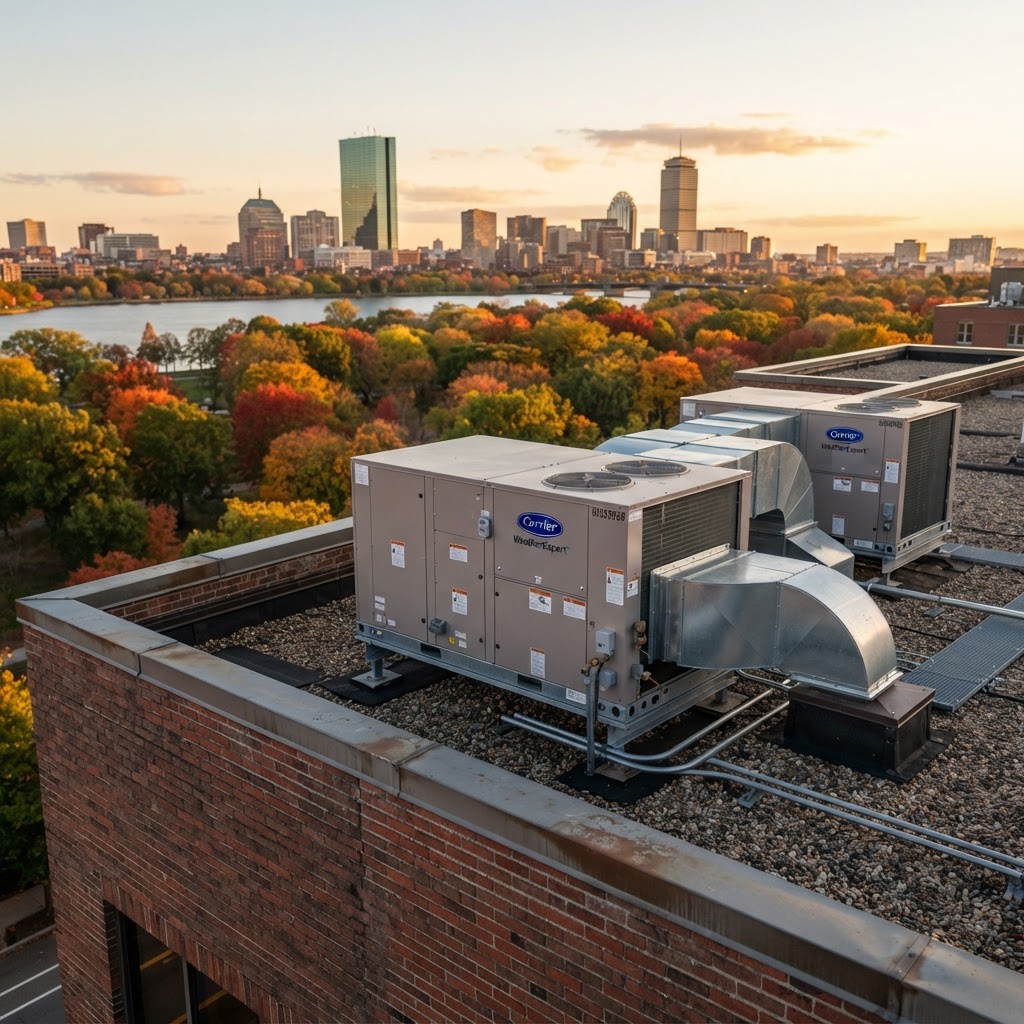
The 2026 HVAC Maintenance Calendar for the New England Hub
A month-by-month 2026 HVAC maintenance calendar for New England commercial facility managers — covering Boston, Manchester NH, Hartford CT, Providence RI, and Worcester. Quarterly PMs, seasonal changeover, freeze protection, cooling tower startup, boiler service, and more.
12 min read
Managing NH Office Building Humidity: Essential Summer Dehumidification
Discover effective strategies for commercial humidity control in NH and across New England to protect your facility from summer moisture damage.
3 min read
Comments (0)
No comments yet. Be the first to comment!