The 2026 HVAC & Facility Maintenance Calendar for El Paso
El Paso commercial HVAC systems don't fail randomly — they fail on a schedule dictated by the Chihuahuan Desert itself. The transition from a mild spring to a 105°F June, the first monsoon dust front in July, and the overnight freeze in January all arrive on roughly the same calendar page every year. Facility managers who treat that predictability as an asset — not a surprise — keep systems running; those who don't spend August writing emergency repair checks.
Q1: January, February, March
January
With overnight lows regularly dipping below freezing on El Paso rooftops, freeze protection verification is the single highest-priority task of the month. Test every freeze stat, low-ambient lockout, and heat tape circuit on rooftop units, exposed condensate lines, and makeup water lines serving cooling towers or evaporative pads. Inspect pipe insulation for any damage that accumulated during fall. Confirm that cooling tower basin heaters are energized and that float controls are functional. If freeze stats are not tested under a controlled load and documented, the first hard freeze event will find the ones that failed silently in October.
Also use January's cooler ambient temperatures to complete boiler combustion analysis, clean heat exchanger surfaces, and verify safety controls — high-limit, low-water cutoff, and pressure relief — on all hydronic and steam systems. Document flue gas readings; an untuned burner in a large office or healthcare building wastes fuel all winter.
February
Conduct a full belt, bearing, and sheave inspection across all air handling units (AHUs), exhaust fans, and cooling tower fans. Desert dust loading accelerates belt wear faster than humid-climate tables predict. Replace any belt showing glazing, cracking, or more than half the manufacturer's wear tolerance. Check variable frequency drive (VFD) parameters against the original sequence of operations; VFDs drifted from setpoints are a leading cause of comfort complaints that get misdiagnosed as refrigerant problems.
Run economizer functional tests on all units equipped with air-side economizers. February offers the ambient conditions — cool, low-humidity air — where an economizer that is stuck closed goes undetected until summer peak load. Verify damper actuator travel, mixed-air sensor calibration, and BAS sequence logic end to end.
March
March is pre-season changeover. Complete cooling system startup checklists before ambient temperatures make chiller and DX systems load-critical. For chilled water plants, perform eddy-current tube inspection or at minimum a visual tube inspection on shell-and-tube condensers; El Paso's hard water deposits scale aggressively, and a single season of deferred tube cleaning measurably degrades heat transfer. Send a cooling tower water sample for a baseline mineral analysis — calcium hardness, total dissolved solids, pH, conductivity — before startup. Establish bleed-off rates and biocide treatment schedules now, not in June.
Change all pre-filters and final filters on AHUs to give the system a clean baseline entering the high-dust season. Inspect and clean condensate drain pans and P-traps; pans that sat stagnant through winter accumulate biofilm that will clog drains within weeks of heavy cooling operation.
Q2: April, May, June
April
Evaporative cooler season preparation begins in April. Replace evaporative media pads — typically aspen fiber or rigid cellulose — before first use; pads that carried mineral scale through winter will not achieve rated efficiency and will slough debris into the water sump. Inspect distribution headers and water distribution tubes for mineral blockage. Flush sumps, clean float valves, and verify bleed/bleed-off solenoid operation. Set bleed rates based on the incoming water's hardness; El Paso source water is hard enough that inadequate bleed produces visible scale on pads within two to three weeks.
For hybrid systems that combine evaporative pre-cooling with DX, verify that the controls handoff sequence between evaporative and mechanical stages is functioning correctly. A stuck or mis-sequenced hybrid system forces the compressor to operate at unnecessarily high condensing temperatures all summer.
May
Conduct your first refrigerant leak check of the season across all DX rooftop units, split systems, and chilled water plant components. Use an electronic leak detector; visual inspections alone miss slow leaks at fittings and valve cores that become significant over a 6-month cooling season. Document refrigerant circuit pressures and superheat/subcooling against the system's design operating conditions. A rooftop unit entering peak summer with a 10% refrigerant deficit will trip on high discharge pressure when ambient hits 105°F.
Clean condenser coils on every rooftop unit. In El Paso, a single dust storm can add enough particulate loading to measurably increase condenser approach temperature within days. Use low-pressure water rinsing in the direction of airflow; high-pressure washing bends fins and accelerates corrosion. After coil cleaning, verify condenser fan blade pitch and rotation direction — blade pitch errors often go unnoticed until the system underperforms on a peak-heat day.
June
June is peak-load month. By now all deferred tasks are emergencies. The priority this month is BAS trending review — pull 30 days of discharge air temperature, chilled water supply temperature, and condenser entering-water temperature data and look for creeping degradation trends before they become failures. Verify demand-control ventilation sequences are active and that economizer dampers are at minimum position during peak heat.
Perform a mid-season water treatment check on cooling towers and evaporative systems: test pH, conductivity, and biocide residual. If conductivity has climbed significantly above your March baseline, bleed rates are insufficient. Legionella risk management demands documented water treatment logs; for healthcare and multi-tenant buildings, an undocumented water treatment program is both a health risk and a liability.
Q3: July, August, September
July
Monsoon preparation defines July. Before the first haboob arrives, verify that all outdoor air intakes have intact screens and that filter banks are at no more than 50% of their final pressure drop rating. After any significant dust event, check static pressure drop across all filter banks; do not wait for the scheduled monthly reading. Replace filters when pressure drop reaches the manufacturer's change-out threshold, regardless of calendar date — in a bad dust year, that may mean three filter changes in a single season.
Inspect all rooftop condensate drain pans and piping. Monsoon humidity dramatically increases condensate volume; drain pans that were borderline in June will overflow in July, causing ceiling damage and mold. Clear all P-traps, verify float switches on drain pan overflow controls, and confirm adequate slope in horizontal drain runs.
August
August is full monsoon. The focus shifts to reactive monitoring plus documentation. Review BAS alarms daily. Inspect evaporative media pads for biological growth — the combination of heat, humidity, and organic debris from dust storms is the optimal condition for algae and bacteria. Treat sumps with an EPA-registered biocide appropriate for evaporative systems and document treatment dates and dosages.
Check motor amp draws on cooling tower fans, AHU supply fans, and condenser fans against nameplate ratings. Motors running above nameplate amperage in August are heading toward thermal failure. Log readings; a motor trending upward over three consecutive checks should be evaluated for rewind or replacement before the reading becomes a fault.
September
As monsoon activity decreases, begin planning for seasonal changeover. Test economizer damper operation again — dust intrusion during monsoon season jams dampers and contaminates actuators. Inspect rooftop unit curb flashing and roof penetrations for any storm-season damage that could allow water infiltration before winter. Conduct a post-monsoon filter changeout and document the loading — this is valuable data for next year's filter budget.
Q4: October, November, December
October
October is the shoulder-season transition. Commission heating systems before they are needed under load. Test furnace ignitors, heat exchangers, gas valves, and safety controls on all gas-fired rooftop units. For hydronic systems, test boiler controls, verify glycol concentration in any freeze-protected circuits, and confirm that variable-flow pumping sequences match the updated building load profile.
Begin evaporative cooler winterization: drain sumps fully, remove and store or discard media pads, shut off and blow out water supply lines, and cover units to prevent rodent and debris intrusion. Leaving water in evaporative systems over winter guarantees freeze damage.
November
Conduct the annual BAS controls audit. Verify that all occupied/unoccupied schedules reflect current tenant schedules, that setback temperatures are appropriately configured, and that all sensors have been calibrated or verified within the past 12 months. A BAS running on stale schedules from a departed tenant or a miscalibrated supply air temperature sensor negates the energy value of the entire controls investment.
Complete chiller seasonal shutdown procedures: pull and analyze oil samples on centrifugal and screw chillers, record refrigerant charge, log operational hours, and schedule any warranty-required service before the unit sits idle. Log the condition of tubes, purge unit operation (centrifugal), and any refrigerant activity from leak checks.
December
December returns to freeze protection. Verify all items from January's checklist on a pre-winter basis. Test unit heaters in mechanical rooms, parking structures, and loading docks. Inspect roof drains and overflow scuppers to ensure they are clear before winter rain events. Confirm all emergency heat sequences on heat pump systems are functional.
Schedule Q1 service appointments now. MetroKleen | MKMaintX serves El Paso, Horizon City, Socorro, and the broader West Texas region with structured PM programs designed around the desert's actual failure modes. Reach the team at 1-888-669-5808 or visit mkmaintx.com to review commercial PM program options before the January freeze window.
What a Compliant PM Calendar Actually Saves
A structured PM calendar doesn't guarantee specific cost reductions — equipment condition, age, and operational hours all vary — but the failure modes it prevents are well documented. Deferred condenser coil cleaning increases compressor discharge pressure and accelerates compressor wear. Skipped water treatment allows scale accumulation that reduces chiller efficiency and eventually requires costly mechanical tube cleaning or early heat exchanger replacement. Missed freeze stat testing produces catastrophic coil failures that take systems offline during occupied hours. Deferred belt inspection results in unexpected fan failures during peak cooling demand when service lead times are longest. The calendar converts unpredictable emergency expenditures into predictable, plannable maintenance costs — which is a fundamentally different financial position for any facility budget.
Compliance with ASHRAE Standard 180 (Standard Practice for Inspection and Maintenance of Commercial Building HVAC Systems) also supports insurance documentation requirements, Joint Commission readiness for healthcare facilities, and due diligence records for property transactions.
Frequently Asked Questions
Q: How often should filters be changed on a commercial rooftop unit in El Paso? A: Pressure drop across the filter bank — not calendar date — should drive changeout decisions. In a typical El Paso commercial building during dust season, that may mean monthly or even more frequent changes on units with outdoor air economizers. Monitor differential pressure and replace at the manufacturer's final resistance rating.
Q: Does El Paso's hard water really affect chiller performance significantly? A: Yes. El Paso source water is among the harder municipal supplies in Texas. Calcium carbonate scale forms on condenser tube surfaces and acts as an insulator. Even a thin scale deposit measurably increases condensing temperature and compressor lift. Annual tube cleaning and active cooling tower water treatment are not optional in this region.
Q: When should evaporative cooler media pads be replaced? A: Replace pads at the beginning of each cooling season regardless of apparent condition. Pads that carried scale and biofilm through winter will not distribute water evenly, reducing efficiency and increasing the risk of water quality problems. Mid-season inspection is also advisable after any significant monsoon dust events.
Q: What is the highest-risk month for commercial HVAC failures in El Paso? A: June and August represent the two peak-risk windows. June combines maximum cooling load with systems that may carry deferred winter maintenance. August adds monsoon humidity and dust intrusion to maximum load conditions. Refrigerant-related failures and condenser coil failures peak in June; drain and filtration failures peak in August.
Q: How does a BAS controls audit fit into a PM calendar? A: The BAS controls audit — ideally performed in October or November — verifies that all operational sequences, schedules, and sensor calibrations reflect current building use. A BAS running correct sequences against incorrect sensor data or outdated schedules undermines every other PM task. It is the quality-control layer over the entire mechanical maintenance program.
Get a Quote for Your Facility
Tell us where your building is and we'll call you back within 2 business hours. No obligation.
Subscribe to Updates
Get facility maintenance insights delivered
Join our newsletter for expert tips, industry news, and company updates from the MetroKleen | MKMaintX team.
Services That Cover This Work
MetroKleen | MKMaintX handles every trade under one contract — so the fix in this article and the next one call come from the same team.
Preventive programs, RTU & chiller service, 24/7 emergency repair
VIEW SERVICENightly cleaning, day porters, floor care, multi-site programs
VIEW SERVICEPrecision HVAC, humidity control, GMP-compatible cleaning
VIEW SERVICEPanels, wiring, code compliance, emergency power
VIEW SERVICEPipe repair, drain cleaning, backflow prevention
VIEW SERVICELED retrofits, fixture service, emergency lighting
VIEW SERVICELOCAL SERVICE PAGES
Need this work handled? Free assessment, no minimum contract.
Related Posts
AI SELECTED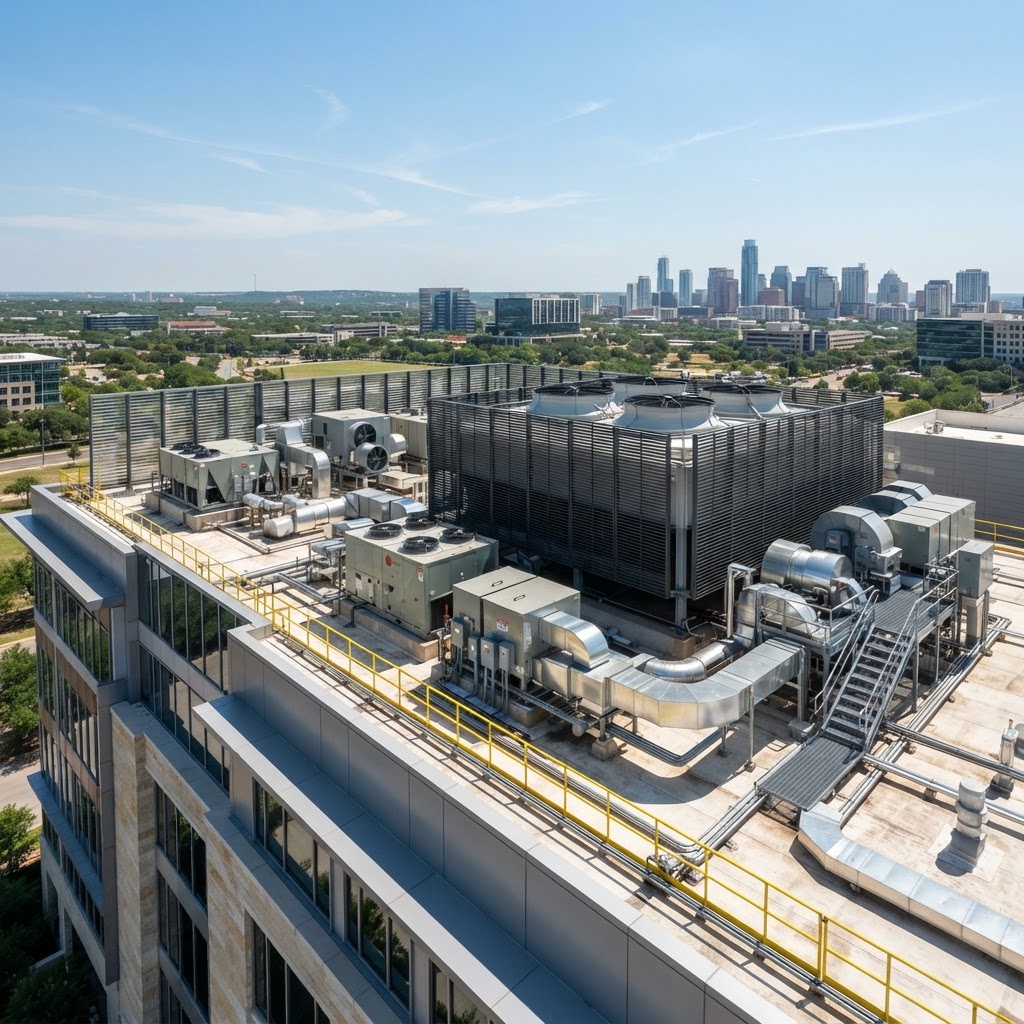
The 2026 HVAC & Facility Maintenance Calendar for Austin
A month-by-month 2026 HVAC maintenance calendar built for Austin's brutal cooling season, hail storms, and rare but damaging freezes — with concrete tasks for every month.
9 min read
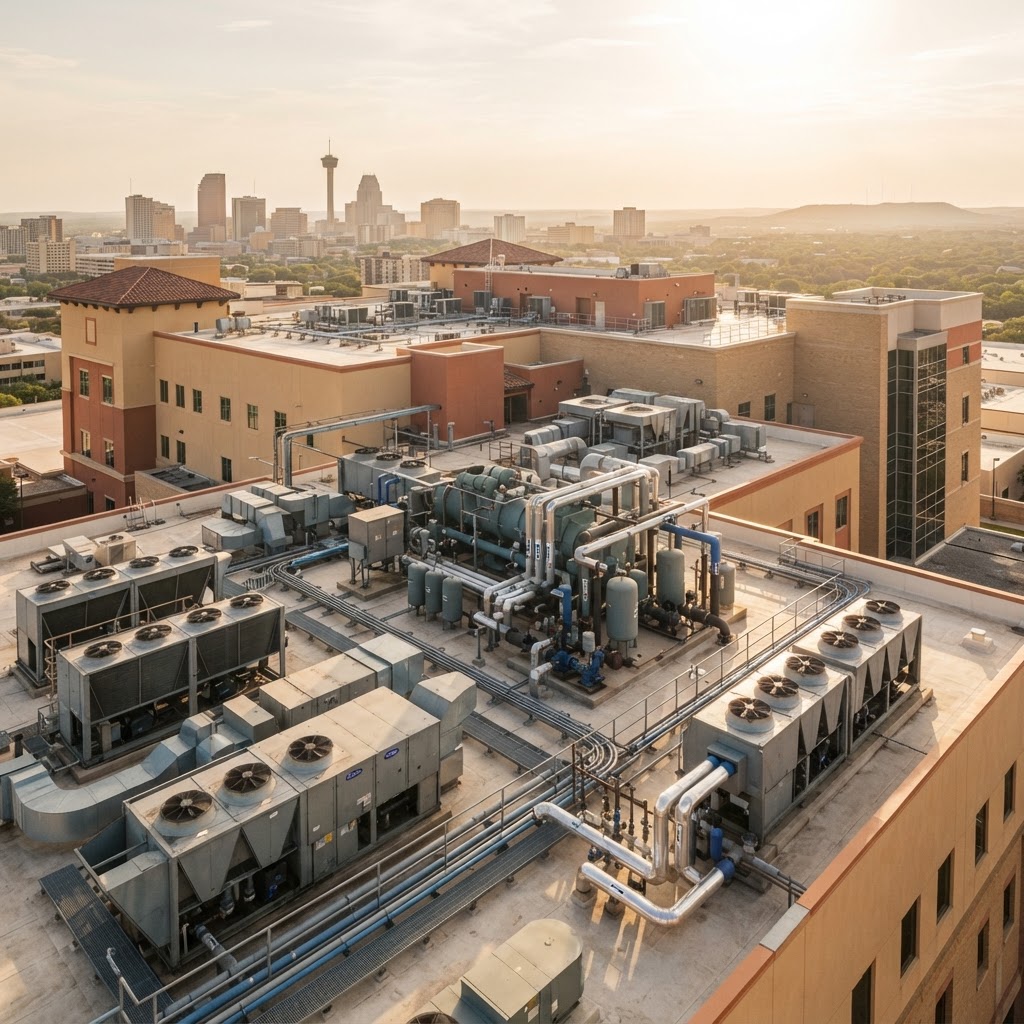
The 2026 HVAC & Facility Maintenance Calendar for San Antonio
A month-by-month 2026 HVAC maintenance calendar for San Antonio TX commercial facility managers—covering chillers, cooling towers, coils, water treatment, freeze protection, and seasonal changeover.
9 min read
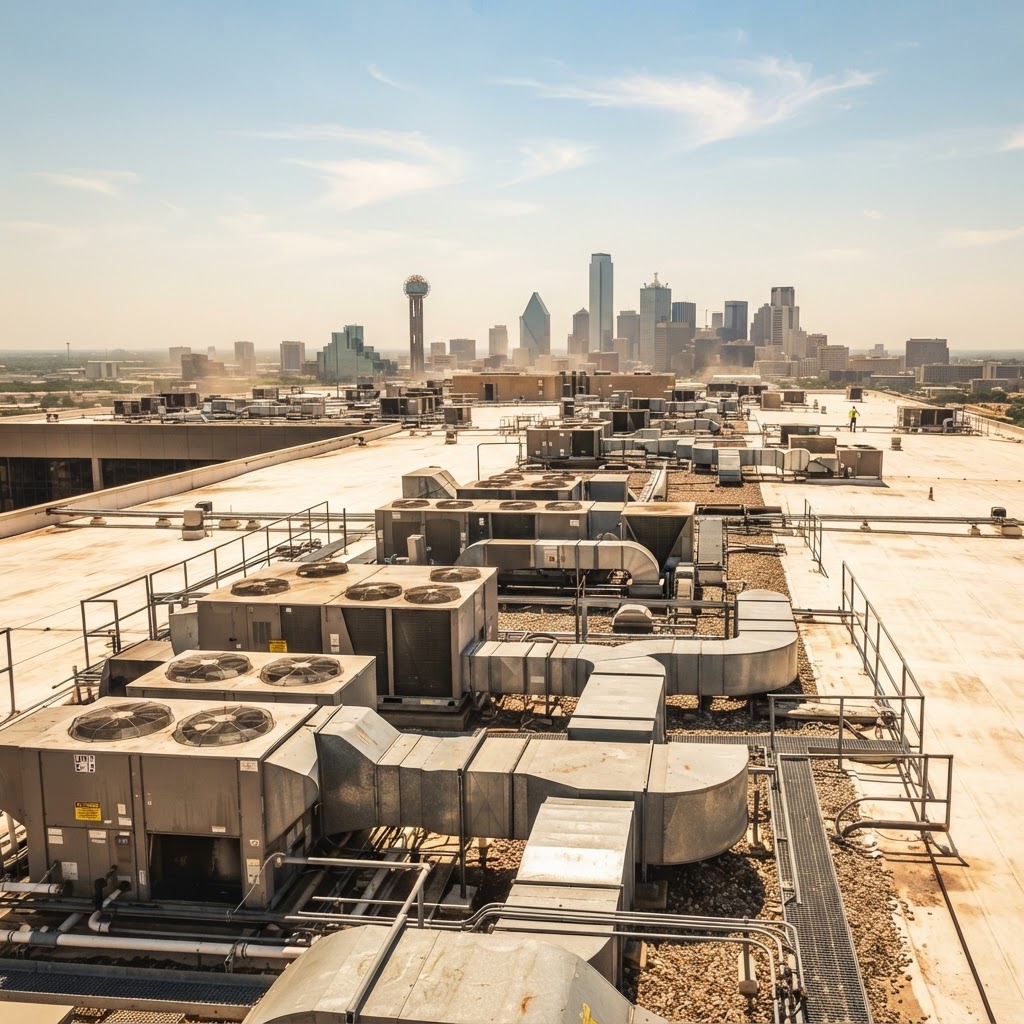
The 2026 HVAC & Facility Maintenance Calendar for the Texas Hub
A month-by-month 2026 HVAC maintenance calendar for Texas facility managers covering freeze protection, cooling season prep, storm recovery, and more.
13 min read
Comments (0)
No comments yet. Be the first to comment!