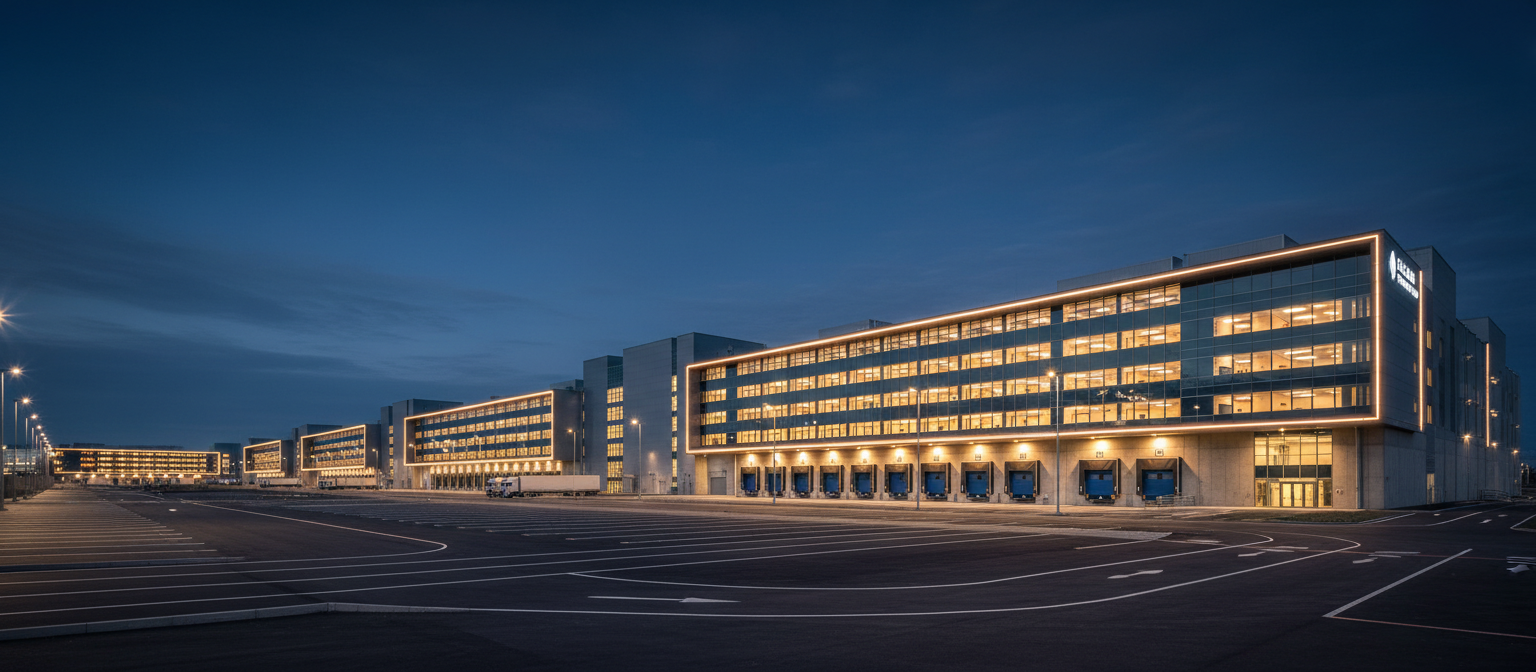
The 2026 HVAC & Facility Maintenance Calendar for Dallas
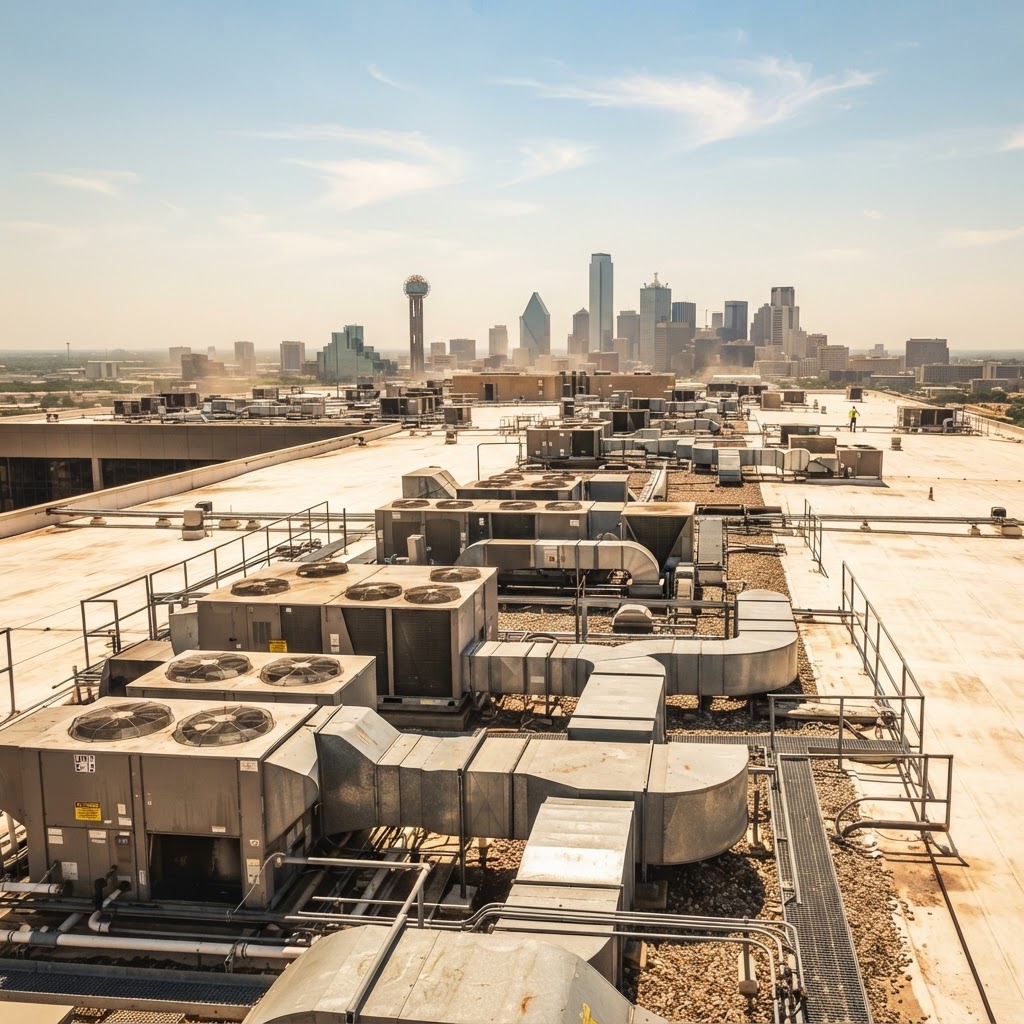
Dallas commercial buildings don't fail randomly—they fail on a schedule. The same sequence of extreme heat, surprise freezes, and severe storm windows repeats every year, and the mechanical systems that weren't serviced before each event are the ones that fill the emergency service log. A 2026 HVAC maintenance calendar built around DFW's actual climate turns that predictable failure curve into a predictable prevention curve.
Q1: January – March | Freeze Recovery, Pre-Cool Prep, and Storm Season Onset
January
January is DFW's highest freeze-risk month, but it's also the window to assess any damage from December cold snaps before spring load arrives. Priority tasks: inspect all freeze stats and low-limit controllers on AHUs, test heat trace circuits on exposed condensate and chilled-water piping, and verify that economizer damper actuators didn't seize during cold weather. Check boiler controls, combustion efficiency, and heat exchanger condition—this is one of only two months where heating reliability is genuinely critical. Replace filters on a schedule appropriate to building occupancy and local dust load; high-bay warehouses and distribution centers with dock doors benefit from a January baseline filter change after holiday inbound freight traffic. Failure to test freeze stats now means a split coil or cracked heat exchanger goes undetected until the next hard freeze—often at 2 a.m. on a Sunday.
February
With heating still active, February is the month to schedule chiller seasonal startup planning. Order long-lead parts—VFD components, compressor wear parts, specialty refrigerants—before spring shortages. Perform belt tension and bearing inspections on all air handlers and exhaust fans; belts that stretched under heating season operation need re-tensioning or replacement before cooling loads hit. Verify BAS sequences of operation against the current as-built controls narrative; sequence drift from contractor overrides or occupancy changes is common and goes unnoticed until an occupied zone fails to maintain setpoint in July. Healthcare campuses and labs should confirm that reheat coil isolation valves cycle freely before the transition season creates simultaneous heating and cooling demand.
March
March opens hail and windstorm season in North Texas and simultaneously marks the start of meaningful cooling load. Before the first warm spell, complete a full condenser coil inspection on every rooftop packaged unit and split system—look for fin damage, debris accumulation, and loose fastener panels. Install or inspect hail guards on exposed condenser sections. Confirm refrigerant charge on all DX systems with a manifold or electronic leak check; low charge discovered in March is a scheduled repair, low charge discovered in August is an emergency with extended lead times. Begin cooling tower startup procedures: inspect drift eliminators, fill media, basin heaters (if retained for overnight cold snaps), and establish water treatment protocols with your chemical provider before recirculation pumps run continuously.
Q2: April – June | Peak Pre-Season Commissioning and Grid-Stress Preparation
April
April is the most important PM month on the DFW calendar. This is the last reliable window before heat is continuous. Conduct full chiller seasonal startup: leak test refrigerant circuits, verify oil levels and differential pressure, log approach temperatures as a baseline, and confirm that condenser water flow rates meet design. Clean evaporator and condenser tubes if water treatment logs from the prior season show any scaling tendency. On rooftop units, replace belts, check motor amp draws, and clean evaporator coil faces—a coil fouled with cottonwood or construction dust can reduce capacity by double digits before a single work order is written. Complete economizer functional testing: verify damper travel, actuator linkage, and control signal; an economizer stuck in minimum position wastes energy all summer, one stuck open in August defeats the mechanical cooling system entirely. Condensate drain pan inspection and flushing belongs here—flush pans, treat with biocide tablets, and confirm drain line slope before high-humidity operation begins.
May
By May, cooling is the dominant operational mode and grid-stress events become possible. Every rooftop unit, chiller, and cooling tower should already be at full operational readiness. Focus May PM effort on BAS demand-limiting sequences and shed strategies—verify that load-shed programs are configured and that facility managers know activation thresholds. Inspect cooling tower basin water levels, blowdown rates, and biocide residuals; Legionella risk management programs should have documented water samples on file. For buildings with make-up air units serving warehouses or manufacturing, verify that economizer and enthalpy controls are calibrated—uncalibrated economizers introduce excessive latent load that degrades cooling capacity and indoor humidity control. Confirm fire/smoke damper positions are logged; a damper that closed during a false alarm and wasn't re-opened is an airflow problem waiting to surface.
June
June brings peak cooling load and the tail end of severe storm season. After any hail or high-wind event, perform an immediate exterior inspection of all rooftop equipment: look for displaced panels, bent coil guards, damaged flashing around curbs, and debris in condenser sections. Storm damage that goes unaddressed accelerates coil corrosion and vibration-induced refrigerant leaks. Mid-June is also the time to re-verify filter condition—high outdoor particulate during storm season loads filters faster than baseline assumptions. Log chiller performance data (kW/ton, approach temperatures, condenser water delta-T) monthly from this point through September to catch degradation trends before they become failures.
Q3: July – September | Peak Demand, Reliability Holds, and Early Transition Planning
July
July in DFW routinely produces multi-day heat events above 105°F. There is no margin for deferred maintenance. PM tasks this month are condition-monitoring, not preventive: review chiller trending data, check cooling tower fan blade condition and belt drive assemblies, and confirm that condenser water temperatures are within design range. Any refrigerant leak that wasn't resolved in spring will be most symptomatic now—watch for rising suction pressure, short cycling, and zone complaints. For 24/7 healthcare and lab facilities, AHU filter changes scheduled to building-specific intervals (often 60-90 days in high-occupancy or high-filtration applications) should not be deferred for operational convenience; a clogged filter bank forces fan motors to over-amp and reduces airflow to pressurized spaces.
August
August is the highest-risk month for compressor failures and chiller trips because equipment has been running continuously for five months. Pull oil samples on screw and centrifugal chillers if not done in July; acid or moisture contamination caught in August can mean a controlled shutdown rather than a catastrophic bearing failure. Verify cooling tower blowdown and conductivity control—scaling in August can foul condenser tubes within weeks. Begin planning for fall transition: identify any heating-season repairs identified last winter that need to be scheduled before October.
September
September often delivers a second heat wave after a brief cool spell that tempts facilities staff to reduce cooling system attention. Maintain full cooling readiness through September 30. This month is appropriate for scheduling boiler inspection and startup services—lead times for burner parts and heat exchanger cleaning are shorter now than in October. Begin BAS sequence review for heating season: verify that heating changeover setpoints, morning warm-up routines, and freeze protection sequences are correctly programmed.
Q4: October – December | Seasonal Transition, Heating Startup, and Winter Preparation
October
October is DFW's transition month, often with 85°F days and 45°F nights in the same week. Economizer controls are under maximum stress during shoulder season—verify that integrated economizer logic doesn't simultaneously call for heating and mechanical cooling in the same zone. Complete boiler startup: combustion test, heat exchanger inspection, safety relief valve verification, and low-water cutoff test. Begin chiller seasonal shutdown procedures for any equipment taken offline for winter; follow manufacturer protocols for refrigerant isolation, oil heater activation, and control panel winterization. For buildings that keep chillers online year-round, confirm freeze protection on exposed chilled-water piping is active.
November
November PM focuses on freeze protection verification: test all freeze stats, confirm heat trace controllers are energized, and verify that unit heater thermostats in mechanical rooms and parking structures are set correctly. Walk all rooftop penetrations and inspect pipe insulation on exposed domestic and HVAC piping—insulation damaged during summer maintenance access is a freeze-risk vector. Perform AHU coil winterization on any units that will be shut down seasonally. Review water treatment shutdown procedures for cooling towers being taken offline.
December
December closes the year with annual system documentation review: collect all PM records, filter change logs, water treatment reports, refrigerant tracking logs, and BAS alarm histories into a single facility file. This documentation supports regulatory compliance, warranty claims, and insurance requirements. Complete any deferred belt or bearing replacements identified during the year before a hard freeze creates emergency call volume across the market. Confirm that emergency heating response protocols are posted and that on-call contacts for your service provider—reachable at 1-888-669-5808—are current.
What a Compliant PM Calendar Actually Saves
A structured 2026 HVAC maintenance calendar doesn't eliminate every failure, but it systematically eliminates the most expensive category: the failure that was preventable, predictable, and simply not addressed. Facilities that follow quarterly PM schedules document fewer after-hours emergency dispatches, shorter equipment downtime events, and more defensible records when warranty claims, insurance adjusters, or accreditation inspectors arrive. Refrigerant that is caught low in April is a service call; refrigerant that fails a compressor in July is a capital event. A belt replaced in February costs parts and labor; a failed belt that shuts down an AHU serving a hospital corridor costs far more in emergency response, regulatory risk, and occupant impact. The calendar disciplines the process so that equipment condition is always known, never assumed.
Facilities across the DFW Metroplex can align their 2026 PM programs with MetroKleen | MKMaintX by visiting mkmaintx.com or calling 1-888-669-5808 to schedule a facility assessment.
Frequently Asked Questions
Q: How many PM visits per year does a typical Dallas commercial building need? A: Most commercial buildings benefit from a minimum of four quarterly visits, but cooling-dominant DFW facilities—especially those with chillers, cooling towers, or critical healthcare loads—often schedule six or more visits annually, with additional visits before peak cooling season and immediately after severe weather events.
Q: When should cooling tower startup happen in Dallas? A: Cooling tower startup should be completed by early April at the latest. DFW can see sustained heat above 85°F as early as mid-April, and a cooling tower that hasn't been inspected, cleaned, and chemically treated before recirculation begins is both a reliability and a Legionella risk management concern.
Q: What's the biggest HVAC mistake Dallas facility managers make going into summer? A: Deferring refrigerant leak checks and economizer testing until after the first heat complaint. Both are quick to inspect in April and become emergency-level repairs in July when every service provider in DFW is at capacity.
Q: Does a Dallas building really need freeze protection planning? A: Yes. Hard freezes occur an average of several times per decade and are disproportionately destructive precisely because buildings and operators are unprepared. Freeze stat testing, heat trace verification, and pipe insulation inspection in October and November cost very little compared to a split chilled-water coil or burst domestic line in an occupied building.
Q: How do I know if my current PM contract covers all the tasks in this calendar? A: Request a written scope of work matrix from your provider that maps each task to a specific service visit month. If the contract lists only generic quarterly visits without specifying coil cleaning cadence, water treatment coordination, economizer testing, or refrigerant tracking, the scope likely has gaps that will surface as deferred maintenance costs.
Get a Quote for Your Facility
Tell us where your building is and we'll call you back within 2 business hours. No obligation.
Subscribe to Updates
Get facility maintenance insights delivered
Join our newsletter for expert tips, industry news, and company updates from the MetroKleen | MKMaintX team.
Services That Cover This Work
MetroKleen | MKMaintX handles every trade under one contract — so the fix in this article and the next one call come from the same team.
Preventive programs, RTU & chiller service, 24/7 emergency repair
VIEW SERVICENightly cleaning, day porters, floor care, multi-site programs
VIEW SERVICEPrecision HVAC, humidity control, GMP-compatible cleaning
VIEW SERVICEPanels, wiring, code compliance, emergency power
VIEW SERVICEPipe repair, drain cleaning, backflow prevention
VIEW SERVICELED retrofits, fixture service, emergency lighting
VIEW SERVICELOCAL SERVICE PAGES
Need this work handled? Free assessment, no minimum contract.
Related Posts
AI SELECTED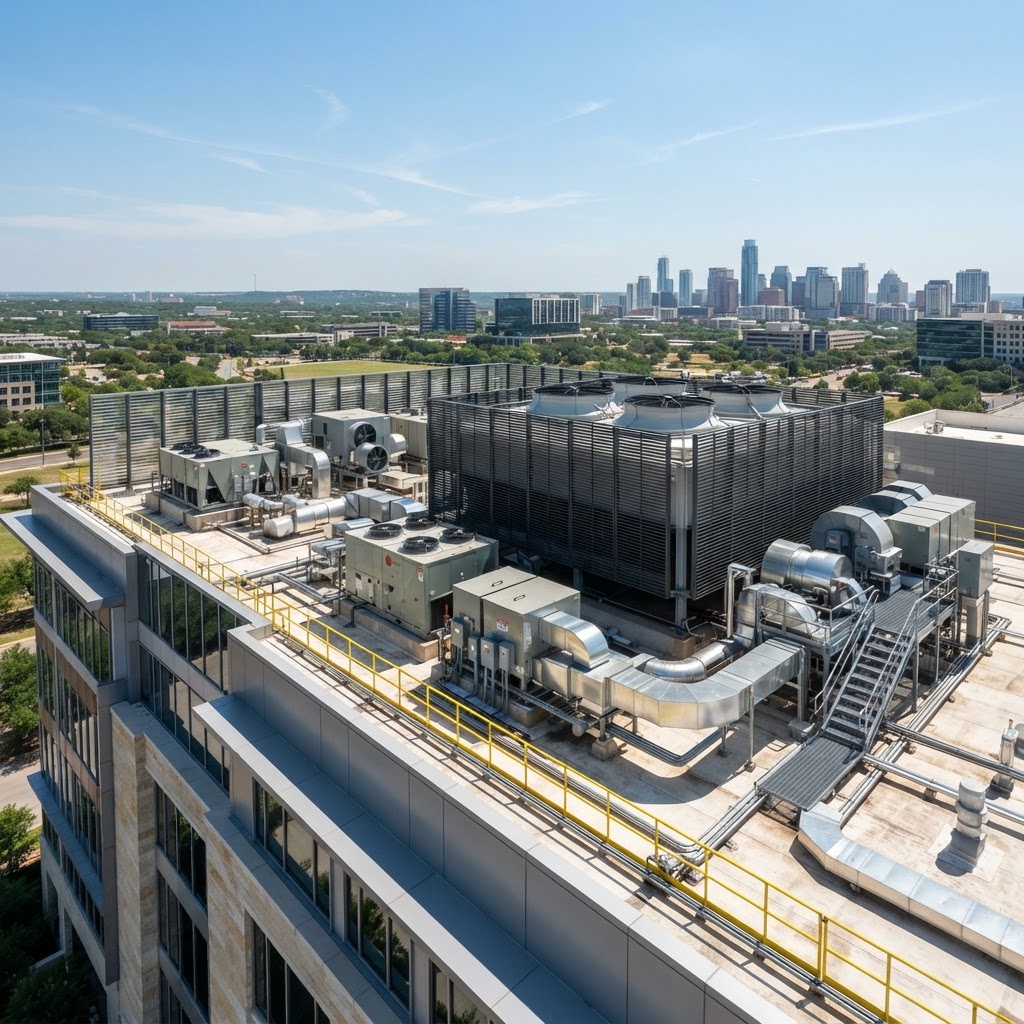
The 2026 HVAC & Facility Maintenance Calendar for Austin
A month-by-month 2026 HVAC maintenance calendar built for Austin's brutal cooling season, hail storms, and rare but damaging freezes — with concrete tasks for every month.
9 min read
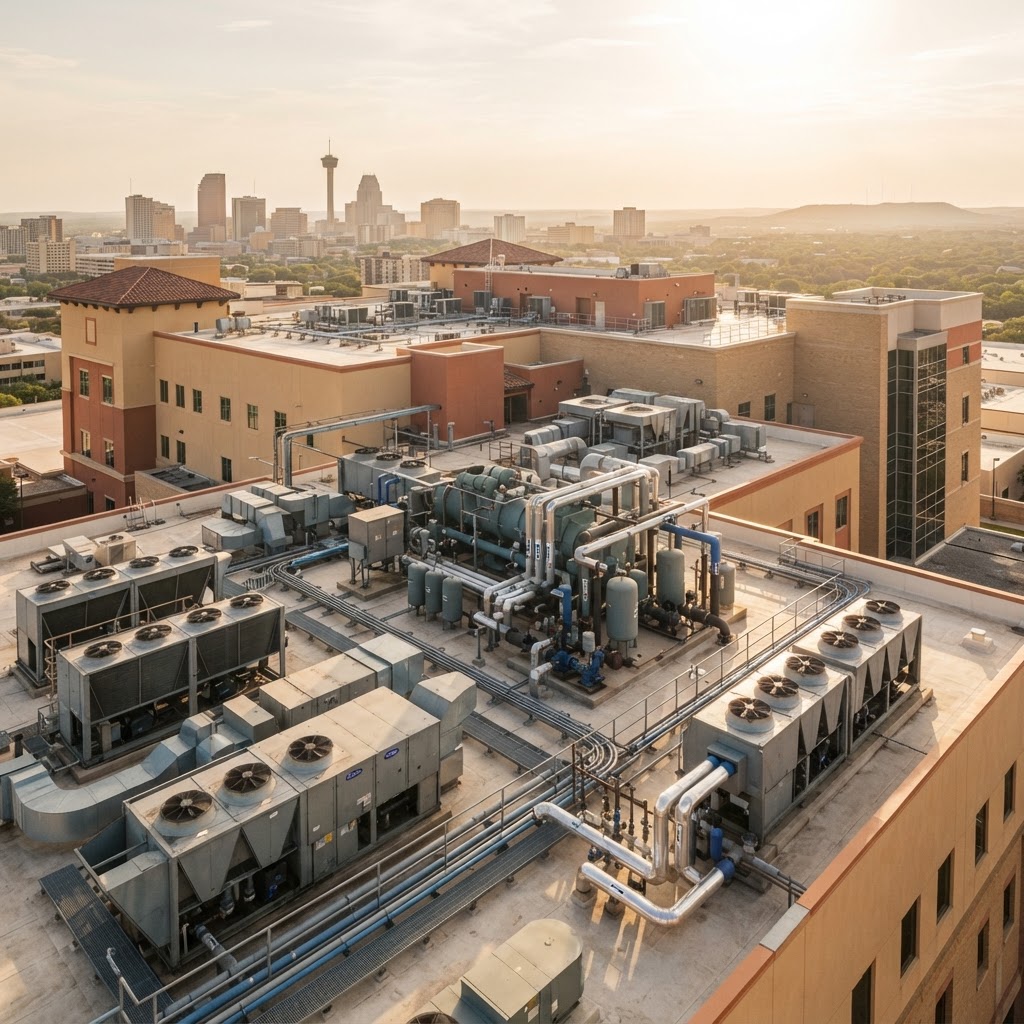
The 2026 HVAC & Facility Maintenance Calendar for San Antonio
A month-by-month 2026 HVAC maintenance calendar for San Antonio TX commercial facility managers—covering chillers, cooling towers, coils, water treatment, freeze protection, and seasonal changeover.
9 min read
The 2026 HVAC & Facility Maintenance Calendar for the Texas Hub
A month-by-month 2026 HVAC maintenance calendar for Texas facility managers covering freeze protection, cooling season prep, storm recovery, and more.
13 min read
Comments (0)
No comments yet. Be the first to comment!