The 2026 HVAC & Facility Maintenance Calendar for the Connecticut Hub
Connecticut commercial buildings fail on a schedule. Boilers that sat idle through a mild October lock up in the first hard freeze. Cooling towers left untreated into September breed Legionella risk. Rooftop units with clogged drain pans overflow into drop ceilings the week facilities staff are focused on something else. A written 2026 HVAC maintenance calendar does not prevent mechanical aging — it prevents mechanical surprise, which is the part that breaks budgets and occupant trust.
Q1 — January, February, March: Survive the Heating Season
January
January is the most dangerous month for Connecticut mechanical systems, not because anything new goes wrong, but because deferred fall work meets peak thermal stress.
Boiler and steam system inspection: Inspect low-water cutoffs, pressure relief valves, gauge glasses and condensate return lines on every boiler still running. Steam trap surveys on Hartford institutional campuses and Naugatuck Valley mill buildings regularly reveal 15–25% failed-open traps, each one venting live steam and spiking fuel cost. Test traps with ultrasonic or infrared tools — visual inspection alone misses internal bypass failures.
Freeze protection verification: Confirm glycol concentration in all hydronic loops using a calibrated refractometer — not a visual check. Low-ambient lockout setpoints on rooftop units should be documented and verified against current BAS sequences. Coil freeze stats on air-handling units serving perimeter zones are a particular risk at inland Naugatuck Valley and greater Hartford sites where overnight lows regularly reach the single digits. If a freeze stat tripped and reset without a service call, find out why before the next cold snap.
Filter change — heating season cycle: Replace filters on all AHUs serving occupied spaces. In New Haven's biotech corridor and hospital-adjacent buildings, maintain MERV-13 or better and document the change with filter lot numbers for compliance records.
Failure if skipped: A single failed low-water cutoff can cause a boiler dry-fire. A glycol loop at insufficient concentration will freeze and rupture at the first extended cold snap, taking out fin-tube radiation across an entire floor.
February
February is the month to inspect what winter has already done to the building envelope and the equipment exposed to it.
Roof, curb and economizer hood inspection: Ice damming is a real threat across all Connecticut climates but is worst on older flat-membrane roofs common in Bridgeport and Naugatuck Valley industrial stock. Walk rooftops after any freeze-thaw cycle. Check that roof drains and overflow scuppers are not blocked by ice. Inspect economizer hood screens for ice bridging, which blocks outdoor air intake and trips CO₂ or pressure alarms inside. Snow load on economizer hoods has collapsed lighter curb-mounted designs — if your rooftop equipment is original to a 1970s or 1980s building, get an engineer's eye on the curb attachments.
Belt and bearing inspection: Cold temperatures accelerate belt cracking. Inspect V-belts on AHU and exhaust fan drives for glazing, fraying and improper tension. Lubricate bearings per manufacturer spec — over-lubrication in cold conditions is as damaging as under-lubrication. Document nameplate data for any belt replaced so future purchases match without field measurement.
BAS sequence audit — heating mode: Verify that all heating sequences are active and that occupied/unoccupied setpoints are correctly programmed for 2026 schedules. Healthcare and laboratory facilities in the New Haven and Hartford markets must verify pressurization relationships between spaces have not drifted due to seasonal damper position changes.
Failure if skipped: Blocked roof drains and ice dams drive water intrusion that soaks insulation, corrodes structural decking and triggers mold remediation costs that dwarf any rooftop inspection fee. A snapped belt on a main supply fan serving a server room or clinical space does not wait for business hours.
March
March is transition month — heating systems are still live, but the window opens to begin pre-cooling preparation.
Condensate system flush and inspection: As temperatures begin to rise, confirm that all condensate drain pans and lines are clear of algae and biofilm accumulated during shoulder-season operation. AHUs that modulate between heating and cooling create intermittent condensate conditions that favor biological growth.
Spring PM scheduling and parts procurement: Order replacement belts, filters and water treatment chemicals now, before every other Connecticut facility manager does the same in late April. Lead times on commercial MERV-13 filters and specialty coil cleaners have extended in recent supply cycles.
Economizer functional test: Test economizer operation, damper actuators and outdoor air temperature/enthalpy sensors before cooling season load arrives. A failed economizer damper stuck closed wastes energy; one stuck open in humid summer air overloads dehumidification and can cause moisture damage to wall assemblies.
Q2 — April, May, June: Changeover and Pre-Cooling Commissioning
April
Boiler seasonal shutdown: For buildings with warm-weather boiler layup, follow a documented shutdown procedure: chemical treatment of the boiler water to prevent corrosion during idle months, closing of isolation valves, and tagging of controls. Do not assume a boiler that ran fine through March will restart cleanly in October without a pre-season inspection.
Chiller startup and refrigerant check: Initiate chiller startup procedures per manufacturer guidelines — do not cold-start a centrifugal or screw chiller without verifying oil temperature, purge unit status and refrigerant charge. Inspect all refrigerant circuit connections with electronic leak detector. Document refrigerant inventory to satisfy EPA Section 608 recordkeeping requirements. Coastal Fairfield County buildings with high internal latent loads need confirmed chiller capacity before humidity season arrives.
Cooling tower startup: Drain winter-stored towers, inspect basin coating, fill strainers, check drift eliminators and fan blade pitch, and introduce biocide treatment before the tower first recirculates. Legionella risk management plans required under Connecticut DPH guidelines should be reviewed and updated annually — April startup is the trigger point.
Failure if skipped: A refrigerant leak discovered in July during a heat event means a 2–4 week wait for a service slot. A cooling tower not treated at startup is a Legionella liability that no facility manager or ownership group wants to defend.
May
Full coil cleaning — cooling coils and condenser coils: Clean evaporator and condenser coils on all rooftop units, split systems and AHU cooling coils. Coastal Fairfield County sites accumulate salt-laden particulate that accelerates aluminum fin corrosion — use a low-pH coil cleaner appropriate for coastal environments and rinse thoroughly. Fouled condenser coils raise head pressure, reduce capacity and shorten compressor life.
Filter change — pre-cooling season: Second filter change of the year. In laboratory and healthcare environments this is non-negotiable and must be logged.
Variable frequency drive inspection: Check VFD cooling fans, verify parameter settings have not been reset by power events, and confirm drive enclosures are free of dust accumulation that causes thermal shutdown.
June
Full-load cooling system test: Run the chilled water system under as close to design load as possible and verify supply/return delta-T, chiller staging sequences and bypass valve operation. If BAS trending data from prior summers shows delta-T collapse, investigate coil fouling or balancing valve issues before July.
Dehumidification capacity verification: This matters acutely in New Haven labs and coastal Stamford and Bridgeport offices where latent loads are high. Verify that reheat or dedicated dehumidification systems are operational and that humidity setpoints are correctly programmed.
Q3 — July, August, September: Peak Cooling and Pre-Heating Preparation
July
Cooling tower water treatment intensification: Increase blowdown and biocide dosing frequency during peak evaporation months. Coastal humidity elevates concentration ratios faster than inland sites. Conductivity-based blowdown controllers should be calibrated quarterly — July is one of those quarters.
Condensate drain pan inspection and cleaning: Inspect monthly during July and August. Coastal buildings with high latent loads produce large condensate volumes; an algae-blocked drain line overflows the pan within days. Use pan treatment tablets rated for the drain line length on your system.
Chiller performance trending: Pull BAS trend logs for chiller kilowatt-per-ton, approach temperatures and compressor run hours. Degraded performance caught in July allows a proactive refrigerant or oil service before the August peak.
August
Third filter change of the year for high-occupancy and healthcare buildings. Standard commercial buildings on a quarterly schedule should change no later than August to ensure clean filters entering the shoulder season.
Refrigerant leak verification: A second leak check mid-season on large systems is justified given refrigerant cost and regulatory pressure. Any system that required a top-off in April should be re-inspected now.
Fan coil unit and terminal unit inspection: In multi-tenant office and healthcare buildings, inspect fan coil drain pans, coils and filter media. These units are invisible to occupants until they drip on a ceiling tile or begin circulating moldy air.
September
September is the most important month in the Connecticut HVAC calendar. Buildings that enter October unprepared pay for it from November through March.
Boiler pre-season inspection and startup: Complete boiler inspections, burner tune-ups, heat exchanger inspections and control calibrations before October 1. The Connecticut boiler inspection program requires current certificates — confirm yours are in order. For steam systems, test all safety valves, repair failing steam traps identified in January survey, and flush condensate receivers.
Cooling tower winterization planning: Begin planning chemical layup or operational winterization based on expected continued use. Towers serving process loads in New Haven biotech buildings may run year-round and require freeze protection packages.
Economizer and outside air damper pre-season test: Repeat the March functional test in reverse — verify economizer operation is ready for fall free-cooling and that damper seals prevent cold air infiltration when dampers are commanded closed.
Q4 — October, November, December: Heating Season Activation and Winter Hardening
October
Heating system full activation: All boilers should be fired and verified by October 15. For systems with redundant boilers, test lead-lag sequencing and confirm backup boiler starts automatically on simulated lead-boiler failure. Document the test.
Freeze protection — final verification: Glycol concentration check, freeze stat testing, heat trace inspection on exposed condensate lines and domestic water mains serving mechanical penthouses. Rooftop unit low-ambient lockout setpoints reviewed and confirmed.
Roof and curb inspection — pre-winter: Clear roof drains, inspect curb flashing around all rooftop equipment, and check economizer hood condition. This single inspection prevents the majority of winter water intrusion calls MetroKleen | MKMaintX responds to across Hartford, New Haven and Fairfield County each year.
November
Fourth and final filter change of the year. Buildings running MERV-13 or HEPA filtration should not extend this interval — increased heating-season recirculation increases filter loading.
BAS heating season sequence lock-in: Verify that all heating sequences, demand-controlled ventilation setpoints and night setback programs are correctly configured for winter operation. For healthcare and lab buildings with 24/7 occupancy, confirm that unoccupied setbacks do not compromise pressurization or temperature-sensitive storage areas.
Belt, bearing and drive inspection — pre-winter: Final mechanical inspection before sustained cold. Replace any belt showing cracking or glazing; re-lubricate all motor bearings; tighten electrical connections on all starter and VFD panels, which loosen with thermal cycling.
December
Mid-winter boiler performance review: Pull fuel consumption data and compare to prior years. Significant deviations indicate combustion efficiency loss, heat exchanger fouling or building envelope changes that affect heating load. Address before January.
Emergency response protocol review: Confirm that on-call contact trees are current, that critical spare parts (pressure relief valves, circulator pump seals, filter media) are stocked, and that your service provider's emergency line is posted. MetroKleen | MKMaintX maintains 24/7 emergency dispatch at 1-888-669-5808 and serves facilities across Connecticut and 35+ states — the number to have on the wall before the January freeze, not after.
What a Compliant PM Calendar Actually Saves
A documented PM calendar does several things that informal reactive maintenance cannot. First, it creates an asset-life record — when you know that a chiller received its fifth annual pre-season inspection, you have data to support a capital replacement request or a warranty dispute. Second, it shifts the labor cost profile: a scheduled belt replacement during a 2-hour PM visit costs a fraction of an emergency after-hours call with overtime labor, trip charges and next-day parts freight. Third, it protects regulatory standing — Connecticut boiler certificates, EPA refrigerant records, DPH Legionella documentation and Joint Commission environment-of-care requirements all depend on dated, signed service records that a calendar-driven program naturally produces. Finally, chillers and boilers that receive consistent manufacturer-specified maintenance consistently reach or exceed their rated service life; those that do not typically require major component replacement or full replacement 5–10 years early. No single PM visit is expensive. Deferred PM at scale, across a multi-building portfolio, is.
Facility managers who want a custom version of this calendar mapped to their specific building portfolio and mechanical inventory can request one at mkmaintx.com or by calling 1-888-669-5808.
Frequently Asked Questions
Q: How many PM visits per year does a typical Connecticut commercial building need? A: Most commercial buildings with central HVAC — rooftop units, AHUs, a boiler and/or chiller — require a minimum of four quarterly visits plus seasonal startup and shutdown procedures for major systems. High-occupancy, healthcare and laboratory buildings with 24/7 environmental requirements typically require six to eight structured visits plus continuous monitoring and rapid-response coverage.
Q: Is a separate cooling tower Legionella management plan required in Connecticut? A: Connecticut DPH has adopted water management plan requirements aligned with ASHRAE 188. Any building with a cooling tower, decorative fountain or other high-risk water system should have a documented Water Management Plan with defined monitoring, response triggers and written records. Your HVAC service provider should be able to assist with plan development and ongoing documentation.
Q: When should glycol concentration be checked, and what is the target? A: Glycol should be checked with a calibrated refractometer at least twice per year — before the heating season (September) and mid-winter (January). For most Connecticut commercial applications, a propylene glycol concentration providing freeze protection to –20°F is appropriate, though process cooling loops serving sensitive equipment may require a lower threshold. Concentration degrades over time due to dilution and thermal degradation; do not assume a system filled three years ago is still at spec.
Q: Our building has both legacy steam unit heaters and modern rooftop units. Can one PM visit cover both? A: Yes, if the technician is qualified on both system types and the visit is scoped accordingly. This is a common configuration in Naugatuck Valley mill buildings and older Bridgeport industrial facilities. The PM scope should explicitly list steam trap survey, condensate return inspection and unit heater coil condition alongside standard rooftop PM tasks. A generic rooftop-focused PM contract will miss the steam system entirely.
Q: What documentation should we receive after each PM visit? A: At minimum: a signed work order with date, technician name and credential, equipment tag numbers, measurements taken (filter static, refrigerant pressures, motor amperage, glycol concentration, water treatment readings), parts replaced with part numbers, and any deficiencies noted with recommended corrective action. For regulated environments, photos and calibration records for test instruments add compliance value. This documentation is what converts a PM program from a cost center into a documented asset-management program.
Get a Quote for Your Facility
Tell us where your building is and we'll call you back within 2 business hours. No obligation.
Subscribe to Updates
Get facility maintenance insights delivered
Join our newsletter for expert tips, industry news, and company updates from the MetroKleen | MKMaintX team.
Services That Cover This Work
MetroKleen | MKMaintX handles every trade under one contract — so the fix in this article and the next one call come from the same team.
Preventive programs, RTU & chiller service, 24/7 emergency repair
VIEW SERVICENightly cleaning, day porters, floor care, multi-site programs
VIEW SERVICEPrecision HVAC, humidity control, GMP-compatible cleaning
VIEW SERVICEPanels, wiring, code compliance, emergency power
VIEW SERVICEPipe repair, drain cleaning, backflow prevention
VIEW SERVICELED retrofits, fixture service, emergency lighting
VIEW SERVICELOCAL SERVICE PAGES
Need this work handled? Free assessment, no minimum contract.
Related Posts
AI SELECTED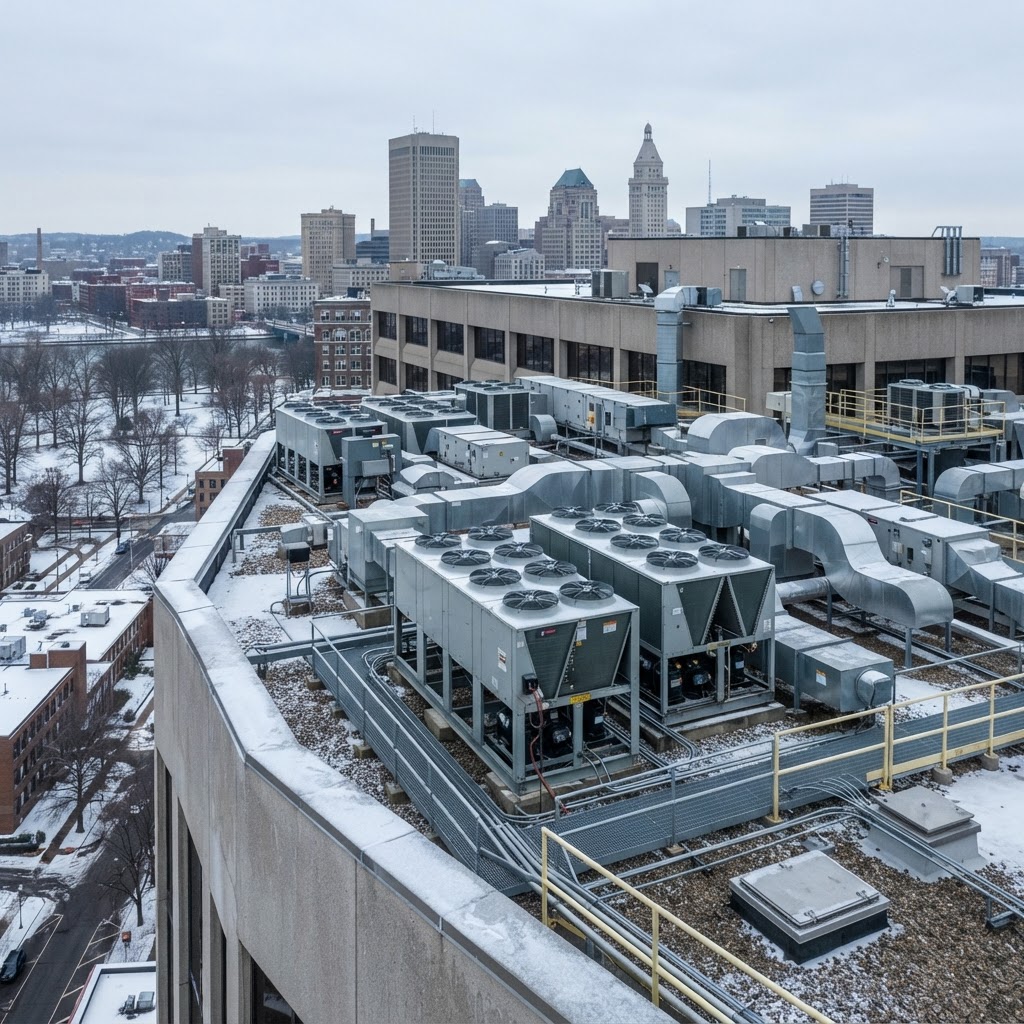
The 2026 HVAC & Facility Maintenance Calendar for Hartford
A month-by-month 2026 HVAC maintenance calendar for Hartford CT facility managers—covering freeze protection, boiler switchover, cooling towers, steam traps, and BAS sequences.
11 min read
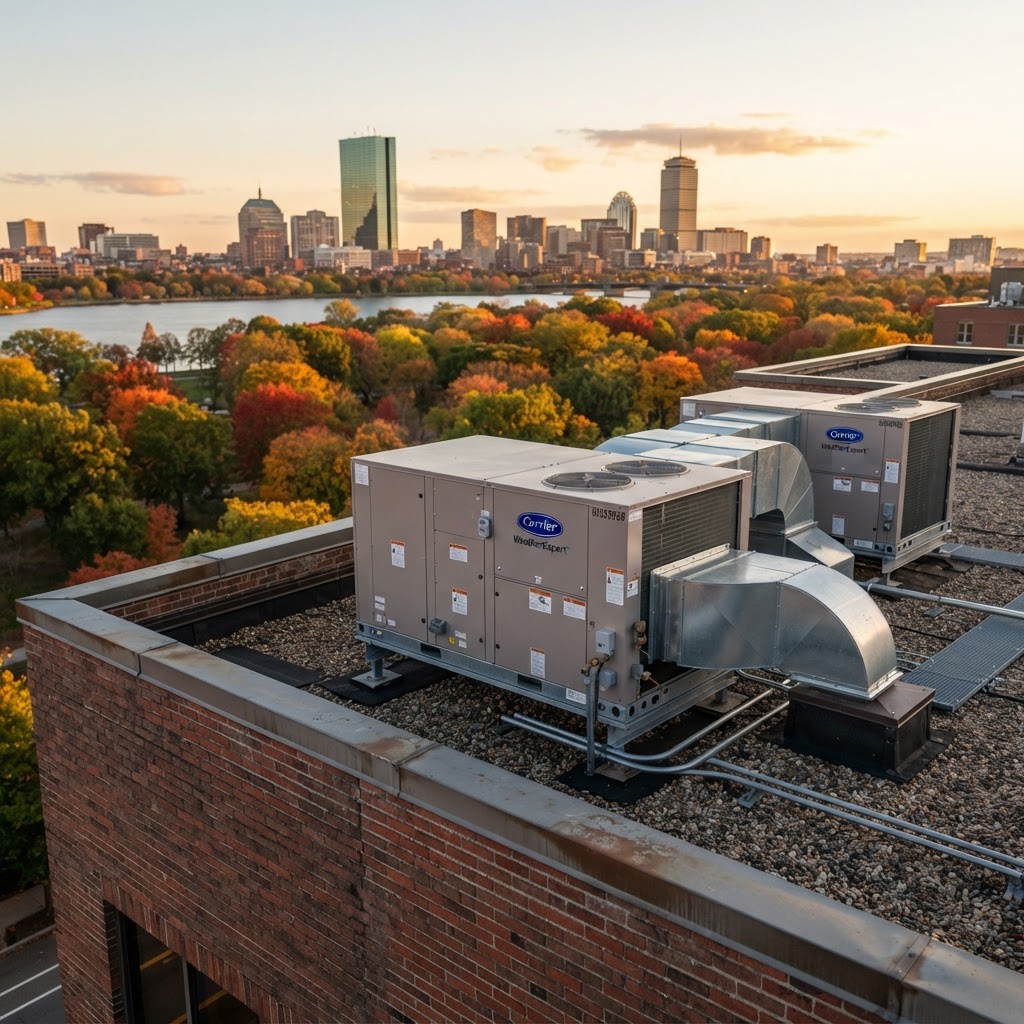
The 2026 HVAC Maintenance Calendar for the New England Hub
A month-by-month 2026 HVAC maintenance calendar for New England commercial facility managers — covering Boston, Manchester NH, Hartford CT, Providence RI, and Worcester. Quarterly PMs, seasonal changeover, freeze protection, cooling tower startup, boiler service, and more.
12 min read
Preventing CT Plumbing Failures: Expert Drain and Sewer Inspections
Protect your assets with expert commercial plumbing maintenance in Connecticut and the Greater New England region. Ensure reliability with MetroKleen.
3 min read
Comments (0)
No comments yet. Be the first to comment!