The 2026 HVAC & Facility Maintenance Calendar for the Boston Hub
Boston's commercial mechanical systems don't fail randomly — they fail on a schedule dictated by nor'easters, humidity swings, and a heating season that runs a full seven months. Facility managers who operate without a written PM calendar are essentially waiting for the failure rather than preventing it. A structured 2026 HVAC maintenance calendar built around Boston's specific climate, building stock, and district-by-district failure patterns is the single most cost-effective document your operations team can own this year.
Q1: January – March | Surviving the Heating Season
January
January is peak load for every boiler, steam riser, and perimeter heating system in your portfolio. The failure mode isn't usually the equipment — it's the deferred inspection that missed a cracked heat exchanger or a failed steam trap venting live steam into a corridor.
- Boiler inspection and flue analysis: Combustion efficiency testing should have happened before winter, but January is your last clear window to catch a boiler running rich before fuel costs compound. Check refractory, electrodes, and low-water cutoffs.
- Steam trap survey: For Back Bay brownstones, Downtown towers, and any Longwood Medical Area building on district steam, failed-open traps waste enormous energy and create condensate hammer. A handheld acoustic or infrared survey identifies the 10–15% of traps that typically fail annually.
- Freeze protection verification: Confirm glycol concentration in any exposed hydronic loop, verify heat trace on rooftop units and condensate drain lines, and check low-ambient lockout settings on any rooftop packaged unit. A lockout set too high will short-cycle a compressor; set too low, it won't protect at all.
- Snow and ice on rooftop equipment: January snowpack on economizer hoods, roof curbs, and unit ventilator intakes is one of the leading causes of mechanical room flooding and coil freeze-up in Boston. Walk accessible roofs after each significant storm. Arrange roof access with building security in advance — in a Seaport high-rise or a Kendall Square campus, spontaneous roof access simply doesn't happen.
- Filter inspection: High-occupancy buildings running maximum recirculation during cold snaps load filters faster. Inspect and replace as needed; don't wait for the quarterly schedule.
February
February compounds January's risks. Ice damming on older Back Bay and Charlestown buildings blocks roof drains, and the resulting ponding finds every unsealed roof penetration above your mechanical rooms.
- Roof drain and overflow inspection: Clear debris and ice from all primary and secondary roof drains. Document the inspection with photos — this is your liability record if a ceiling failure follows.
- Cooling tower basin freeze protection: Towers should be in winter layup or protected with basin heaters. Confirm heater operation and thermostat setpoints. A cracked basin discovered at spring startup costs weeks of cooling season availability.
- BAS alarm review: Pull a month of alarm logs. Persistent duct static pressure alarms, zone temperature deviations, and low-pressure boiler faults are signals of developing failures. In Kendall Square biotech and Longwood lab buildings, a BAS drift that goes unread is a compliance event, not just a comfort complaint.
- Belt and bearing inspection: Cold temperatures accelerate belt cracking and grease hardening in pillow-block bearings on AHUs. Check all accessible drives on quarterly PM visits and document conditions.
March
March is the transition month. The heating plant is still fully loaded, but cooling season pre-work must begin now to avoid the May and June scrambles that push every Boston mechanical contractor's schedule past capacity.
- Chiller pre-startup inspection: Megger the motor windings, check refrigerant charge and moisture indicators, verify oil levels and heater operation, and schedule refrigerant leak checks per EPA Section 608 requirements. For a large centrifugal chiller, the manufacturer's pre-startup checklist runs 40+ line items — budget the time.
- Cooling tower pre-season planning: Order water treatment chemicals, schedule basin cleaning, and if your tower has a fill pack replacement on the five-year plan, book the crane pick now. Urban crane logistics in the Seaport and Downtown core require permits and weeks of lead time.
- Economizer functional testing: Before cooling loads arrive, verify that economizer dampers stroke fully, that actuators aren't seized from winter cold, and that the BAS sequence opens the damper at the correct enthalpy or dry-bulb setpoint. A stuck economizer costs more in energy over a cooling season than almost any other single-point failure.
Q2: April – June | Changeover and Commissioning
April
April is seasonal changeover month for most Boston commercial portfolios. Heating systems go to standby; cooling systems come online.
- Boiler seasonal shutdown: Clean firetubes or watertubes, brush and vacuum flue passages, treat boiler water for layup (wet or dry depending on your layup duration), and tag the system out with a documented shutdown checklist. For Longwood Medical Area buildings with 24/7 reheat coils, confirm that backup heating capacity remains available.
- Condenser coil cleaning: Before the first mechanical cooling call arrives, clean condenser coils on all rooftop units with a low-pressure coil cleaner. Fouled coils raise condensing pressure, cut capacity, and trip high-pressure safeties on the first genuinely hot day — which is always a Friday afternoon.
- Drain pan and condensate inspection: Drain pans that sat all winter accumulate biological growth. Clean pans, flush P-traps, and confirm that condensate pumps operate before the first cooling load. A clogged condensate drain will produce a ceiling tile failure in a tenant space within 48 hours of a humid day.
- Fan coil unit service (Back Bay, Downtown pre-war towers): FCUs and unit ventilators need coil cleaning, valve exercise, and filter replacement. These units are often in-suite with no building staff access — coordinate with tenants now, not in July.
May
- Cooling tower startup: Fill basin, start circulating pumps, verify water treatment program is active, and collect baseline water samples. Cooling tower Legionella risk management requires documented startup procedures, water treatment logs, and — in Massachusetts — awareness of ASHRAE 188 water management plan obligations. Retain all records; they are the owner's compliance documentation.
- Chiller startup: Follow the manufacturer's and your service contractor's commissioning checklist. Log refrigerant charge, operating pressures, approach temperatures, and motor amps at baseline. These numbers are your diagnostic benchmark for the rest of the cooling season.
- Low-ambient lockout confirmation: Confirm lockout controls are set correctly now that ambient temperatures are rising. Rooftop units that couldn't run below 40°F in January should be verified for unrestricted operation above that threshold.
June
June begins the peak cooling season and marks the point where deferred maintenance becomes emergency service.
- Full refrigerant leak check: Walk every DX system with an electronic leak detector. Document findings per EPA recordkeeping requirements.
- BAS sequence verification for economizers: With warm, humid air arriving, confirm economizer lockout is functioning correctly. An economizer that stays open at 80°F and 70% RH will overwhelm your cooling plant and spike humidity in any healthcare or lab space.
- Quarterly PM visits: June is the first quarterly service visit of the warm season. Filters, belts, bearings, electrical connections, and controls on all AHUs.
Q3: July – September | Peak Cooling Load Management
July
- Cooling tower blowdown and water chemistry: July heat drives aggressive evaporation and concentration cycles. Weekly water chemistry checks and blowdown rate adjustments keep cycles of concentration in range and protect fill pack and basin from scale and biological fouling.
- Chiller performance trending: Log approach temperatures, refrigerant pressures, and kW/ton weekly. A rising approach temperature on the condenser side signals fouling; a rising kW/ton signals condenser or evaporator issues developing. Catching this in July avoids an emergency chiller repair in August.
- Spot thermal imaging of electrical panels: Peak electrical loads in July and August create the thermal conditions for loose connections to fail. An infrared scan of main distribution panels and HVAC disconnect panels is fast and finds problems before they become outages.
August
- Mid-season filter inspection: High cooling loads and maximum outdoor air intake mean filter loading accelerates. Don't wait for October's quarterly visit.
- Condensate system check: Re-inspect drain pans and P-traps mid-season. A P-trap that dried out during a low-load period in spring can allow sewer gas to enter a mechanical room — a common, avoidable complaint in urban buildings.
- Cooling tower fill and drift eliminator inspection: Mid-season inspection of fill pack condition and drift eliminator integrity is best practice under ASHRAE 188. Document the inspection.
September
September is the mirror image of March — cooling systems are still running hard, but heating season pre-work must begin.
- Boiler pre-season startup: Service boilers before the first cold call. Clean firetubes, test all safeties, verify low-water cutoffs, calibrate controls, and run a combustion analysis. For steam systems, clean the steam header and check pressure-reducing valves and modulating controls.
- Steam trap pre-season survey: The best time to survey steam traps is under light load in September, before October switchover demands the system run continuously.
- Pneumatic control calibration (Back Bay, Downtown): Buildings with pneumatic thermostats and controllers need annual calibration. Drifted pneumatic controls cause the zone temperature complaints and rebalancing calls that plague pre-war towers every November.
Q4: October – December | Heating Switchover and Year-End Closeout
October
- Official heating switchover: Bring boilers online, commission heating coils and perimeter radiation, verify hot water reset curves and steam pressure setpoints. For Longwood Medical Area and Kendall Square lab buildings, confirm that reheat coils are operational before outdoor temperatures drive simultaneous heating and cooling loads.
- Cooling tower winterization: Drain exposed piping, install basin heaters or execute full layup, and document the procedure. This documentation is part of your Legionella water management plan.
- Economizer cold-weather preparation: Verify low-limit controls to prevent freezestat trips from fully open economizers on cold days.
November
- Full quarterly PM visit: Heating season filters, belt and bearing inspection on all AHUs, boiler operating log review, and BAS control sequence verification for heating mode.
- Roof drain inspection: Before the first freeze cycle, clear all primary and secondary roof drains. Install drain covers if needed to prevent debris accumulation over the winter.
- Glycol concentration check: Test all exposed hydronic systems. Dilution from system top-offs during the year often reduces freeze protection below design.
December
- Year-end PM documentation audit: Compile all 2026 PM records, water treatment logs, refrigerant leak check documentation, and inspection reports. These records belong to the building owner and must be retained for regulatory compliance and insurance purposes.
- 2027 calendar planning: Issue the next year's PM calendar and book contractor slots before the market tightens in January. Urban Boston contractors fill preferred maintenance slots early — the facility managers who call in November get February availability; those who call in February get June.
- BAS year-end trend review: Pull a full year of runtime data, alarm frequencies, and energy consumption trends. Anomalies in trending data are the early warning system for equipment that will fail in the next 12 months.
What a Compliant PM Calendar Actually Saves
A structured PM calendar doesn't guarantee specific dollar savings — every building is different — but it does change the economics of mechanical ownership in measurable ways. Equipment that receives documented annual and quarterly service consistently reaches or exceeds published design life: centrifugal chillers at 20–25 years, cooling towers at 15–20 years, commercial boilers at 25–30 years. Equipment that runs without PM typically fails at 60–70% of design life, and the replacements arrive as emergency capital expenditures rather than planned budget items.
Compliance exposure is equally real. Cooling tower water treatment records, refrigerant leak check documentation, and BAS alarm logs are requested by insurers, health inspectors, and — in healthcare and lab settings — accreditation bodies. A calendar that generates these records systematically removes that exposure.
For Longwood Medical Area and Kendall Square clients, unplanned downtime carries a cost that goes beyond mechanical repair. A failed AHU in a BSL-2 lab or a humidity excursion in a sterile compounding pharmacy is a research or compliance event. The PM calendar is the operational document that stands between the facility and that outcome.
To build or audit your building's PM calendar, contact MetroKleen | MKMaintX at 1-888-669-5808 or visit mkmaintx.com.
Frequently Asked Questions
Q: How often should commercial HVAC filters be changed in a Boston office building?
A: Most commercial office buildings running MERV-8 to MERV-13 filtration should inspect filters quarterly and replace them every 3–4 months under normal occupancy. High-density occupancy, renovation activity, or proximity to construction sites — common in the Seaport and Kendall Square — can cut that interval to 6–8 weeks. Healthcare and lab settings with HEPA or MERV-16 final filters require manufacturer-specified change intervals regardless of visual condition.
Q: When is the right time to schedule cooling tower basin cleaning in Boston?
A: Basin cleaning should occur at spring startup, before the tower is placed into service — typically late April or early May in Boston. A mid-season inspection in August is best practice under ASHRAE 188. The startup cleaning removes winter sediment and biological growth before water treatment chemistry is activated, which is the correct sequence for Legionella risk management.
Q: Do Boston commercial buildings need a formal Legionella water management plan?
A: ASHRAE Standard 188-2021 is the recognized standard of care for building water system Legionella management. While Massachusetts does not currently mandate a written WMP for all commercial buildings, healthcare facilities, senior housing, and buildings serving immunocompromised populations operate under effectively mandatory compliance expectations from accreditation bodies and insurers. Any building with a cooling tower, decorative fountain, or complex domestic hot water system should have a documented plan.
Q: How far in advance should Boston facility managers book rooftop equipment replacements?
A: For any work requiring a crane pick, roof access permits, or loading-dock coordination in Downtown Boston, Back Bay, the Seaport, or Kendall Square, plan on 8–12 weeks of lead time minimum. Summer and early fall are the most constrained windows. Rooftop unit replacements scheduled in Q4 of the prior year consistently receive better contractor availability and pricing than emergency replacements in peak season.
Q: What is the most commonly skipped PM task in Boston commercial buildings, and what does it cost?
A: Steam trap surveys are consistently deferred in buildings on district steam or with in-building steam distribution. A failed-open trap vents live steam continuously, wastes significant energy, and causes condensate hammer that damages valves, fittings, and steam coils over time. A full trap survey and repair program typically pays for itself within a single heating season in any building with more than a few dozen traps — and it extends the life of the steam distribution infrastructure that is effectively irreplaceable in pre-war Boston buildings.
Get a Quote for Your Facility
Tell us where your building is and we'll call you back within 2 business hours. No obligation.
Subscribe to Updates
Get facility maintenance insights delivered
Join our newsletter for expert tips, industry news, and company updates from the MetroKleen | MKMaintX team.
Services That Cover This Work
MetroKleen | MKMaintX handles every trade under one contract — so the fix in this article and the next one call come from the same team.
Preventive programs, RTU & chiller service, 24/7 emergency repair
VIEW SERVICENightly cleaning, day porters, floor care, multi-site programs
VIEW SERVICEPrecision HVAC, humidity control, GMP-compatible cleaning
VIEW SERVICEPanels, wiring, code compliance, emergency power
VIEW SERVICEPipe repair, drain cleaning, backflow prevention
VIEW SERVICELED retrofits, fixture service, emergency lighting
VIEW SERVICELOCAL SERVICE PAGES
Need this work handled? Free assessment, no minimum contract.
Related Posts
AI SELECTED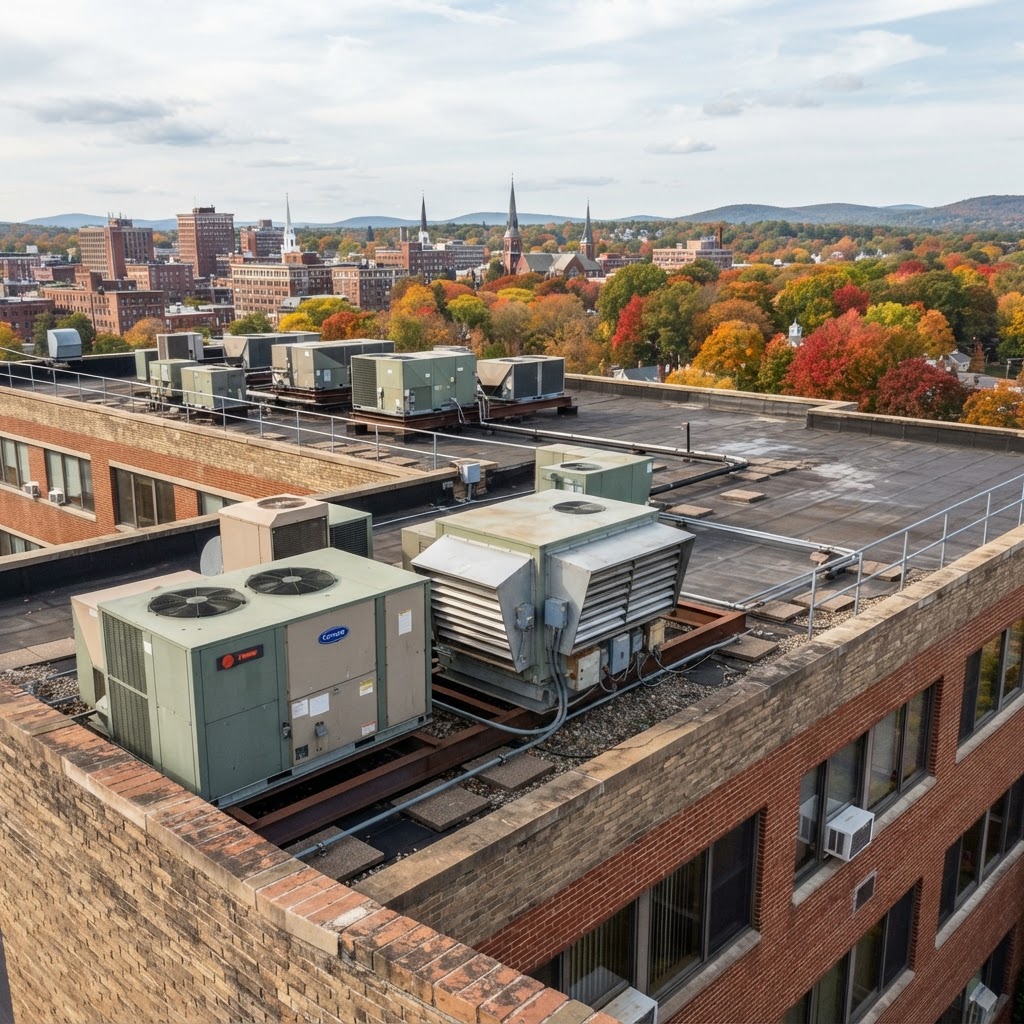
The 2026 HVAC & Facility Maintenance Calendar for the Massachusetts Hub
A month-by-month 2026 HVAC maintenance calendar for Massachusetts facility managers — boilers, chillers, steam, coils, and compliance all on one schedule.
11 min read
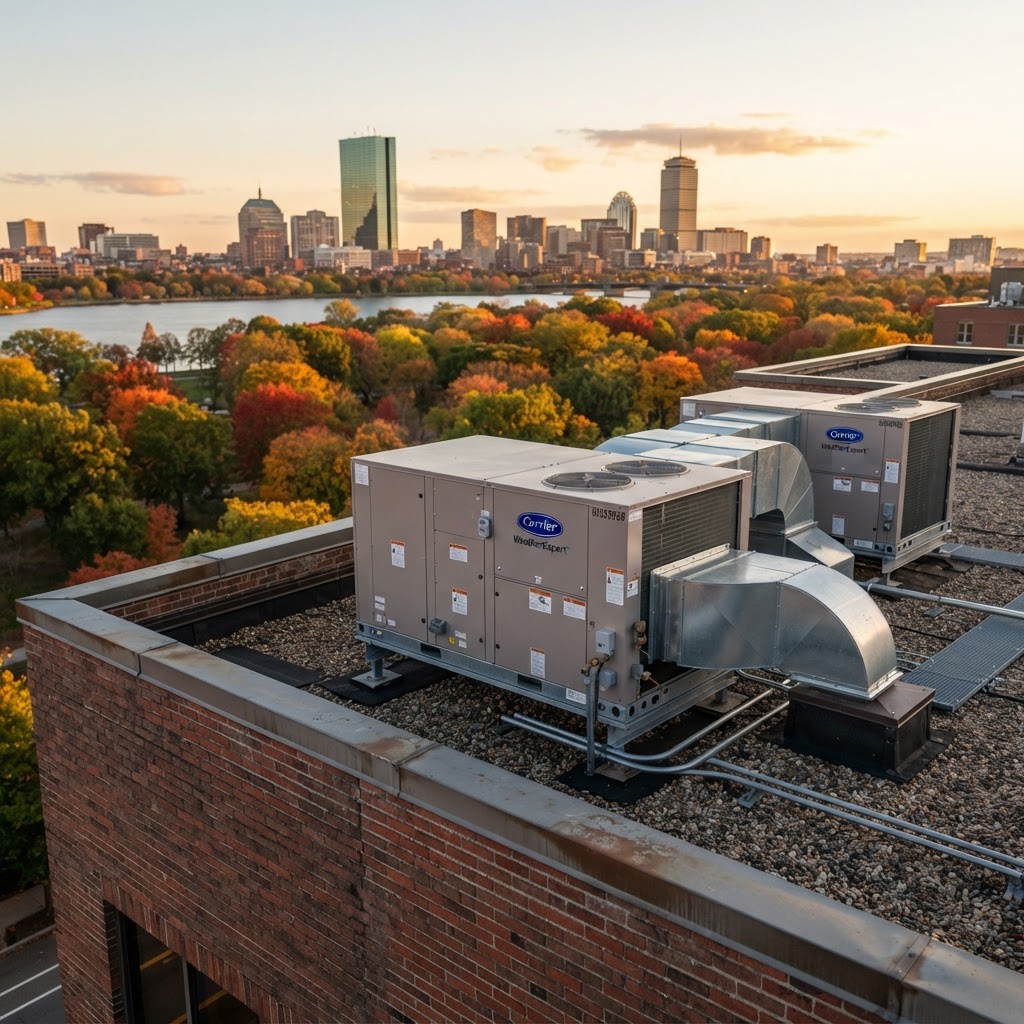
The 2026 HVAC Maintenance Calendar for the New England Hub
A month-by-month 2026 HVAC maintenance calendar for New England commercial facility managers — covering Boston, Manchester NH, Hartford CT, Providence RI, and Worcester. Quarterly PMs, seasonal changeover, freeze protection, cooling tower startup, boiler service, and more.
12 min read
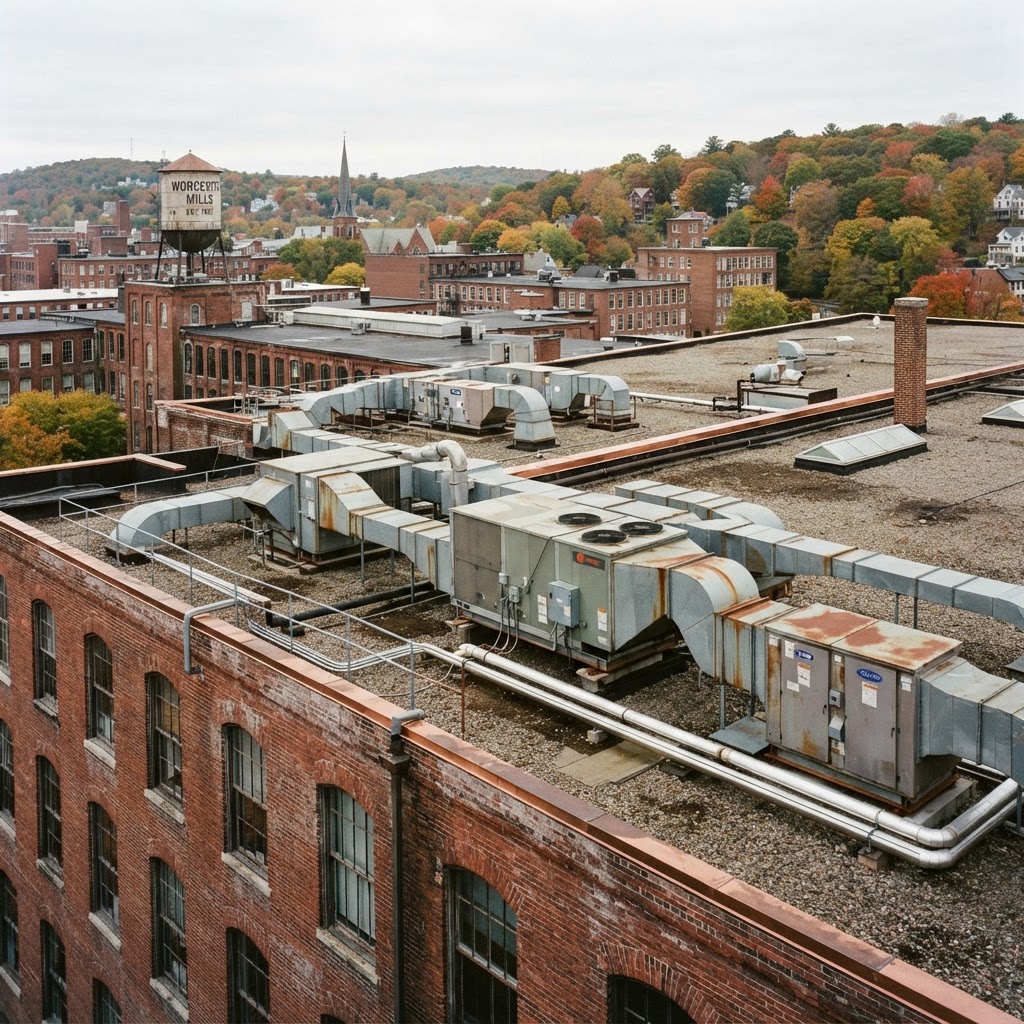
The 2026 HVAC & Facility Maintenance Calendar for Worcester
A month-by-month 2026 HVAC maintenance calendar built for Worcester, MA commercial facilities — covering freeze protection, boiler startup, chiller pre-season, steam traps, and BAS calibration.
10 min read
Comments (0)
No comments yet. Be the first to comment!