The 2026 HVAC & Facility Maintenance Calendar for Austin
Austin mechanical systems fail on a predictable seasonal schedule because the climate imposes extreme, back-to-back stress cycles that most PM calendars were never written to address. A punishing eight-month cooling season transitions without warning into hard freezes that split copper and crack heat exchangers, and Central Texas hail storms arrive squarely during commissioning season for chilled-water plants. The facility managers who stay ahead of unplanned downtime are the ones who treat the calendar itself as a maintenance tool.
Q1: January – March
January
January is the rarest window Austin offers: low cooling load, stable weather, and equipment that has just survived the heating season. Use it. Boiler inspections should include combustion analysis, heat exchanger integrity checks, flue draft verification, and safety control calibration. Chilled-water system layup or low-load operation deserves a full glycol concentration test — freeze protection that tested fine in October may have been diluted by makeup water. Verify BAS setpoint sequences for heating mode; a mismatched economizer lockout temperature discovered now costs nothing. Change or measure pressure drop across all air-handler filters; construction dust and cedar pollen from the Ashe juniper season that peaks December through February loads filters faster than any fixed 90-day schedule predicts. Skipping January filter service risks coil fouling that compounds through spring.
February
February is Austin's most dangerous freeze month. The ice storms of recent years have demonstrated what happens when rooftop units, condensate lines, and heat pump reversing valves are not winterized: split drain pans, burst copper, and seized compressors that fail the morning building occupancy spikes. Inspect all pipe insulation and heat tape continuity on exposed condensate and refrigerant lines. Test emergency freeze stats on AHUs and verify low-ambient lockout controls on condensing units. If you operate a cooling tower, confirm the basin heater is functional and the float valve is not weeping. Begin scheduling your spring condenser coil cleaning crews now — lead times tighten fast once March arrives.
March
March opens hail season. Walk every rooftop and inspect condenser coils, unit casing fasteners, roof curbs, and equipment access panels for storm damage before the first cooling call of the year. Dented condenser coils reduce airflow and spike head pressure; a 15% reduction in coil face area can push discharge pressure beyond safe operating limits on a 100°F Austin afternoon. Perform spring refrigerant leak checks on all DX systems, document superheat and subcooling baselines, and verify TXV or EEV operation. This is also the month to test economizer actuators and damper linkages — an economizer stuck closed wastes energy all summer; stuck open during a humid spring day floods drain pans and grows mold. Replace belts on all belt-driven AHUs and measure bearing temperatures with an infrared gun.
Q2: April – June
April
Spring pollen — oak, cedar elm, and grasses — hits Austin's outdoor air intakes hard. Monitor filter differential pressure daily on high-occupancy buildings and be prepared to change filters mid-cycle. Cooling tower startup for chilled-water plants should be completed with a full water treatment program review: biocide dosing, conductivity setpoints, blowdown rates, and Legionella risk management documentation. Inspect tower fill, drift eliminators, and basin strainers. Verify that chiller controls have transitioned out of winter mode and that unloading sequences and high-pressure cutouts are calibrated before ambient temperatures climb.
May
May is the last month to complete full-load commissioning before the heat arrives in earnest. Run each chiller to full capacity during a cool morning and verify approach temperatures, compressor amp draw, and condenser water flow rates. Test bypass valves and variable-frequency drives on chilled-water pumps. For healthcare and laboratory facilities with reheat coils and humidification systems, verify that summer dehumidification sequences are active and that reheat valve actuators are not sticking — a stuck-open reheat coil in a humid Austin May turns patient rooms or clean rooms into moisture problems. Complete any rooftop unit coil cleaning not finished in March.
June
June brings both the season's first serious heat and continued hail risk. Conduct a mid-season refrigerant system audit: compare current superheat and subcooling readings against your March baseline. Any drift indicates a leak or a metering device problem — find it before July. Inspect condenser fan motors and blades for vibration or erosion from hail debris. On BAS-controlled campuses, verify demand-limiting sequences, load shedding programs, and after-hours setback schedules are armed correctly. Confirm that economizer high-limit controls are set to enthalpy, not dry-bulb only, given Central Texas humidity spikes.
Q3: July – September
July
July and August are when Austin's climate becomes unforgiving. Condensing units run at or above design ambient temperatures for weeks at a time. Weekly visual inspections of condenser coils for debris accumulation — cottonwood seed, grass clippings, insects — are not optional. Check compressor oil sight glasses and crankcase heaters on scroll and reciprocating systems. Verify condenser water setpoints on chilled-water plants; raising condenser water temperature to save pump energy in July costs far more in compressor efficiency than it saves. Pull and clean strainers on cooling towers and condenser water loops monthly. Monitor BAS alarms daily and respond to any trend showing rising supply air temperatures or elevated chiller lift.
August
August is statistically Austin's hottest month and the peak period for compressor failures, capacitor failures on rooftop units, and heat exchanger stress cracking on split systems that have been running continuously since April. Schedule a mid-summer PM visit specifically to inspect electrical components: contactor condition, capacitor microfarad readings, disconnect fuse ratings, and wire termination torque. Loose terminations at elevated ambient temperatures accelerate insulation failure. For data center and tech campus facilities, verify precision air conditioning unit setpoints and verify that hot aisle containment integrity has not been compromised by equipment changes.
September
September brings the first hints of shoulder-season weather but equipment is at maximum fatigue. Complete a post-summer refrigerant system documentation update: record system pressures, note any oil staining at fittings, and flag any units that required refrigerant additions during summer for leak repair rather than recharge. Begin cooling tower winterization planning if the facility shuts towers seasonally. Test economizer controls again — fall is the second economizer season in Austin, and a stuck damper wastes free cooling for two months.
Q4: October – December
October
October is changeover month. Heating system startup for boilers, heat pumps, and gas-fired unit heaters must be completed before the first cold snap, which can arrive without warning. Test ignition controls, gas pressure, and heat exchanger integrity on all gas-fired equipment. Verify reversing valve function on heat pumps and test defrost board operation. Recalibrate BAS heating sequences and confirm that morning warm-up cycles are programmed correctly for the building's thermal mass. Drain and blow out condensate lines on systems that will not run in heating mode.
November
November is the month to complete any deferred summer work before the holidays compress schedules. Perform annual belt replacements on any belt-driven equipment not replaced in spring. Inspect all roof curb seals and equipment penetration flashing before winter rain season. Verify glycol concentrations in any hydronic system exposed to freezing temperatures. Complete the annual BAS review: trend logs from the summer will reveal setpoint drift, failed sensors, and sequences that did not perform as intended. Address them now.
December
December requires freeze preparation to be complete. Inspect pipe insulation on all exterior and attic-run lines, test heat tape and freeze stat setpoints, and verify low-ambient controls on any condensing equipment that will operate in cold weather. Walk rooftops after the first cold rain and check drain pan heaters, basin heaters, and any heat trace on cooling towers left in service. Set a BAS alarm for supply air temperatures below 40°F on AHUs without freeze protection coils. In healthcare facilities, verify that humidification system controls are armed for winter dry-air conditions, which drive static electricity and respiratory complaints.
What a Compliant PM Calendar Actually Saves
A structured, climate-specific PM calendar does not promise a specific dollar return — equipment, age, use patterns, and local labor rates vary too much for that. What it reliably delivers is reduced reactive maintenance events, which are universally more expensive than planned work in parts, labor, and lost productivity. It preserves equipment warranty compliance, which requires documented service intervals. It supports regulatory and accreditation requirements for healthcare and educational facilities where environmental controls are not optional. It reduces energy waste from fouled coils, degraded refrigerant charge, and stuck economizers — all of which increase kilowatt-hours consumed per ton of cooling. And it creates the documentation trail that insurance carriers, building owners, and commissioning agents expect when something does go wrong.
Facility managers working across Central Texas who want a single-source partner for this calendar can reach MetroKleen | MKMaintX at 1-888-669-5808 or at mkmaintx.com, where service agreements covering quarterly PM visits, filter programs, water treatment, and emergency response are available across Austin, Round Rock, Cedar Park, San Marcos, and 35+ states.
Frequently Asked Questions
Q: How often should commercial HVAC filters be changed in Austin? A: Change cadence should be driven by measured pressure drop across the filter bank, not a fixed date. Austin's Ashe juniper pollen season, spring oak pollen, construction activity near tech campuses, and summer thunderstorm dust can all collapse a 90-day filter in 30 days. Establish a pressure drop threshold — typically 0.5" w.g. above clean resistance for a 2" pleated filter — and check it weekly in high-load periods.
Q: Why is hail damage such a priority for Austin facility managers? A: Central Texas sits in a high-frequency hail corridor. Even quarter-size hail dents condenser coil fins, reducing airflow and raising head pressure. Damaged fins that go unrepaired through summer push compressors beyond design discharge temperatures, shortening service life significantly. Post-storm rooftop inspections and hail guards on exposed condensing equipment are among the highest-ROI protective measures available in this market.
Q: What freeze protection measures are most critical for Austin rooftop units? A: The three most commonly neglected items are condensate drain line heat trace, low-ambient lockout controls on condensing units, and glycol concentration verification in hydronic coils. Austin's freezes are infrequent enough that heat tape fails between uses and glycol concentrations drift from makeup water additions without triggering alarms. Testing these systems in February, before the most likely freeze window, is essential.
Q: How does a BAS help with seasonal HVAC transitions in Austin commercial buildings? A: A properly sequenced building automation system handles economizer switchover, morning warm-up cycles, demand limiting during peak summer hours, and humidity control for healthcare or laboratory spaces. The risk is drift: sensors fail, actuators stick, and setpoints get manually overridden and never restored. Quarterly BAS sequence verification — not just alarm acknowledgment but actual end-to-end functional testing — ensures the system is doing what the sequence of operations document says it should do.
Q: What is included in a quarterly commercial HVAC PM visit? A: A thorough quarterly visit covers filter inspection and change-out, belt and bearing inspection, refrigerant system checks (pressures, superheat, subcooling), electrical component inspection (contactors, capacitors, terminations), coil condition assessment, condensate drain flushing, BAS setpoint verification, and a written service report with photos. The specific scope should be tailored to equipment type and season — a Q1 visit in Austin looks very different from a Q3 visit when the focus shifts to compressor health and condenser coil condition.
Get a Quote for Your Facility
Tell us where your building is and we'll call you back within 2 business hours. No obligation.
Subscribe to Updates
Get facility maintenance insights delivered
Join our newsletter for expert tips, industry news, and company updates from the MetroKleen | MKMaintX team.
Services That Cover This Work
MetroKleen | MKMaintX handles every trade under one contract — so the fix in this article and the next one call come from the same team.
Preventive programs, RTU & chiller service, 24/7 emergency repair
VIEW SERVICENightly cleaning, day porters, floor care, multi-site programs
VIEW SERVICEPrecision HVAC, humidity control, GMP-compatible cleaning
VIEW SERVICEPanels, wiring, code compliance, emergency power
VIEW SERVICEPipe repair, drain cleaning, backflow prevention
VIEW SERVICELED retrofits, fixture service, emergency lighting
VIEW SERVICELOCAL SERVICE PAGES
Need this work handled? Free assessment, no minimum contract.
Related Posts
AI SELECTED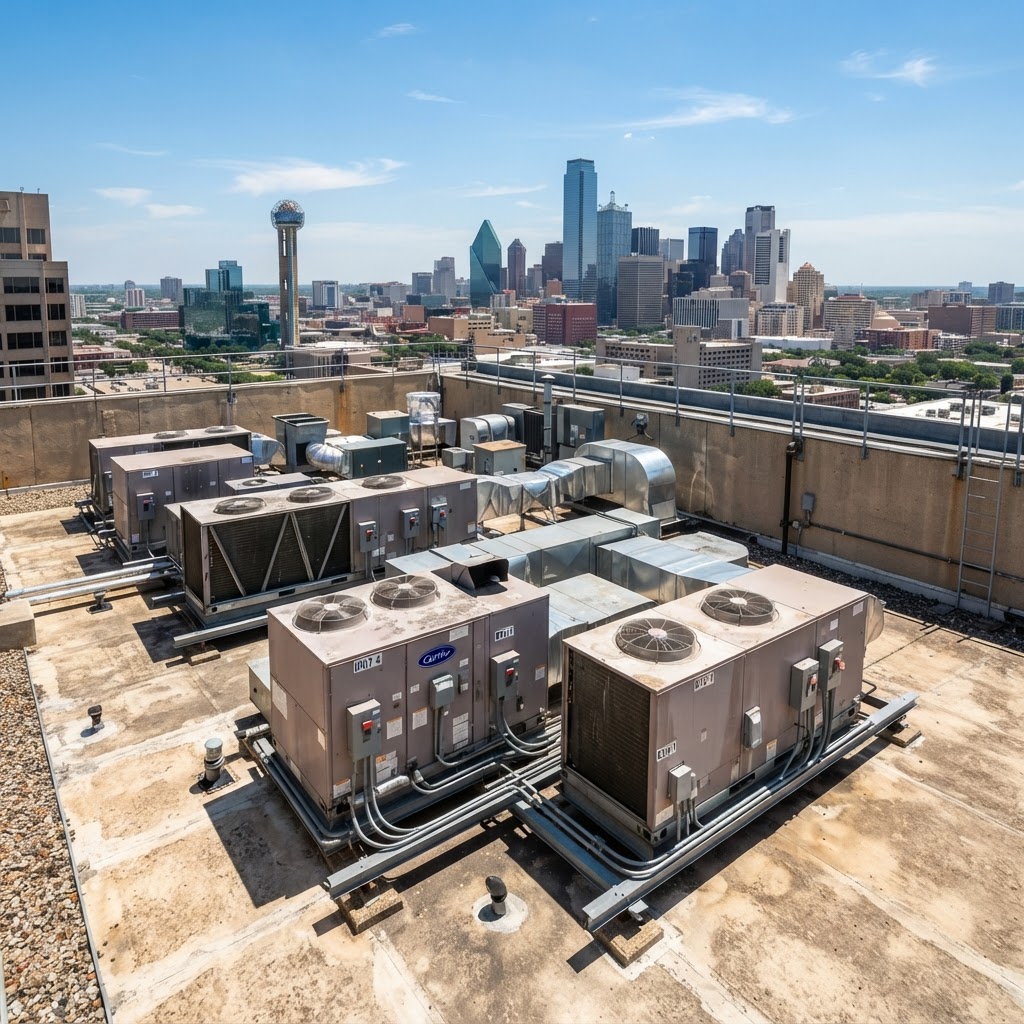
The 2026 HVAC & Facility Maintenance Calendar for Dallas
A month-by-month 2026 HVAC maintenance calendar built for Dallas TX commercial facilities—covering chillers, cooling towers, freeze protection, storm season, and quarterly PM tasks.
9 min read
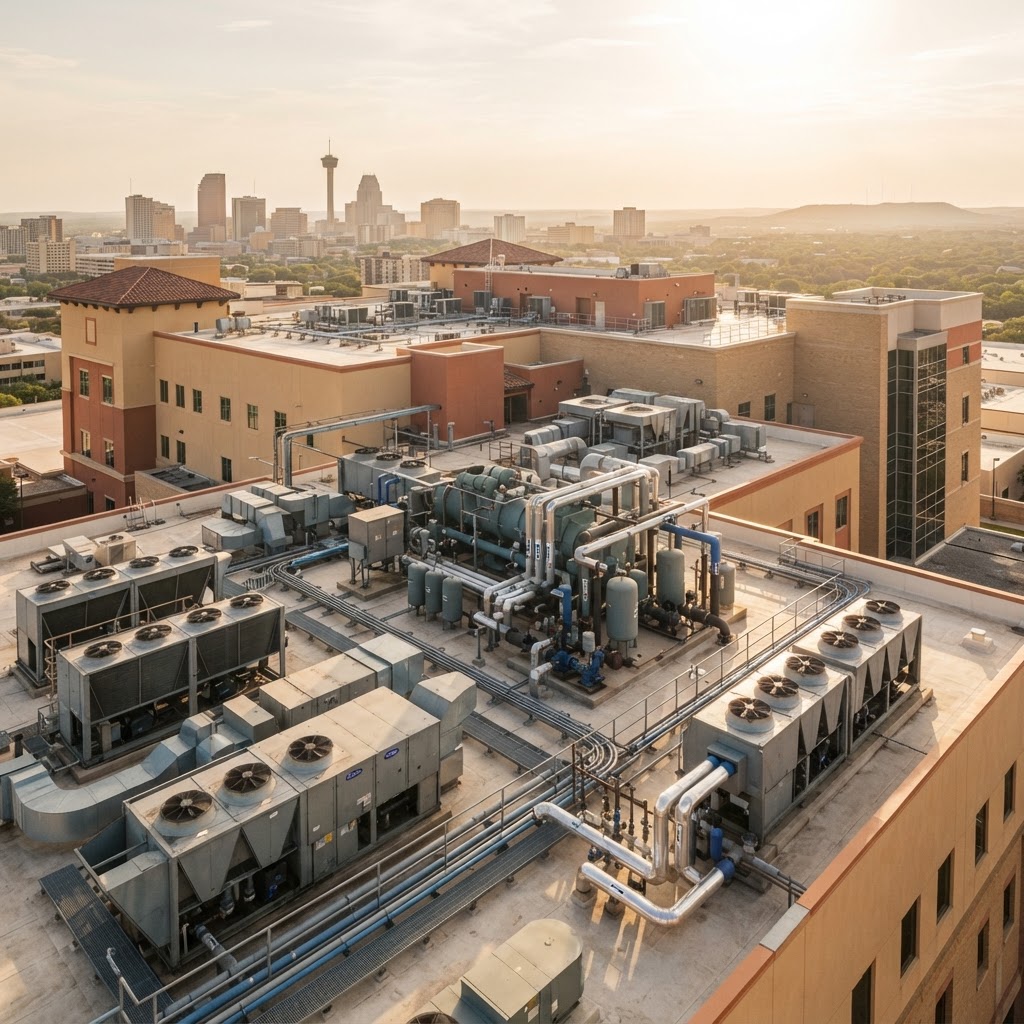
The 2026 HVAC & Facility Maintenance Calendar for San Antonio
A month-by-month 2026 HVAC maintenance calendar for San Antonio TX commercial facility managers—covering chillers, cooling towers, coils, water treatment, freeze protection, and seasonal changeover.
9 min read
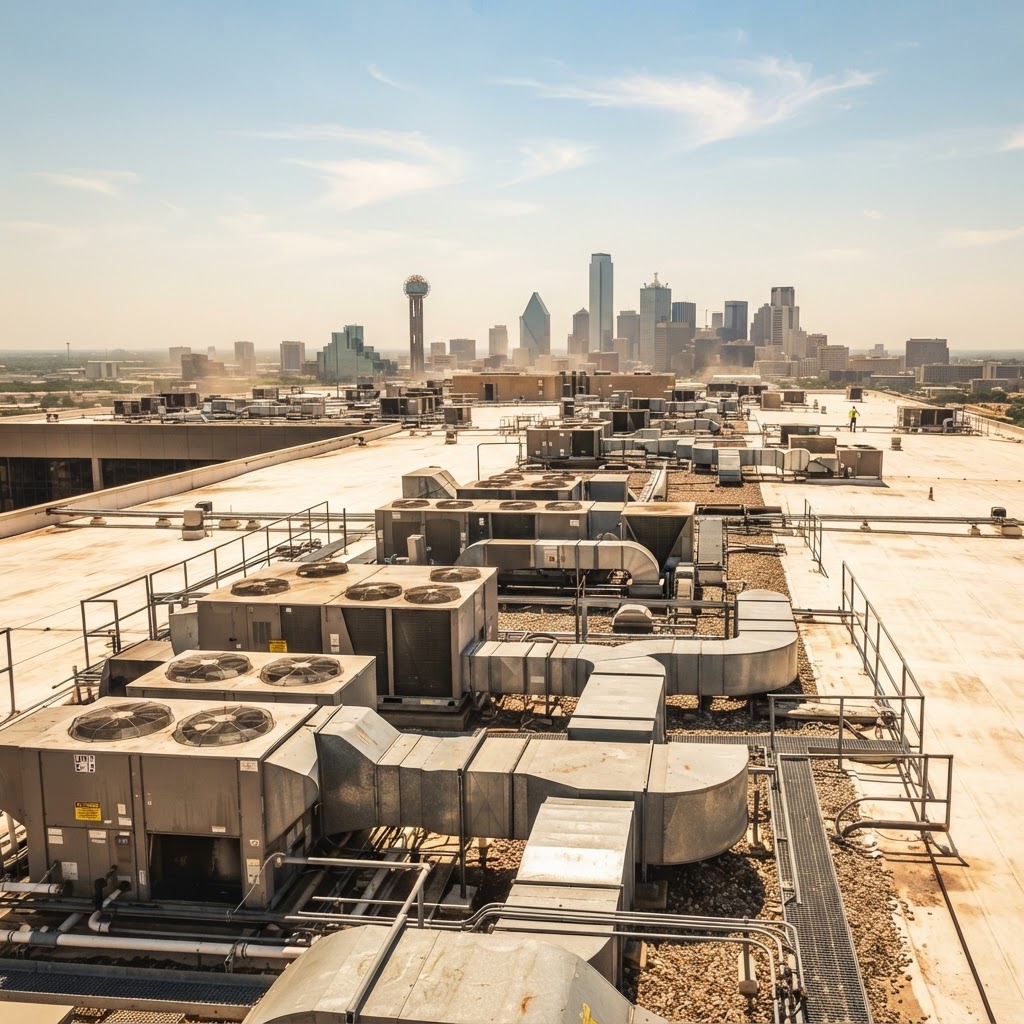
The 2026 HVAC & Facility Maintenance Calendar for the Texas Hub
A month-by-month 2026 HVAC maintenance calendar for Texas facility managers covering freeze protection, cooling season prep, storm recovery, and more.
13 min read
Comments (0)
No comments yet. Be the first to comment!