Cambridge Lab and Biotech Facility Maintenance: Compliance and Cleanroom Standards
Cambridge's Kendall Square is home to some of the most sophisticated laboratory and biotech facilities in the world — and keeping them compliant, clean, and operational requires a maintenance program far more demanding than standard commercial cleaning. One lapse in protocol can mean contaminated research, failed audits, or regulatory shutdowns that cost millions.
The Unique Maintenance Challenge Inside Cambridge Biotech Facilities
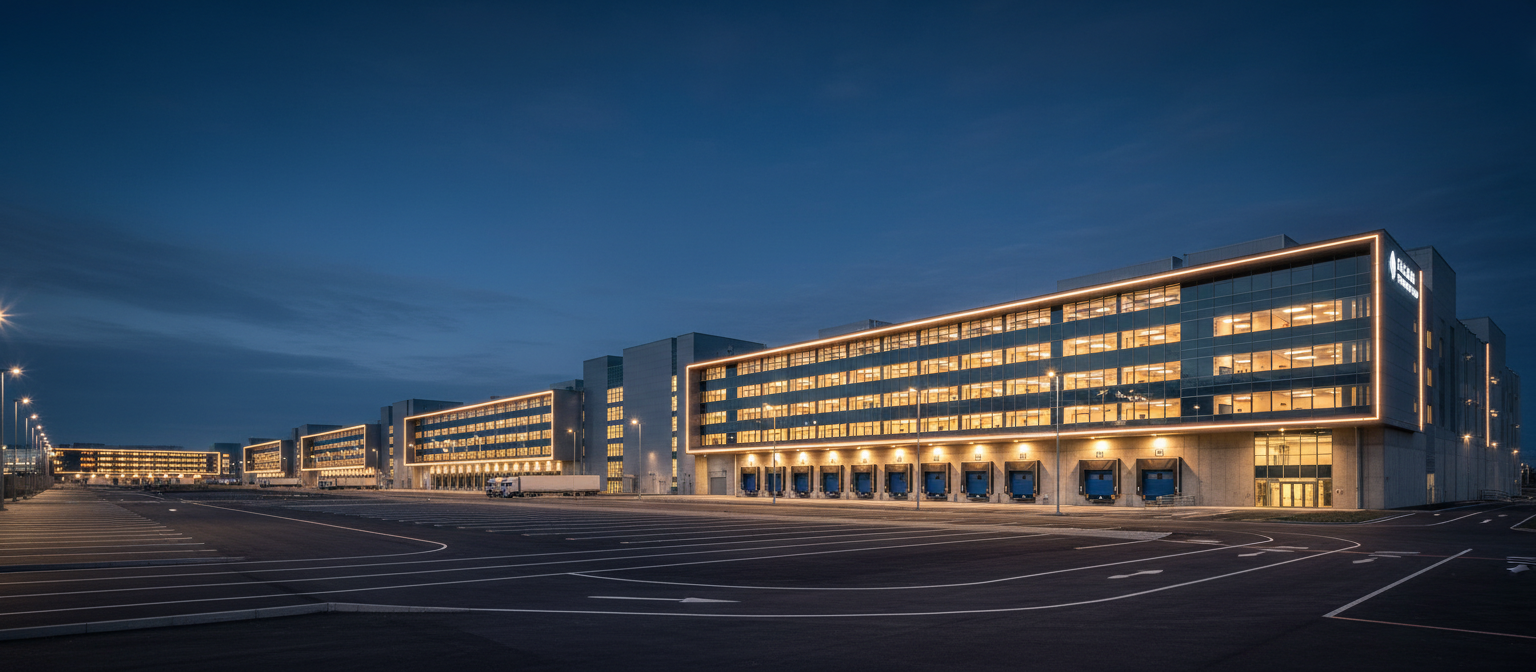
Walk through the Kendall Square biotech corridor on any given morning and you'll pass the campuses of Moderna, Biogen, Novartis, and hundreds of smaller life sciences firms operating in a district that has earned its reputation as the biotech capital of the world. Behind the glass facades and badge-controlled lobbies, researchers are conducting work that depends absolutely on environmental control, surface sterility, and particle-count compliance. These aren't just operational preferences — they are regulatory mandates enforced by the FDA, EPA, and ISO certification bodies.
The maintenance challenge inside a Cambridge biotech facility is fundamentally different from servicing a traditional office building or retail space. Cleanrooms, wet labs, BSL-2 and BSL-3 biosafety laboratories, animal research suites, and specialized HVAC systems demand maintenance personnel who understand ISO 14644 cleanroom classification, GMP (Good Manufacturing Practice) requirements, and the occupational hazards unique to life sciences environments. A standard janitorial crew with mops and spray bottles is not just inadequate here — it is a liability.
Why Boston's Climate and Building Stock Complicate Compliance
Boston's weather patterns create compounding challenges for any facility striving to maintain cleanroom standards compliance. The region experiences dramatic humidity swings — from frigid, bone-dry winters that push relative humidity into single digits, to humid, muggy summers that can spike moisture levels and accelerate microbial growth on improperly maintained surfaces. For a cleanroom operator in Cambridge, these fluctuations directly stress HVAC systems, HEPA filtration banks, and pressurization differentials that are critical to maintaining ISO Class 5 through Class 8 environments.
Cambridge's building stock adds another dimension of complexity. The life sciences boom has pushed biotech tenants into a mix of purpose-built modern towers along Binney Street and heavily retrofitted older commercial or industrial buildings throughout the broader Kendall and East Cambridge neighborhoods. Older structures present persistent challenges: aging ductwork that harbors particulate contamination, slab-on-grade floors prone to moisture infiltration, and utility systems that were never designed to support the precision environmental controls a 21st-century lab demands. Maintaining biotech facility compliance in a retrofitted 1970s building requires a fundamentally different approach than servicing a newly constructed life sciences tower.
It is worth noting that these challenges extend beyond Cambridge itself. Facilities in the Longwood Medical Area — home to Massachusetts General Hospital research divisions, the Brigham, and major pharmaceutical partners — face similarly demanding standards. The Seaport Innovation District and Charlestown Navy Yard have both absorbed significant life sciences overflow, and even emerging clusters in Back Bay and Downtown Boston now include medical device and biotech tenants occupying floors that require specialized maintenance protocols.
Regulatory Framework: What Cambridge Biotech Facilities Must Meet
Understanding the regulatory landscape is the first step to building a compliant maintenance program. Cambridge biotech facility maintenance must typically address requirements drawn from multiple overlapping frameworks:
- ISO 14644 — the international standard for cleanroom classification, monitoring, and contamination control, covering everything from air particle counts to personnel gowning protocols
- FDA 21 CFR Part 211 — current Good Manufacturing Practice regulations for pharmaceutical facilities, covering environmental monitoring, cleaning validation, and equipment maintenance records
- EPA and Massachusetts DEP regulations — governing the storage, handling, and disposal of hazardous chemicals, biological waste, and other regulated materials common in research environments
- OSHA Biosafety Standards — particularly relevant for BSL-2 and BSL-3 facilities operating in Cambridge's dense research cluster
- Cambridge Biosafety Committee ordinances — the City of Cambridge operates one of the most active municipal biosafety oversight programs in the country, requiring registered facilities to meet specific containment and operational standards
Maintenance providers who are unfamiliar with this framework cannot operate effectively inside these environments. Cleanroom standards compliance is not a one-time certification — it is a continuous operational discipline requiring documented procedures, trained personnel, and systematic verification.
MetroKleen | MKMaintX's Approach to Life Sciences Facility Maintenance
At MetroKleen | MKMaintX, our approach to Cambridge biotech and life sciences maintenance is built on three pillars: trained and credentialed personnel, validated cleaning and maintenance protocols, and documented compliance support.
Our technicians who service cleanroom and laboratory environments complete specialized training in ISO cleanroom protocols, GMP cleaning procedures, and the proper use of disinfectants validated for cleanroom applications — including sporicidal agents, sterile IPA solutions, and non-shedding wiping materials that meet contamination control specifications. We understand that the wrong cleaning agent, the wrong wipe, or the wrong technique can introduce contamination, compromise surface integrity, or trigger a deviations report that disrupts production timelines.
Our facility maintenance compliance programs for Cambridge biotech clients typically include:
- Cleanroom cleaning and disinfection — following written SOPs aligned with client-specific contamination control strategies, using validated products and techniques suited to ISO class designation
- HVAC and HEPA filter monitoring support — coordinating with mechanical teams to document filter integrity, pressure differential readings, and airflow velocity checks that feed into environmental monitoring programs
- Hard surface and floor care — using ESD-safe, particle-shedding-minimized equipment appropriate for raised flooring, epoxy-coated lab floors, and anti-static vinyl common in life sciences spaces
- Biohazardous waste handling coordination — working within established facility waste streams to ensure maintenance activities do not cross-contaminate clean areas or violate waste segregation protocols
- Maintenance documentation and record-keeping — producing the cleaning logs, equipment inspection records, and corrective action documentation that auditors, QA teams, and regulatory inspectors expect to see
We also support facilities during FDA inspections, ISO audits, and internal quality reviews by ensuring that all maintenance-related documentation is current, organized, and audit-ready.
The Real Cost of Non-Compliance
Facility managers sometimes hesitate to invest in specialized maintenance services, weighing the cost against what appears to be adequate performance from a general contractor. This calculus changes dramatically when you account for the true cost of a cleanroom compliance failure.
A single contamination event in a pharmaceutical manufacturing suite can require a full environmental remediation, batch rejection, production shutdown, and investigation process that costs anywhere from tens of thousands to several million dollars — before accounting for regulatory fines or the reputational damage that follows a public deviation report. For a biotech startup in Cambridge conducting early-stage clinical manufacturing, a compliance failure at a critical juncture can delay an IND filing or compromise a funding timeline in ways that are existential to the company.
Investing in a Cambridge biotech facility maintenance partner who understands and operates within your quality system is not an overhead cost — it is risk management. The right maintenance provider reduces the probability of contamination events, provides defensible documentation when auditors ask questions, and frees your internal QA and facilities team to focus on higher-order problems.
What to Look for in a Life Sciences Maintenance Provider
Not every commercial maintenance company is equipped to serve the Cambridge biotech market. When evaluating providers, facility managers should ask pointed questions and expect detailed, specific answers. Key criteria include:
- Demonstrated cleanroom experience — ask for references from current life sciences clients and verify that the provider has active experience in ISO-classified environments, not just general laboratory cleaning
- Trained and background-checked personnel — cleanroom technicians should have documented training records and should be able to articulate why certain materials, procedures, or techniques are required in a given environment
- Written SOPs and cleaning validation support — a credible provider will bring draft SOPs and be willing to work with your QA team to validate cleaning methods against your contamination control strategy
- Insurance and compliance documentation — verify general liability coverage, workers' compensation, and that the provider carries appropriate environmental liability coverage for facilities handling hazardous materials
- Familiarity with local regulations — providers serving Cambridge facilities should be specifically familiar with Cambridge Biosafety Committee requirements and Massachusetts DEP obligations, not just federal standards
- Scalable service models — your facility's needs during a routine production week differ from your needs during a site expansion, an audit preparation sprint, or a post-construction cleanroom qualification. A good provider scales with you.
MetroKleen | MKMaintX meets all of these criteria and brings the additional advantage of a nationwide network that supports multi-site biotech and pharma clients across more than 35 states, while maintaining the local knowledge and responsive presence that Cambridge facilities require. Reach us at 1-888-669-5808 or visit mkmaintx.com to discuss a customized maintenance program for your life sciences facility.
Frequently Asked Questions
Q: What ISO cleanroom classes are most common in Cambridge biotech facilities, and how does that affect maintenance requirements?
A: Most Cambridge research and development labs operate in ISO Class 7 and ISO Class 8 environments, while pharmaceutical manufacturing suites — particularly those supporting clinical-stage production — often require ISO Class 5 or Class 6 conditions. Higher ISO classification (lower class number) means stricter particle count limits, more rigorous gowning requirements, and more demanding cleaning protocols using validated sterile materials. Maintenance procedures, product selection, and documentation requirements must be matched precisely to the ISO class designation of each space.
Q: How often should cleanrooms in Cambridge biotech facilities be professionally cleaned and maintained?
A: Frequency depends on the cleanroom classification, the nature of the work performed, and the facility's contamination control strategy. ISO Class 7 and 8 research environments typically require daily cleaning of high-touch surfaces and floors, with more comprehensive disinfection cycles on a weekly basis. Manufacturing suites may require cleaning between every production run. Your maintenance provider should help you build a cleaning frequency matrix aligned to your environmental monitoring data and QA requirements.
Q: Can MetroKleen | MKMaintX support facilities outside Cambridge — such as in the Longwood Medical Area or the Seaport?
A: Absolutely. While Kendall Square represents the highest concentration of biotech and life sciences tenants in the region, MetroKleen | MKMaintX serves life sciences and medical research facilities across Greater Boston, including the Longwood Medical Area, Seaport Innovation District, Charlestown, and beyond. Our regional team is familiar with the specific building conditions, regulatory environments, and tenant requirements across all major Boston life sciences clusters.
Q: What documentation should a biotech facility expect from its maintenance provider for compliance purposes?
A: At a minimum, a compliant maintenance program should produce cleaning logs with date, time, technician identification, products used, and areas serviced. Higher-complexity environments may require equipment calibration records, disinfectant lot numbers and expiration tracking, corrective action logs for any deviations, and personnel training records that can be reviewed during an FDA inspection or ISO audit. MetroKleen | MKMaintX provides structured documentation packages customized to each client's quality management system.
Q: How does MetroKleen | MKMaintX handle the onboarding of a new Cambridge biotech facility client?
A: Onboarding begins with a detailed facility assessment — we walk the site with your facilities and QA leads to map cleanroom classifications, identify high-risk surfaces and traffic patterns, review existing SOPs, and understand your audit calendar and production schedule. From that assessment, we build a customized maintenance scope of work, train dedicated technicians to your facility's protocols, and establish a documentation framework before the first service visit. This structured onboarding process ensures that day one of service is compliant, not a learning curve.
Get a Quote for Your Facility
Tell us where your building is and we'll call you back within 2 business hours. No obligation.
Subscribe to Updates
Get facility maintenance insights delivered
Join our newsletter for expert tips, industry news, and company updates from the MetroKleen | MKMaintX team.
Services That Cover This Work
MetroKleen | MKMaintX handles every trade under one contract — so the fix in this article and the next one call come from the same team.
Preventive programs, RTU & chiller service, 24/7 emergency repair
VIEW SERVICENightly cleaning, day porters, floor care, multi-site programs
VIEW SERVICEPrecision HVAC, humidity control, GMP-compatible cleaning
VIEW SERVICEPanels, wiring, code compliance, emergency power
VIEW SERVICEPipe repair, drain cleaning, backflow prevention
VIEW SERVICELED retrofits, fixture service, emergency lighting
VIEW SERVICELOCAL SERVICE PAGES
Need this work handled? Free assessment, no minimum contract.
Related Posts
AI SELECTEDOptimizing RI Biotech Lab Cleanliness with HEPA Filtration Upgrades
Discover how HEPA filtration upgrades improve Rhode Island lab air quality and protect research integrity throughout the Greater New England region.
3 min read
Indoor Air Quality Trends for Massachusetts Biotech and Lab Spaces
Learn how Boston biotech firms are optimizing commercial indoor air quality standards to ensure research safety and attract top talent in New England.
3 min read
Emergency Response Protocols for Somerville Tech Hubs and Labs
Ensure your lab or tech hub stays operational with expert emergency facility repair Somerville protocols. Contact MKMaintX for 24/7 professional maintenance.
3 min read
Comments (0)
No comments yet. Be the first to comment!